
by Michael Liss
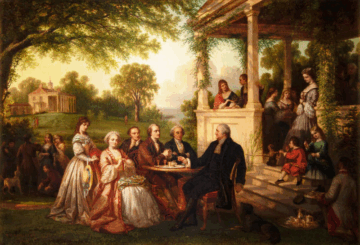
George Washington and his wife Martha were committed eaters and generous hosts. A meal was a serious affair: fine China, glassware and cutlery, a variety of spirits, wines, and champagne, soups and souffles, trifles, crisps, tortes, any number of things pulled or plucked from the soil or vines, harvested from the bays and rivers, or trapped, shot, or simply domesticated and destined for the table.
The couple preferred English-style cooking and apparently were fond of meat pies. For a Christmas meal one year, their kitchen turned out a family favorite—a cover-the-bases delicacy that called for a bushel of flour for crust, stuffed with five different types of boiled fowl—pigeon, partridge, duck, goose, turkey—all baked on high heat for four hours. I’m not sure what that might be called—perhaps “pipparduckoosekey”?
Of course, none of these monumental affairs began with George and Martha doing any of that pulling, plucking, sowing, reaping, boiling, or broiling. Nor setting the table, clearing it afterwards, washing up, polishing the silver, drying the China, or putting it away. The Washingtons had “staff” for that, quite a large staff, in fact.
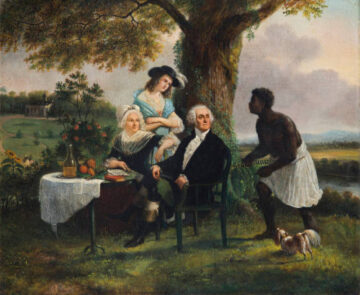
George and Martha kept slaves—per the Mount Vernon website, at the time of George’s death, there were 317 on the plantation. There is nothing to indicate Washington was a particularly difficult master, and Mount Vernon was in temperate Virginia, not some swampy, snake-and-insect-ridden killing field in South Carolina, but the “Peculiar Institution” was certainly vibrant enough there. As one might expect, the staff didn’t enjoy quite the same creature comforts as the Washingtons did. Again, from the website:
The standard slave quarter on Mount Vernon’s five farms was a rough one-room log structure with a wooden chimney, measuring about 225 square feet. Some dwellings were slightly larger and divided into two rooms, each housing a different family. As many as eight people could be crowded into a single room. They slept on pallets or on the dirt floor.
History is complex and contradictory, isn’t it? Certainly, one that demands you put inconvenient parts aside so as to appreciate the more celebratory. Still, this is George Washington, so let’s talk about the Father of Our Country’s personal qualities. No doubt he was uncommonly brave, an oak for the thin reed of independence to lash onto. He was incorruptible, rigidly self-disciplined, and, as Parson Weems reminds us, even as a boy, honest in trees and axes. Read more »
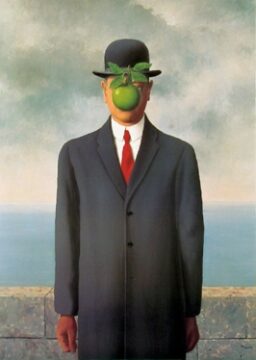


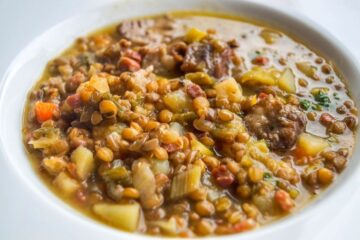 In a culture oscillating between dietary asceticism and culinary spectacle—fasts followed by feasts, detox regimens bracketed by indulgent food porn—it is easy to miss the sensuous meaningfulness of ordinary, everyday eating. We are entranced by extremes in part because they distract us from the steady, ordinary pleasures that thread through our daily lives. This cultural fixation on either controlling or glamorizing food obscures its deeper role: food is not just fuel or fantasy, but a medium through which we experience the world, anchor our identities, and rehearse our values. The act of eating, so often reduced to a health metric or a social performance, is in fact saturated with philosophical significance. It binds pleasure to perception, flavor to feeling, and the mundane to the meaningful.
 Since 1914, the Federal Trade Commission ‘s mission has been to enforce civil antitrust and unfair competition/consumer protection laws. The question is whether this mission has been supplanted—whether the FTC under Trump 2 .0 is becoming the Federal Political Truth Commission.


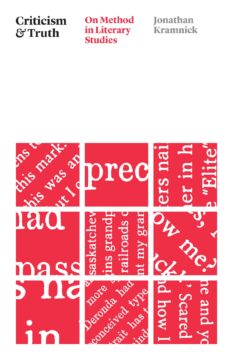 It is now close to 20 years since I completed my Ph.D. in English, and, truth be told, I’m still not exactly sure what I accomplished in doing so. There was, of course, the mundane concern about what I was thinking in spending so many of what ought to have been my most productive years preparing to work in a field not exactly busting at the seams with jobs (this was true back then, and the situation has, as we know, become even worse). But I’ve never been good with practical concerns; being addicted to uselessness, I like my problems to be more epistemic. I am still plagued with a question: Could I say that what I had written in my thesis was, in any particular sense, “true?” Had I not, in fact, made it all up, and if pressed to prove that I hadn’t, what evidence could I bring in my favour? Was what I saw actually “in” the text I was studying?




 Sughra Raza. Colorscape, Celestun, Mexico. March 2025.

 Lana Del Rey exists in a meticulously crafted world of her own. It’s a world apart. I purchased an invite to drop-by this summer, so that I might glimpse its finer details. Along with the crowd at the Anfield stadium in Liverpool, I was standing at its perimeter, gazing inwards, wondering. The atmosphere seemed rarified, there were even lily pads on the custom-built pond.