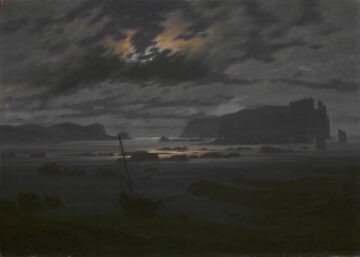
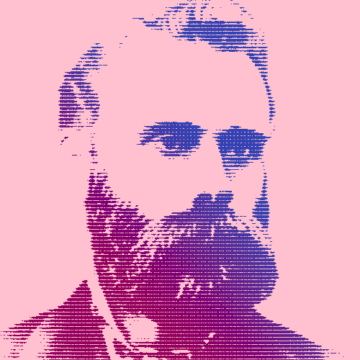
by Laurence Peterson
It is said that money talks, but recent signals from markets, economic indicators, and utterances from monetary policy makers all over the world now display all the comprehensibility of an overly enthusiastic believer speaking in tongues. Things had been hyper-sensitive since the Federal Reserve started raising the key interest rate (Federal Funds rate) from an historic low of 0.25% in early 2022 to 5.5% in August of 2023, but the last several weeks have produced a series of gyrations and blowouts that have been quite unique. Perhaps it is only because of the extraordinary (usually regarding their absurdity) happenings in the world of domestic politics and nothing less than atrocities on the international scene that many have allowed these events to fade from view. But then these developments have their own complicating effects on the same markets.
The most prominent cause of tension in the markets has involved two major forces pulling against each other: a weakness in the US labor market, and signs of increasing or plateauing US inflation. Any significant indication of momentum in either direction induces market players to pile in, reinforcing the trend. If the movement becomes dramatic enough, pressure builds on the monetary authorities to stem the accelerating tide by altering interest rates.
Since early July, poor monthly unemployment reports have resulted in lopsided reactions that have provoked alarm amongst Federal Reserve board members and monetary policy officials worldwide. Officials dropped hints that the first Fed rate cut in 4 years became more or less imminent, slated for the September 18th, 2024 Fed meeting. At first, few expected more than the usual quarter-percentage point cut. But when the second consecutive subpar report for July came in early August, markets worldwide panicked. US and European markets took significant hits, but the real damage, as is so often the case, was in the Far East and the less-developed world, although four of the most adversely affected markets were powerhouses like Japan, South Korea, Taiwan and China. Read more »
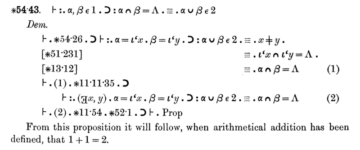

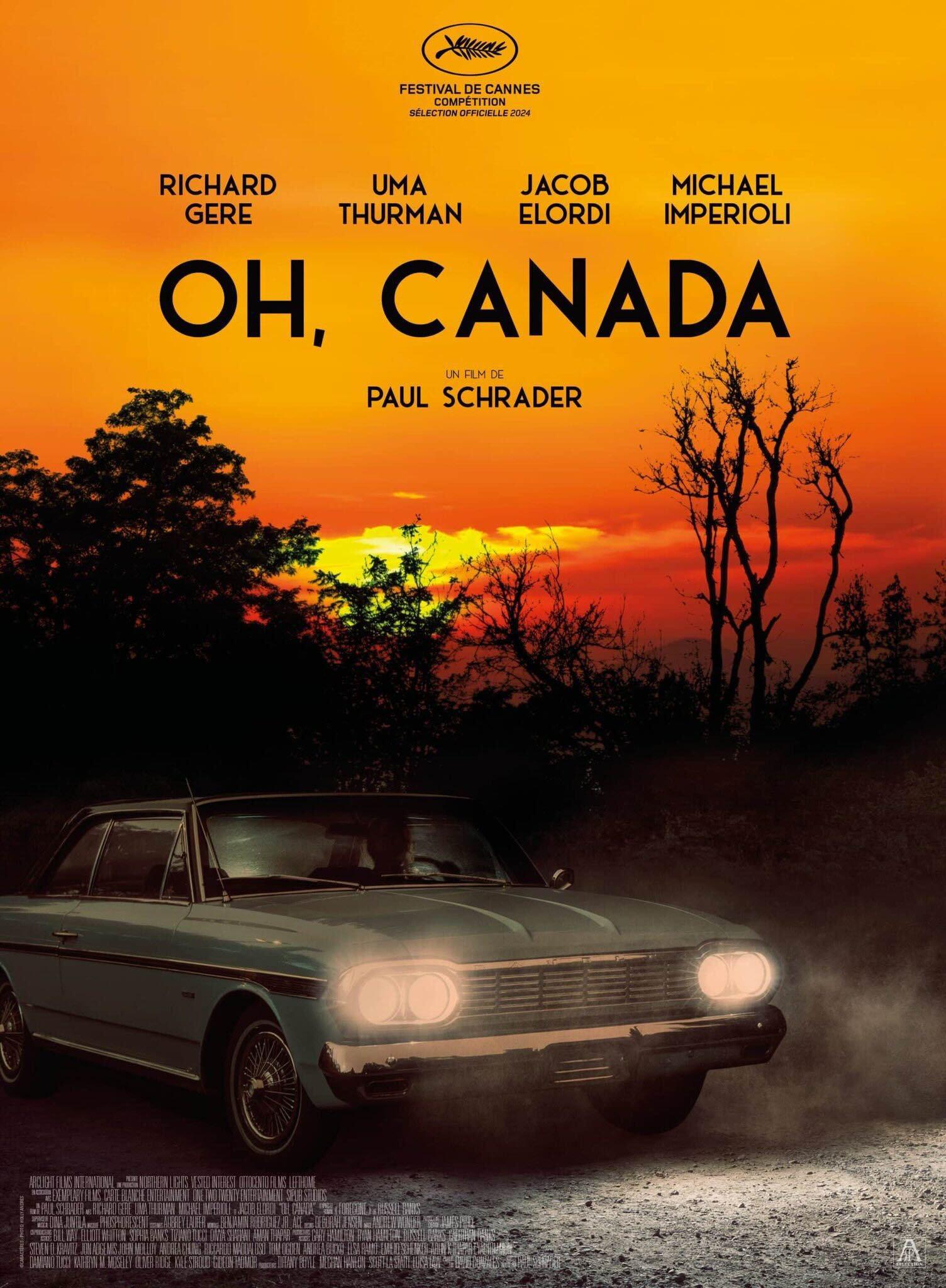 I was in Toronto the other day to see Paul Schrader’s newest film, Oh, Canada, which was screening at the Toronto International Film Festival (TIFF). This was my first time seeing a movie at a festival, and the experience was quite different from seeing a movie at a cinema: we had to line up in advance, the location was not a cinema but a theatre (in this case, the Princess of Wales Theater, a beautiful venue with orchestra seating, a balcony, and plush red carpeting), and there was a buzz in the air, as everyone in attendance had made a special effort to see a movie they wouldn’t be able to see elsewhere. As I stood in line with the other ticket holders, I noticed that there was a clear difference between the type of person in my line, for those with advance tickets, and the rush line, for those without tickets and who would be allowed in only in the case of no shows: in my line, the attendees were older, often in couples, and had the air of Money and Culture about them; in the rush line, the hopeful attendees were younger, often male, and solitary. In other words, those in the rush line, the ones who couldn’t get their shit together to buy a ticket in time, could have been typical Schrader protagonists: a man in a room, trying, yet frequently failing, to live a meaningful life, to keep it together, to be the type of person who buys a ticket in advance, and invites his wife, too. Yet there I was, in the advance ticket line: a man, relatively young, and someone who spends a good deal of time by himself. I’d invited my partner of 10 years, but she didn’t come because she doesn’t like Paul Schrader films, and who can blame her? They’re not for everyone. Perhaps my presence in the advance ticket line, but my understanding of and identification with those in the other line, helps explain my deep attraction to Schrader’s films: I know his characters, and in the right circumstances, I could become one of his characters.
 In 1977, I was a student at the University of Pennsylvania, majoring in French Literature. I was 19 years old and pregnant with my first child. I would dress in a long shapeless plaid green and black dress, tie my hair with an off-white headscarf, and wear Dr. Scholl’s slide sandals trying very hard to blend in and look cool and hippyish, but that look wasn’t really working well for me. The scarf at times became a long neck shawl and the ‘cool and I don’t care’ 70’s look became more of a loose colorless dress on top of my plaid dress, giving me the appearance of a field-working peasant. My sandals added absolutely nothing, except making me trip on the sidewalks.
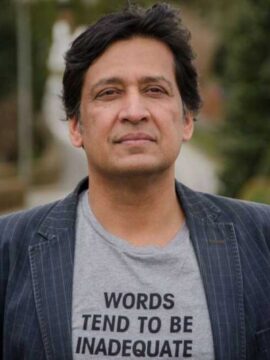 The writer Tabish Khair was born in 1966 and educated in Bihar before moving first to Delhi and then Denmark. He is the author of various acclaimed books, including novels
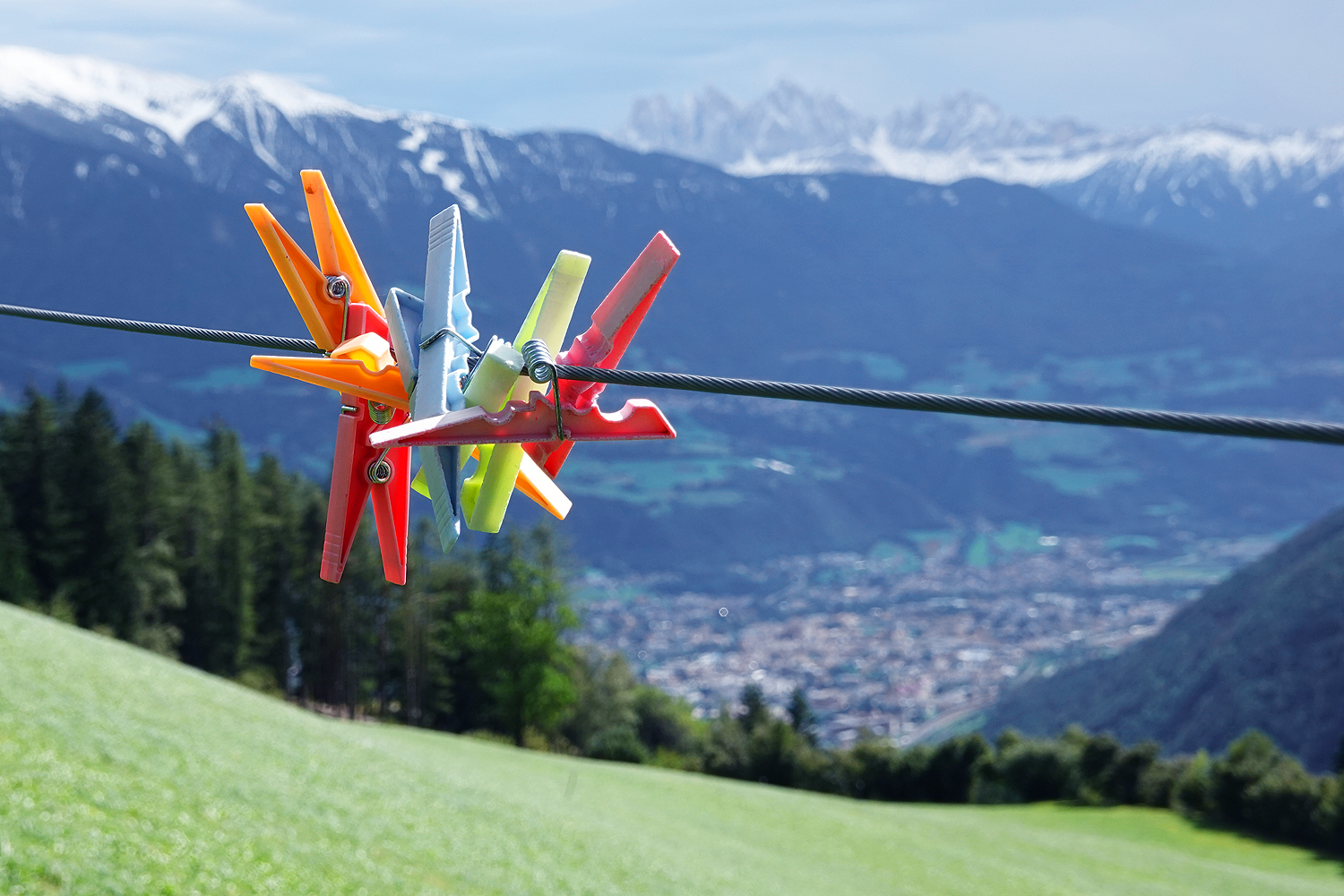
 Sughra Raza. Rain. Hund Riverbank, Pakistan, November 2023.
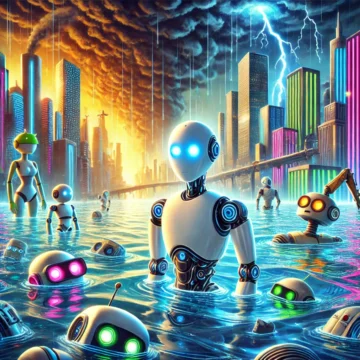 In the 21st century, only two risks matter – climate change and advanced AI. It is easy to lose sight of the bigger picture and get lost in the maelstrom of “news” hitting our screens. There is a plethora of low-level events constantly vying for our attention. As a risk consultant and
 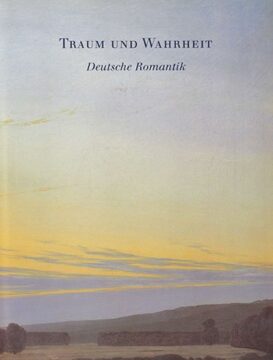 The first time I became aware of Friedrich, many years ago, I was in Zurich to meet an elderly Jungian psychoanalyst—my head stuffed with theoretical questions and eerie dreams with soundtracks by Scriabin. Walking down the Bahnhofstrasse, I passed a bookstore window displaying a stunning art book with the elegant title Traum und Wahrheit (Dream and Truth) and a simple subtitle: Deutsche Romantik. I didn’t yet speak German, but I knew enough to be interested. The book was too heavy for my luggage. I bought it anyway and had it shipped.
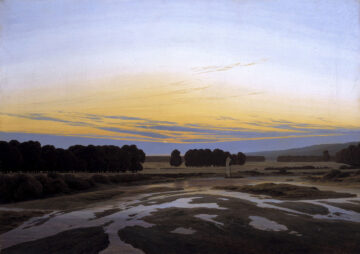 What lured my eye to the cover as I passed by was a partial view from one of my now favorite Friedrich paintings, Das Große Gehege (The Great Enclosure)—a cool marshy landscape evoking real ones I would later see from train windows. How could just a corner of a painting have such power? It was the light, the late afternoon saturation of yellow, the black shadowed trees, and the hint of evening gloom already visible as gray on the horizon even though the sky above was still blue. I was captivated.