by Tim Sommers
 By all accounts, Alexandre Lefebvre’s new book, Liberalism as a Way of Life, is odd. For one thing, as Stephen Holmes points out, Lefebvre oscillates between saying that liberalism is so pervasive and all-encompassing that “Love it or hate it, we all swim…in liberal waters” – and emphasizing the need to evangelize and perform spiritual exercises to grasp the real meaning of deep liberalism. But as Holmes memorably puts it, “Fish do not aspire to wetness.”
Here’s another bit of oddness. Lefebvre calls a spin-off article advertising the book “Rawls the Redeemer.” This is a bit like calling the Pope a secularist.
The thrust of Lefebvre’s argument seems to be this:
“Liberals too quickly adopt [a] narrow institutionalist definition [of liberalism] and assume that liberalism is an exclusively legal and political doctrine. Liberals, in other words, fail to recognize not just what liberalism has become today (a worldview and comprehensive value system) but who they are as well: living and breathing incarnations of it.”
This is not a book review, but to the extent that this adequately captures Lefebvre’s project, I am going to explain what I think is wrong with it and what the limit is on liberalism as a way of life. Let me start with what Lefebvre would no doubt describe as a narrow institutionalist definition of liberalism.
Liberalism is the view that the first principle of justice is that everyone is entitled to certain basic rights, liberties, and freedoms – such as freedom of religion, of conscience, of speech, assembly, the rule of law, and the right to participate as an equal in political and social life. People are not entitled to quantitatively “the most liberty possible” – or even “the most liberty compatible with like liberty for others.” It’s not clear what that could even mean. How do you quantify, or weigh, the freedom to swing your arms against the freedom to publish attacks on the government or the freedom to hang out with whoever you want? What people are entitled to as a matter of justice is a set of liberties adequate to allow them to develop, revise, and pursue their own understanding of the good life, the good, and justice. Roughly, liberalism is about, as Mill put it, everyone having liberties adequate to ensure their own right to pursue their own good in their own way.
Here’s a tempting, but mistaken way to justify liberal basic liberties. Call it the autonomy argument. The liberal liberties are the liberties required for people to be free and autonomous. We prioritize them because we prioritize freedom and autonomy. They reflect our political judgment that autonomy is the most important political value.
This won’t do, of course, since there is no general agreement that autonomy or freedom is the highest good. Read more »
 Enjambment is often an invitation to surprise. The line following a deftly deployed line break can serve as an answer to a question; it can, when done well, have an oracular quality, the feeling of a koan. Take for example Cameron Barnett’s powerful poem “Emmett Till Haunts the Library in Money, MS” published in his 2017 collection The Drowning Boy’s Guide to Water. Written in the voice of Till, the fourteen-year-old Black child from Chicago lynched in Mississippi in 1955 whose murder drew attention to anti-Black violence in the United States, Barnett’s poem uses line breaks as a means to defer meaning between stanzas, and thus to generate a heightened sense of awareness. Taking as its conceit the otherworldly haunting of the Money, Mississippi library, a liminal, bardo-like space where Till’s consciousness is able to narrate even after death, the narrator’s individual thoughts are often divided across stanzas, a line break functioning as a type of psychic pause before the thought is completed. For example, in the final line of the first stanza in a three-stanza poem, Barnett writes “Mamie always preached,” completing that thought at the first line of the second stanza with “good posture, so I sit straight at least.”
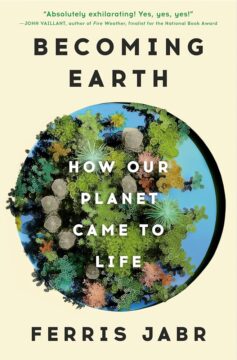 Books on nature abound. More recently, physicist Helen Czerski’s deep knowledge of the seas functioning as an ‘ocean engine’ in Blue Machine: How the Ocean Shapes the World, elevates our understanding of the ocean and provides us with a new appreciation of its integral role in the Earth’s ecosystem. Volcanologist Tamsin Mather ‘s Adventures in Volcanoland: What Volcanoes Tell Us About the World and Ourselves is also another beguiling journey into the awesome history of the ‘geological mammoths’ that are volcanoes and their dynamics, that have changed the surface of the Earth and impacted on its environment.
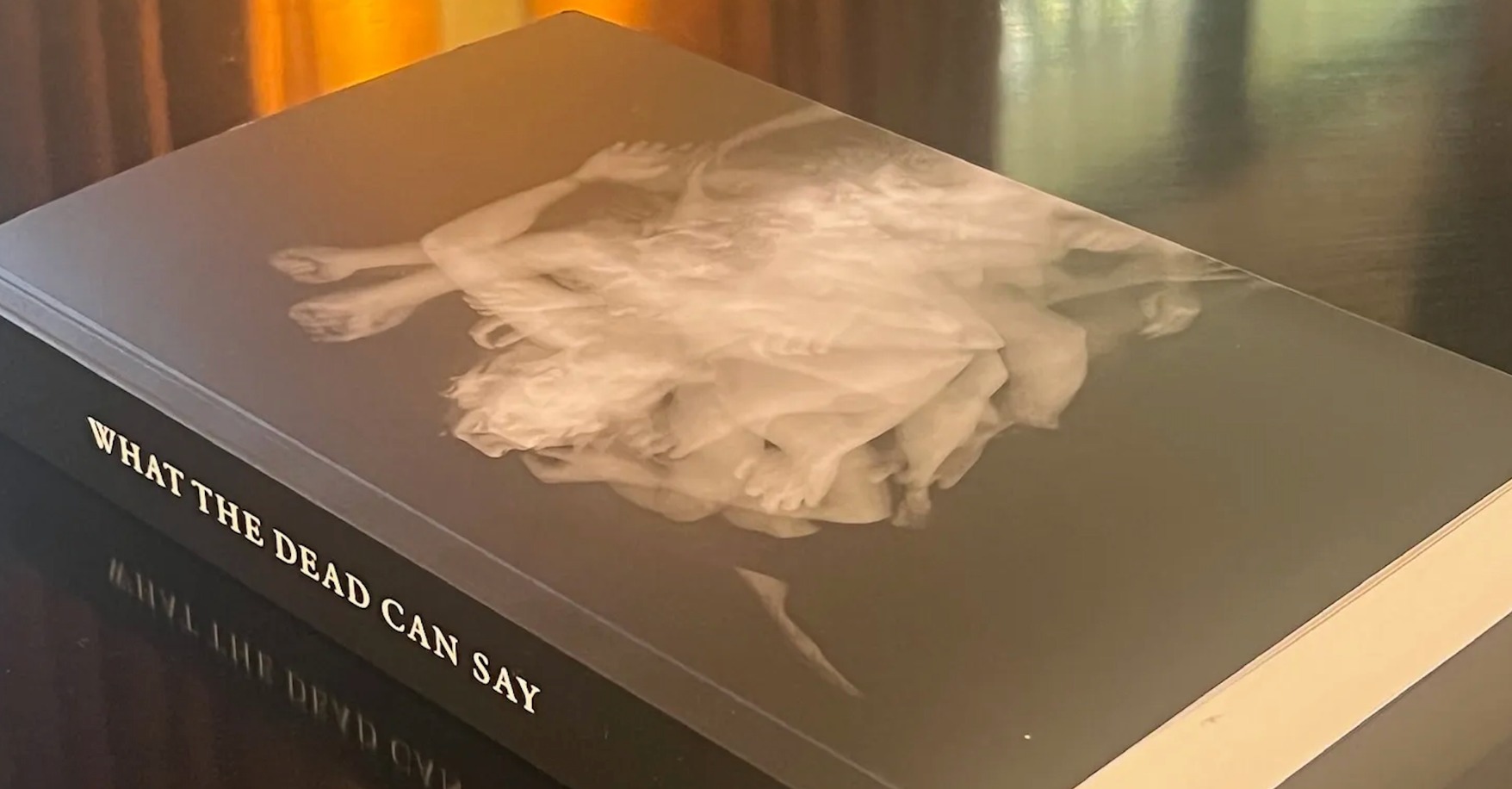 Michele Morano: Philip Graham has long been one of my favorite writers to read and to teach because of his insights, humor, and ability to challenge what we think we see. A versatile author of fiction and nonfiction— whose work has appeared in The New Yorker, Paris Review, Washington Post Magazine, McSweeney’s and elsewhere—Graham chooses subjects that explore the rippling surfaces and deep currents of domesticity at home and abroad. Each of his books illustrates Graham’s powers of perception, interpretation, and experimentation, along with his irrepressible interest in people, the more varied and unlike himself, the better. And each has contributed to the perspective of his latest project.


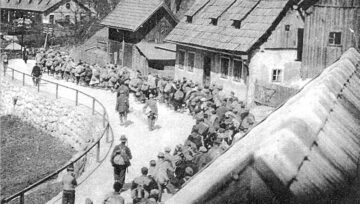



 It’s raining in Russia. Thunderheads boil up in the afternoon heat over there, behind the limestone block fortress on the other side of the river. Which is not a wide river. You can shout across it.
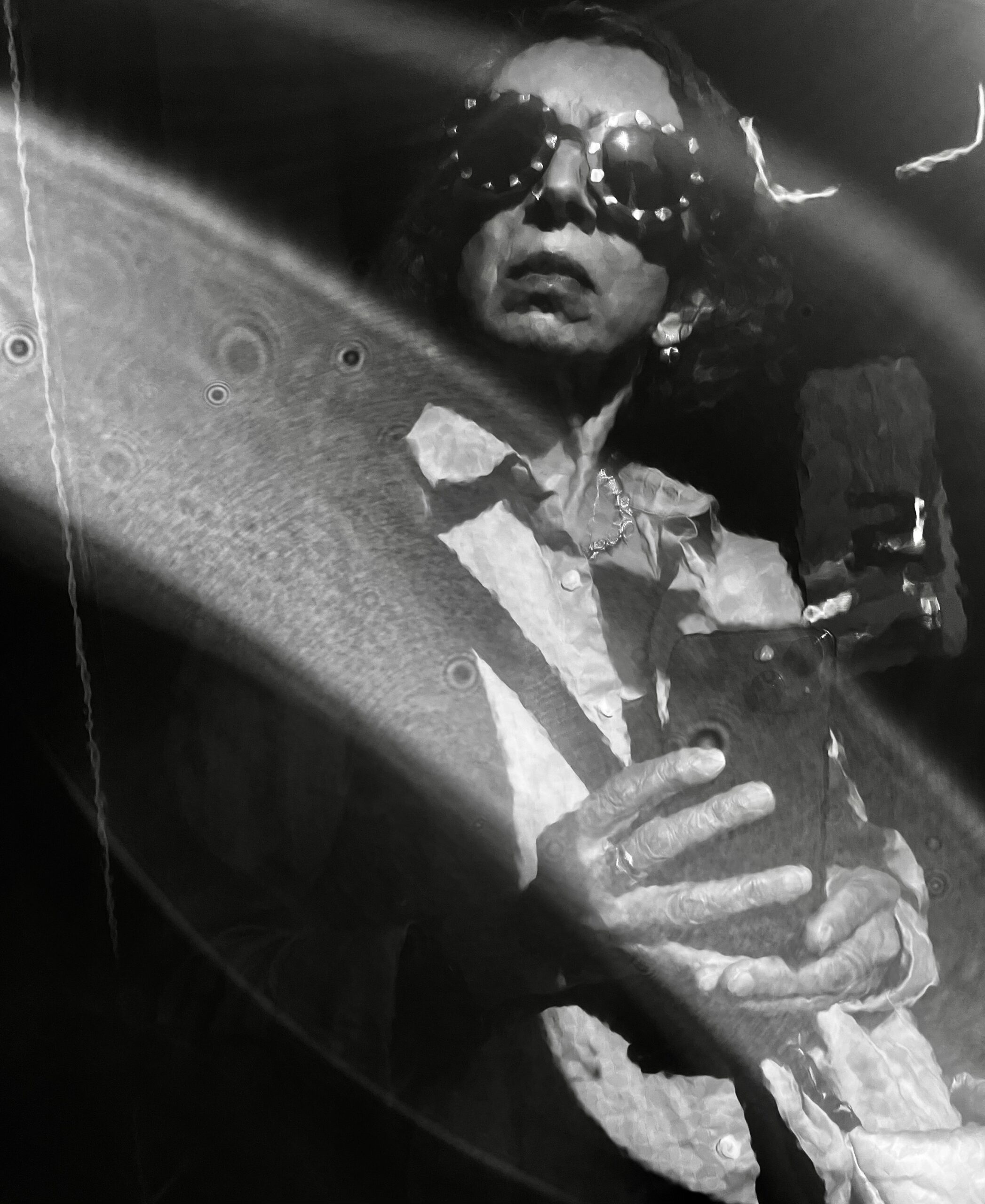 Sughra Raza. On the Train to Franzensfeste. September, 2024.
 Even if you are sympathetic to Marx — even if, at any rate, you see him not as an ogre but as an original thinker worth taking seriously — you might be forgiven for feeling that the sign at the East entrance to Highgate Cemetery reflects an excessively narrow view of the political options facing us.