by Sean Murphy
 i.
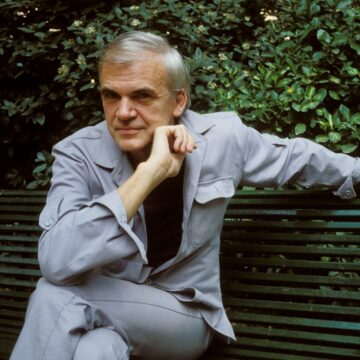
i.Does it tell us much—about the times we live in, about ourselves—that the occasion of Milan Kundera’s passing, at age 94 three years ago this summer, was not met with an outpouring of approbation and appreciation?
If nothing else, it was a reminder of the fickle nature of fashion, trends, and time. It would have seemed a certainty, a decade or two ago, that Kundera’s legacy would accrue advocates and converts, and his readership an evergreen proposition. Of course, history has consistently proven that popular and/or critically lauded writers are anything but guaranteed immortality.
As an acolyte whose flame of both love and envy has never dimmed, I can attest that engaging with his work remains…complicated.
Kundera almost killed me, still in my creative cradle, a writer needing nourishment.
He arrived in my life too early. As a reader, it wasn’t soon enough, as what relatively inexperienced but enthusiastic amateur—fresh from the front lines of grad school and adjusting to a world without texts to deconstruct—won’t benefit from that kind of sophisticated guidance, at any age? Still, as an aspiring writer, Kundera’s work had the odd effect of inspiring me, only too much. One encounters accumulated wisdom of this caliber and feels desperate, like a creature trudging through the heat in search of an oasis. Finally, happening across a patch of water, one laps up every drop, half insane with relief and oblivious to the crocodiles lurking hungrily in the shallows.
Reading Kundera at any age, particularly as an aspiring writer with a future filed under “TBD,” you don’t just want to write like him, you want to be him. On some level you understand: in order to write like that you have to have lived like that. Eventually—and the sooner the better—you recognize it’s an impossibility and, choices narrowed to one, you lick your wounds and get on with the unbearable lightness of being yourself.