by Bill Murray
At the end of the road, Kirkenes punches above its weight
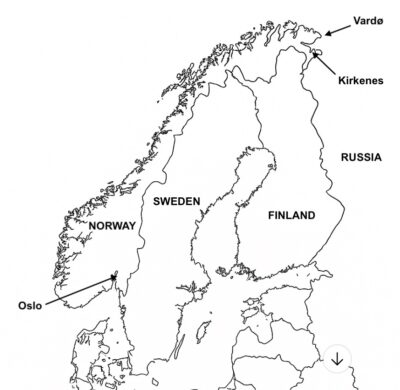 It’s different in the Arctic. Norwegians who live here make their lives amid long cold winters, seasons of all daylight and then all-day darkness, and with a neighbor to the east now an implacable foe.
Finnmark, Norway’s northernmost county, is bigger than Denmark or Estonia, but with a population roughly the size of a suburb in Oslo, the Norwegian capital.
For those of us who don’t live here, the first and biggest difference is that Finnmark is governed by extremes of light and dark. Just now, in the middle of August, the Arctic is leaping and bounding toward darkness. The days are still over eighteen hours long, but losing more than ten minutes of daylight every twenty-four hours.
Many people think near 24 hour summer sunlight must be unbearable; you’d never get any sleep. In fact, all that sun can be handy, not just for outdoor pursuits, but say you want to read a book at two in the morning. Besides, if you must sleep, there are things called blackout curtains.
Winter darkness is a different story. In Kirkenes, the border town and administrative center of 10,000-person Sør-Varanger municipality, when snowflakes have a mind to, you can imagine they come not in flakes but by the dollop. Storms off the Barents Sea can flatten trees and fling sea foam far inland. Winter air can be so crisp it bites.
Flying in, Finnmark presents as a brawny, manly landscape of gneiss and granite, some of which is nearly as old as the oldest continental crust on Earth, meaning something like three billion years. Read more »





 by David J. Lobina

 Hebrew or English?
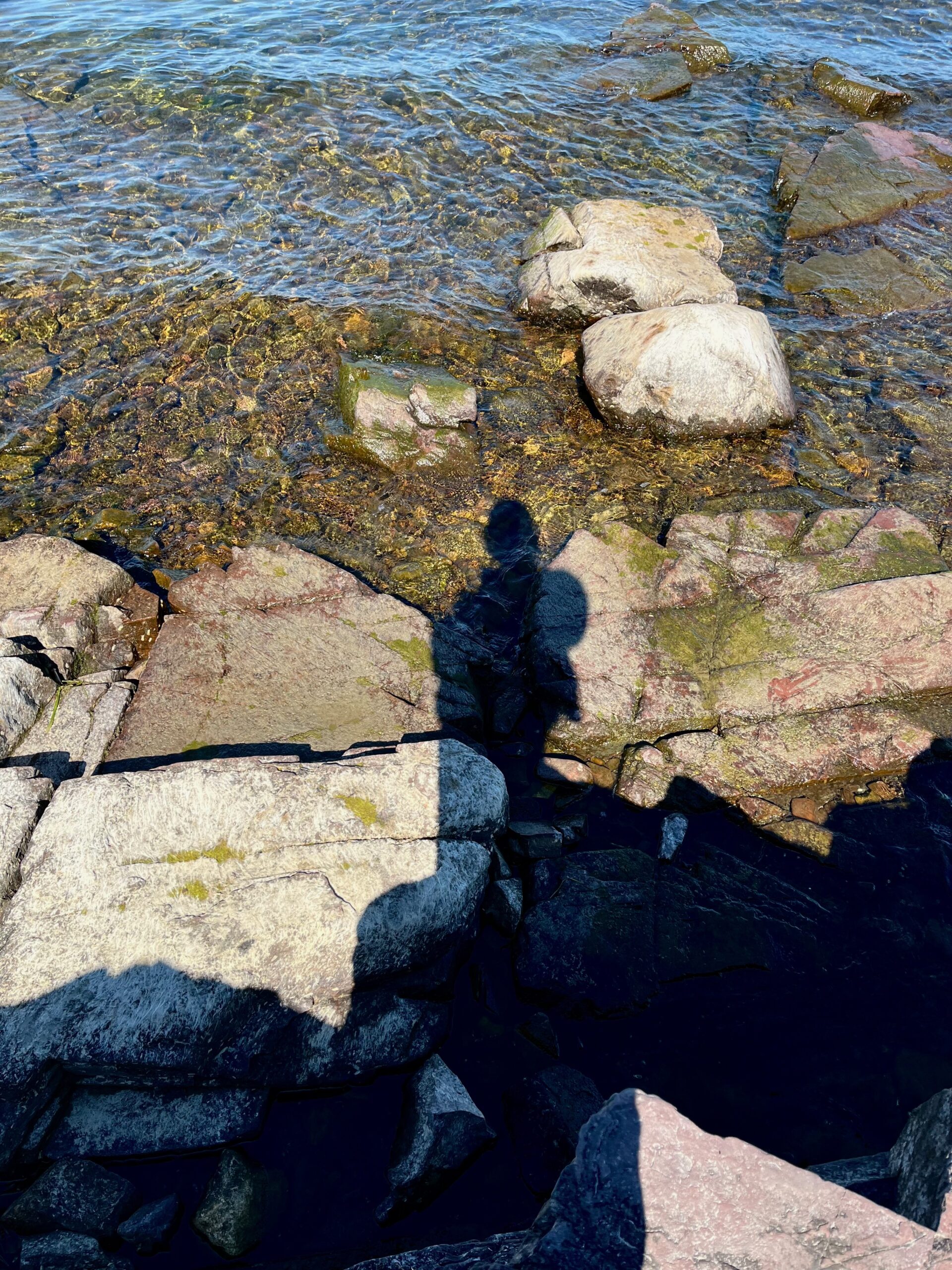 Sughra Raza. On The Rocks at Lake Champlain. August 22, 2025.
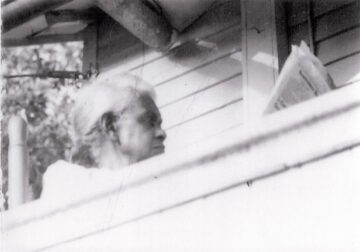 reat-grandmother Emmaline might have loved it too. Born enslaved, she started anew after the Civil War, in what had become West Virginia. There she had a daughter she named Belle. As the family story has it, Emmaline had a hope: Belle would learn to read. Belle would have access to ways of understanding that Emmaline herself had been denied. We have just one photograph of Belle, taken many years later. Here it is. She is reading.