by Ed Simon

Behind the neo-classical façade of the Tate Gallery in Milbank, all grey stone and Corinthian columned, its pediment topped with a grandiose visage of Britannia with her trident and Grecian martial helmet, there is a near-revolutionary work of art first displayed to great controversy in 2001. Winner of that year’s Turner Prize, English conceptual artist Martin Creed’s much-hated Work No. 227: The lights going on and off was the millennial culmination of a certain ironic ‘90s Cool Britannia aesthetic, the resultant natural progression of Oasis, Blur, Britpop, Blair and Damien Hirst’s diamond-crusted skull and shark in formaldehyde. Work No. 227: The lights going on and off consists entirely of an empty white-walled gallery in which the lights flicker off and on for five seconds apiece. In the indomitable art-speak of gallery guides, exhibiting the great rhetoric of rationalization, curator Helen Delany argues on the Tate’s website that Creed’s work “confounds the viewer’s normal expectations,” that the piece “plays with the viewer’s sense of space and time and in so doing he implicated and empowers the viewer, forcing an awareness of, and interaction with, the physical actuality of the space.” In a 2001 Telegraph article auspiciously noting the £20,000 monetary sum that Creed received as part of the Turner prize, Nigel Reynolds soberly reports that the announcement was “met with a mixture of incredulity, attempts at philosophizing and plain outrage.” Jonathan Jones, in a Guardian piece written upon the Tate’s purchasing of Work No. 227: The Lights going on and off (rumored to have sold for £110,000) explains with an admirably honest ambivalence that “One moment I am entranced by a simple, eloquent Creed gesture, the next I am wondering if this is not all a bit… pretentious?” To Jones’ grappling I can add my own critique of Creed, my feeling that the problem with Work No. 227: The lights going on and off is that it’s simply not pretentious enough. Read more »
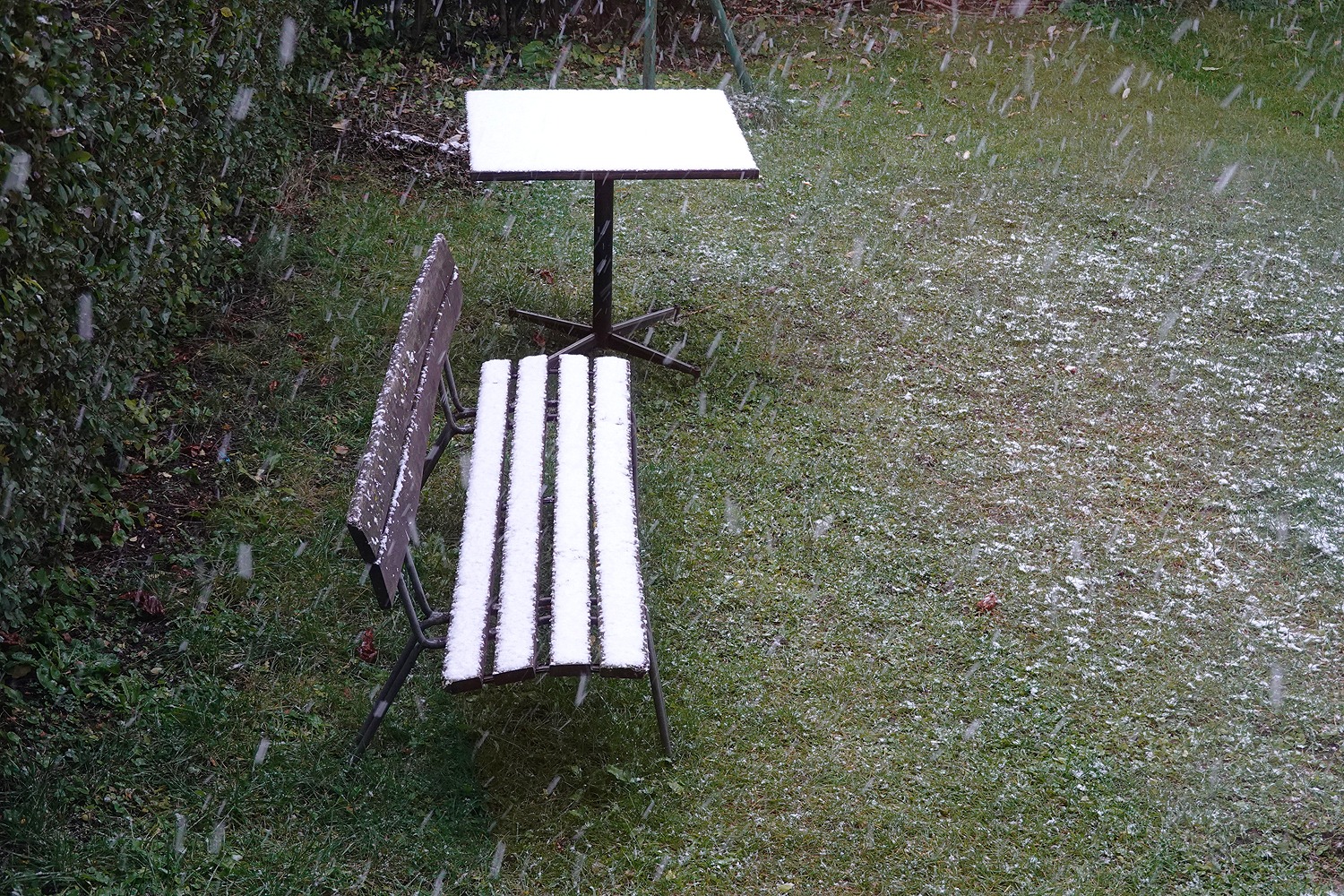
 unenlightened temperature scales) is a kind of touchstone temperature for Canadians – a midsummer sort of heat, usually restricted to July and August, permissible in June and September, but out of its proper place elsewhere. (Its mirror image, -30 degrees (-22 degrees F) is likewise to be restricted to the depths of January and February – though increasingly infrequent even there.) These 30 degree days at the beginning of October had intruded on a moment when every instinct was attuning itself to the coming rituals of autumn, and it thus accorded jarringly, like the rhythm section had suddenly lost its way in the middle of the song.


 In earlier essays, I argued that beauty can orient our desires and help us thrive in an age of algorithmic manipulation (
 The full title of Charles Dickens’ 1843 classic is “A Christmas Carol in Prose: Being a Ghost Story for Christmas.” Inspired by a report on child labor, Dickens originally intended to write a pamphlet titled “An Appeal to the People of England on behalf of the Poor Man’s Child.” But this project took a life of its own and mutated into the classic story about Ebenezer Scrooge that virtually all of us think we know. It’s an exaggeration to say that Dickens invented Christmas, but no exaggeration to say that Dickens’ story has become in our culture an inseparable fixture of that holiday.