
by Mike Bendzela

In a kindergarten classroom in the mid-1960s, a kid named Mikey steered clear of the boys stacking large toy blocks on top of one another and knocking them down again–so obnoxious—and instead went and sat at the table of girls making beads out of salt dough and stringing them together on a thread. These girls were not averse to tasting the salt dough and smacking their lips in disgust. The teacher had wisely settled on salt dough because she knew it wouldn’t poison the students should they eat it. At least the girls were smart and funny and didn’t continually knock each other to the floor.
Mikey preferred these sober, artsy activities–making necklaces of salt dough beads, pressing hand prints into soft clay disks, tracing the profiles of silhouetted heads projected via lamp light onto sheets of construction paper–over the rough-and-tumble of block stacking, fat-ball tossing, and floor hockey, because–well, he just did. Thus developed the central themes of his boyhood–hates sports; likes art and language; hangs out with the girls.
Throughout grade school, gym class gave him a terrible knot in his stomach and he longed to be elsewhere, a disposition cemented into place by an incident during a game of “battle ball,” in which boys stood at opposite walls and hurled large pneumatic balls at each other for God knows what reason, and a ball smacked him square in the face and knocked his glasses off his head.
The glasses allowed him to read the teacher’s flowing, cursive handwriting on the chalkboard, reading which he was good at, and he forever yearned to be allowed to pick up a long piece of chalk and tap-scratch letters onto the board himself. This desire was at long last granted, and soon he was permitted whole boxes of colored chalks to use, and the teacher allowed him and some girl friends to cover the entire chalkboard with decorative chalk drawings. Read more »

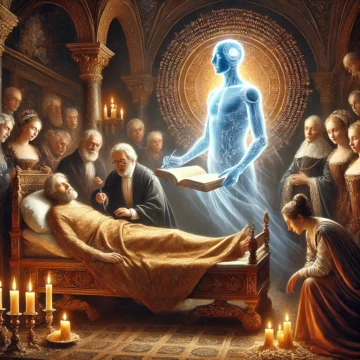 Everyone grieves in their own way. For me, it meant sifting through the tangible remnants of my father’s life—everything he had written or signed. I endeavored to collect every fragment of his writing, no matter profound or mundane – be it verses from the Quran or a simple grocery list. I wanted each text to be a reminder that I could revisit in future. Among this cache was the last document he ever signed: a do-not-resuscitate directive. I have often wondered how his wishes might have evolved over the course of his life—especially when he had a heart attack when I was only six years old. Had the decision rested upon us, his children, what path would we have chosen? I do not have definitive answers, but pondering on this dilemma has given me questions that I now have to revisit years later in the form of improving ethical decision making at the end-of-life scenarios. To illustrate, consider Alice, a fifty-year-old woman who had an accident and is incapacitated. The physicians need to decide whether to resuscitate her or not. Ideally there is an



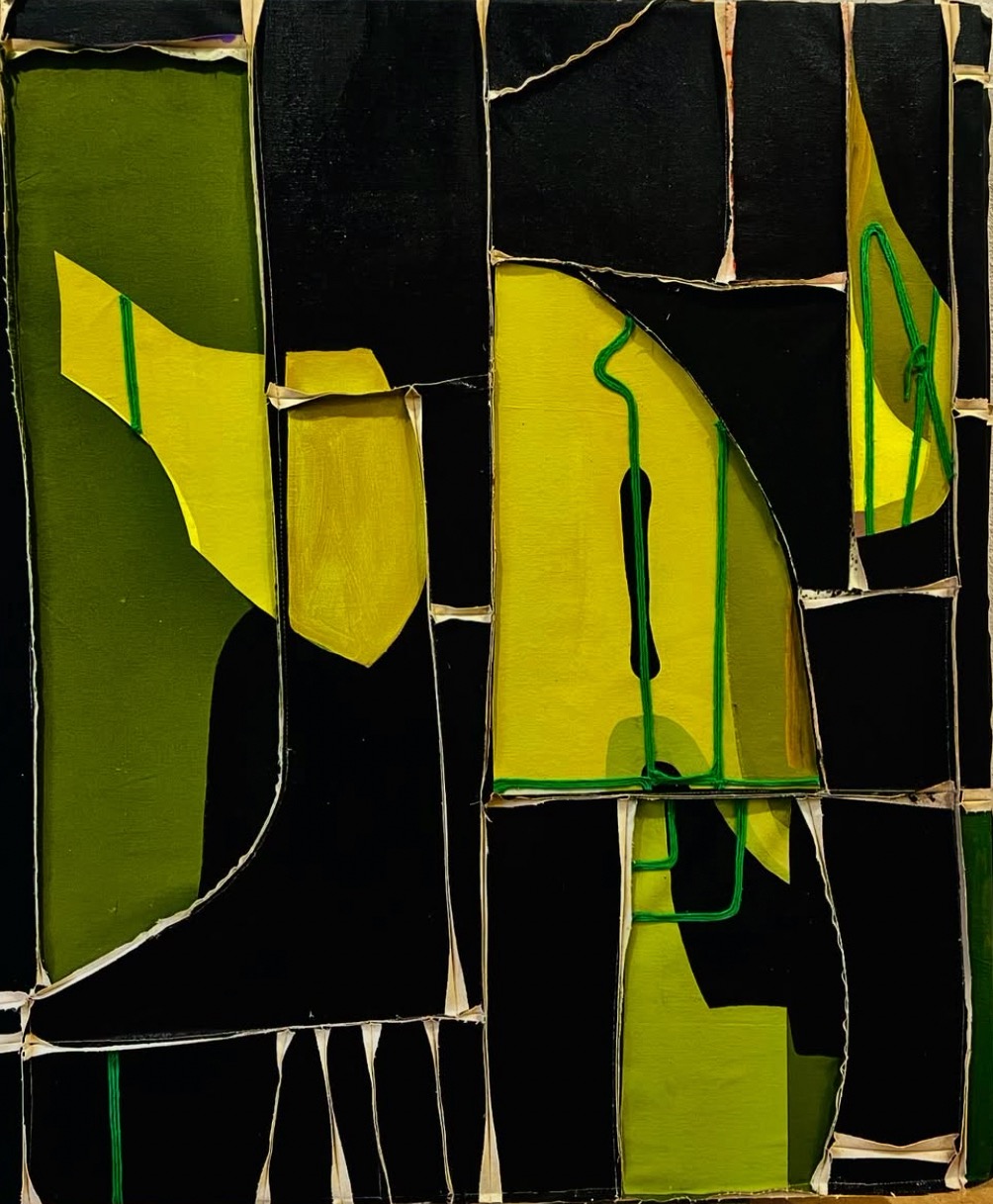 Monica Rezman. After Dark. 2023. (“this is what it’s like to live in the tropics”)

 Close-Up, a 1990 Iranian film directed by Abbas Kiarostami, is one of the rare films where the viewing experience is enhanced by knowing certain details beforehand.


