by Charlie Huenemann
“Many shall run to and fro, and knowledge shall be increased” – Daniel 12:4
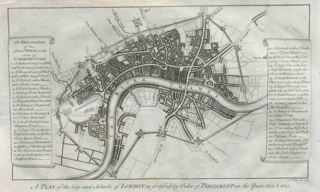
London was an exciting place to be in 1641. The political uncertainty was both thrilling and terrifying: many Puritans, convinced that their suspected crypto-catholic king, Charles I, was in league with the Anti-Christ, were pushing back against his high-handed policies. Their frustration was to lead to civil war within a year. A small circle of London intellectuals, led by Samuel Hartlib, seized the uncertainty of the time to push for what they hoped would be a middle way: a tolerant and enlightened Protestantism that could serve as a foundation for a pan-European utopia.
Hartlib had come to London in 1628 as a refugee from war-torn Poland. He was inspired by Francis Bacon’s vision of an enlightened society built around the pursuit of knowledge, and he saw that such a society could emerge only if education was completely reformed. He maintained an extensive correspondence with savants across Europe, introducing intellectuals with one another and promoting new works of scholarship. He eventually fell into company with John Williams, bishop of Lincoln, who shared his ideals and moreover had access to both money and Parliament. They hatched a plan.
The plan was to invite to London two intellectuals Hartlib knew from his days in Poland: John Dury and John Amos Comenius. Both men shared Hartlib’s zeal for reforming education and for uniting Protestants into common cause against the Catholics. With their energizing presence in London, it was thought that a new vision forward would spread throughout the land, and Parliament would seize upon a model that was more Calvinist than the king would like but less severe than the Puritanism of the would-be rebels: a just compromise.
There was more at stake than mere political stability. Many in Hartlib’s circle believed that the thousand-year rule of the Roman Anti-Christ (aka the Pope) was finally coming to an end, and the new thousand-year rule of Christ was coming into being. Unlike his dour counterparts, Hartlib believed that God rewarded human efforts to come to know the world through natural philosophy, and that piety and natural curiosity could go hand in hand.