by David J. Lobina
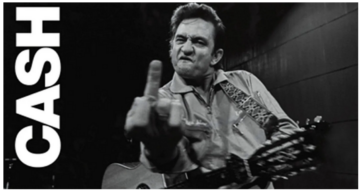
Like almost everyone I know, I enjoy listening to music and going to live concerts. What’s more, once upon a time I used to place much importance on someone’s ability to perform at a concert. This was especially the case because I was listening to a lot of rap music in the mid-to-late 1990s and within that world anything that was live was deemed to trump anything that was recorded. Rap was all about free-styling in situ and trying things out in the big outdoors in order to get your props, as they say; it was clearly not about trying things out again and again in a studio until it all clicked. As a matter of fact, some famous rappers did not sound like in their recordings at live gigs, and that counted against them.[i] Performance on a stage was all that mattered; the rest was manipulative and hardly genuine.
But no more: I now think that live music is awkward to witness and recordings give a better idea of one’s true potential as an artist – a better account of one as an artist, that is.
There’s an interesting contrast to be had here between attending live music and attending live sports (recall the lonely footballer!). When you are watching a live sporting event, especially a professional sporting event, you want to see what players are capable of under pressure and against one another in that very moment.[ii] There is something rather engaging in witnessing pros performing at their very best and in competition, with something at stake, an aspect that is lacking in sporting exhibitions and the well-rehearsed bouts of professional wrestling, the latter all theatre with its mock combat, and both just uninteresting.[iii]
So-called rap battles can be competitive too, though most free-style raps are not really created ex tempore – some are performed for the first time in a battle, sometimes with a specific rival as target in mind – and thus the importance of the live element is somewhat reduced here.[iv] The live component is perhaps more important in other musical styles; jazz, we are often told (here and here, for instance), is not about perfection but improvisation, and this is all the more dramatic if it happens in front of an audience – it seems that jazz is all about being oneself during the creation of music, whatever comes out (naturally enough, the result is usually only of interest when it involves talented and experienced musicians).
I grant all that, but this is not what I have in mind when I say that attending live music is awkward. Read more »

 I take a long time read things. Especially books, which often have far too many pages. I recently finished an anthology of works by Soren Kierkegaard which I had been picking away at for the last two or three years. That’s not so long by my standards. But it had been sitting on various bookshelves of mine since the early 2000s, being purchased for an undergrad Existentialism class, and now I feel the deep relief of finally doing my assigned homework, twenty-odd years late. I think my comprehension of Kierkegaard’s work is better for having waited so long, as I doubt the subtler points of his thought would have had penetrated my younger brain. My older brain is softer, and less hurried.

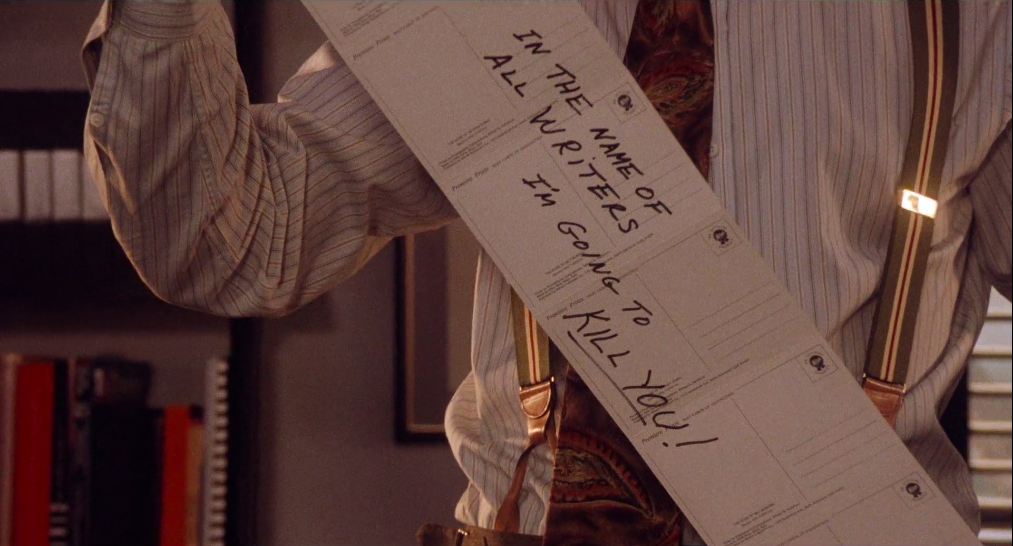 The writer is the enemy in Robert Altman’s 1992 film, The Player. The person movie studios can’t do without, because they need scripts to make movies, but whom they also can’t stand, because writers are insufferable and insist upon unreasonable things, like being paid for their work and not having their stories changed beyond recognition. Griffin Mill, a movie executive played by Tim Robbins, is known as “the writer’s executive,” but a new executive, named Larry Levy and played by Peter Gallagher, threatens to usurp Mill partly by suggesting that writers are unnecessary. In a meeting introducing Levy to the studio’s team, he explains his idea:




 Sughra Raza. After The Rain. April, 2025.
 Morality, according to this view, is more like taste, and in matters of taste I don’t expect others to be like me. This is of course incoherent since the very imperative to be non-judgmental is itself a moral demand, which must claim some level of objectivity since it is a rule that others are expected to follow. Judging others, according to non-judgmentalism, is something we ought not to do. It is presented as an objective moral rule.