by Samia Altaf

“Let’s go look at the flowers outside,” I say, as I sense Dad sinking into the recesses of his fading memory. I wheel him out. Look at the petunias. What a riot—purple, pink, white, that ordinary pedestrian flower in such abundant glory. I hold a bunch to his nose and he takes a deep breath. “Wow,” he says, and opens his eyes. The misty and faraway look hits me hard. It is like looking inside a bombed-out building that has few windows left intact and very little light. But he tries, never having been one to give up; he blinks shortsightedly at the greenery, the flowers, and the blue sky, and shakes his head at the wonder of it all—and of him being there in the middle of it. He struggles to say something but gives up halfway—words too have faded. “Wow,” he says again.
Dad has steadily and imperceptibly lost all memory to Alzheimer’s. Memories of his children, friends, family, his wife now gone. Only shards of crystallized knowledge—encoded so deeply—remain beyond the cognitive deterioration, He recognizes the simple beauty of flowers, they are still real. We look at the yellow rose bush, the petunias and the marigolds, this lovely spring evening. His face lights up. “Wow,” he says, over and over. And then: “I have these in my house” and “when will I go there?” He asks, a complete sentence, and looks anxiously at me, his brow scrunched with a look fit to break your heart. That he remembers—his house and the feeling of wanting to go there. One he had to leave when he and mom got to be too sick to live on their own. Do memories plague his ears, like flies?
“Do memories plague their ears like flies?
They shake their heads. Dusk brims the shadows.
Summer by summer all stole away,
The starting gates, the crowds and cries.”
(Philip Larkin)
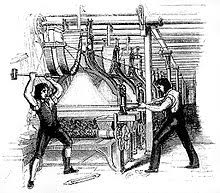 “Luddite” is a word that is thrown around a lot these days. It signifies someone who is opposed to technological progress, or who is at least not climbing on board the technological bandwagon. 21st century luddites tend to eschew social media, prefer presentations without PowerPoint, still write cheques, and may even, in extreme cases, get by without a cell phone. When used in the first person, “luddite” is often a badge of honour. “I’m a bit of a luddite,” usually means “I see through and am unimpressed by the false promise of constant technological novelty.” Used in the third person, though, it typically suggests criticism. “So-and-so’s a bit of a luddite,” is likely to imply that So-and-so finds the latest technology confusing and has failed to keep up with it, probably due to intellectual limitations.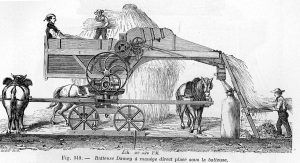

 The traffic had been slow all day but by four pm, it was reduced to a trickle. Those cars that passed him on the street did so in two and threes as if they were sticking together for safety like lumbering animals caught out in a storm. It was, in fact, a very harsh winter day. The afternoon temperatures dipped well below zero: one of the coldest days ever recorded in Chicago. The only sounds now were from an occasional plane passing overhead, and from distant cackling from those venturesome neighbors who had left snug homes to experience the cold. He could hear the sound of his feet crunching through the snow.
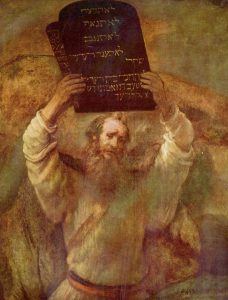 One of the biggest early 20th century philosophical challenges to the belief in God stemmed from the doctrine of verificationism.
 The wine world is an interesting amalgam of stability and variation. As
 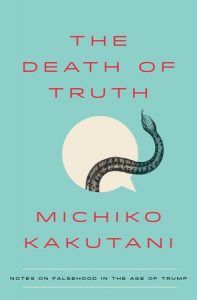 A contemporary truism, ironically enough, is that we now live in a “post-truth” era, as attested by a number of recent books with
 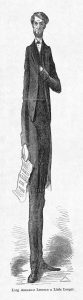 In October of 1859, Abraham Lincoln received an invitation to come to New York to deliver a lecture at the Abolitionist minster Henry Ward Beecher’s Plymouth Congregational Church in Brooklyn.
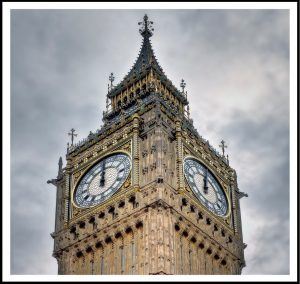 47-year old Teburoro Tito stood at the head of his delegation on an island way out in the Pacific Ocean. At the stroke of midnight on January 1


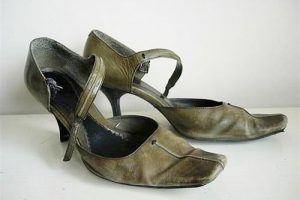 Okay. I’m done. I’m through. I’m hanging up my ruby red slippers, my fuck-me shoes. I’m not going down that yellow brick road no more, no more. I’m giving up internet dating. I may have run a successful antique business in Portobello Road for many years which kept my three children in fish fingers, the three little children I was left with in the middle of Somerset – where I kept chickens, made bread and grew my own veg – when I was 31 and they were all under 6. I may have dragged myself off as a mature student up to the University of East Anglia, after I’d moved us like Ms Whittington to London, to do an MA in Creative Writing with the crème de la crème, whilst juggling child care as the other students hung out talking postmodernism in the bar. I may have written for Time Out, The Independent and The New Statesman as an art critic, published three collections of poetry, one of short stories and three novels but none of this is as anything compared to my failure with internet dating.