
by Bill Murray
 Just about everyone who visits the famous South Luangwa wildlife park drives through Mfuwe, Zambia. A mere wide spot in the road, a trifle to tourists, Mfuwe holds a fearsome, searing memory. It will forever be known for the Man-Eater of Mfuwe, a lion that killed six people over two months in 1991.
There are more famous man-eating tigers than lions in the literature. Tigers and people live in closer proximity in India than lions and people in Africa. I’ve seen an estimate of as many as 10,000 people killed by tigers in India in the nineteenth century.
The Champawat Tigress, the most infamous Panthera tigris, was said to have killed 436 people before she was killed in Nepal, then part of British colonial India, in 1911. After a spree of terror, hunters having failed to kill her, the authorities ultimately called in the Nepalese army. In Kenya’s Tsavo Park two lions killed perhaps two dozen Indian railroad construction workers in 1898, halting the colonizing Brits’ project to connect the port of Mombasa with the interior of British East Africa.
But the Mfuwe man-eater was no colonial-era killer. Its attacks occurred less than thirty years ago, thoroughly terrorizing an overgrown village of scarcely a thousand a spare 60 miles west of the border with Malawi, oriented toward the Malawian capital, Lilongwe. Lusaka, the Zambian capital, is 300 miles away. Read more »

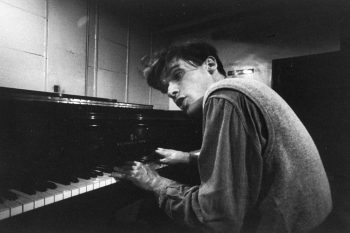
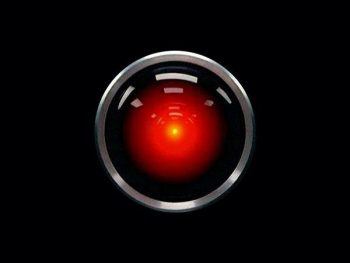 My seventy-something year old uncle, who still uses a flip phone, was talking to me a while ago about self-driving cars. He was adamant that he didn’t want to put his fate in the hands of a computer, he didn’t trust them. My question to him was “but you trust other people in cars?” Because self-driving cars don’t have to be 100% accurate, they just have to be better than people, and they already are. People get drunk, they get tired, they’re distracted, they’re looking down at their phones. Computers won’t do any of those things. And yet my uncle couldn’t be persuaded. He fundamentally doesn’t trust computers. And of course, he’s not alone. More and more of our lives have highly automated elements to them,
  The Anna Karenina Fix
 In the Third Essay of On the Genealogy of Morality, Nietzsche levels a powerful attack on the modern Platonistic conception of mind and nature, urging us to reject such “contradictory concepts” as “knowledge in itself,” or the idea of “an eye turned in no particular direction, in which the active and interpreting forces, through which alone seeing becomes seeing something, are supposed to be lacking.” More recently, Donald Davidson’s attack on the dualism of conceptual scheme and empirical content, and thus of belief and meaning, requires us to see inquiry into how things are as essentially interpretative.
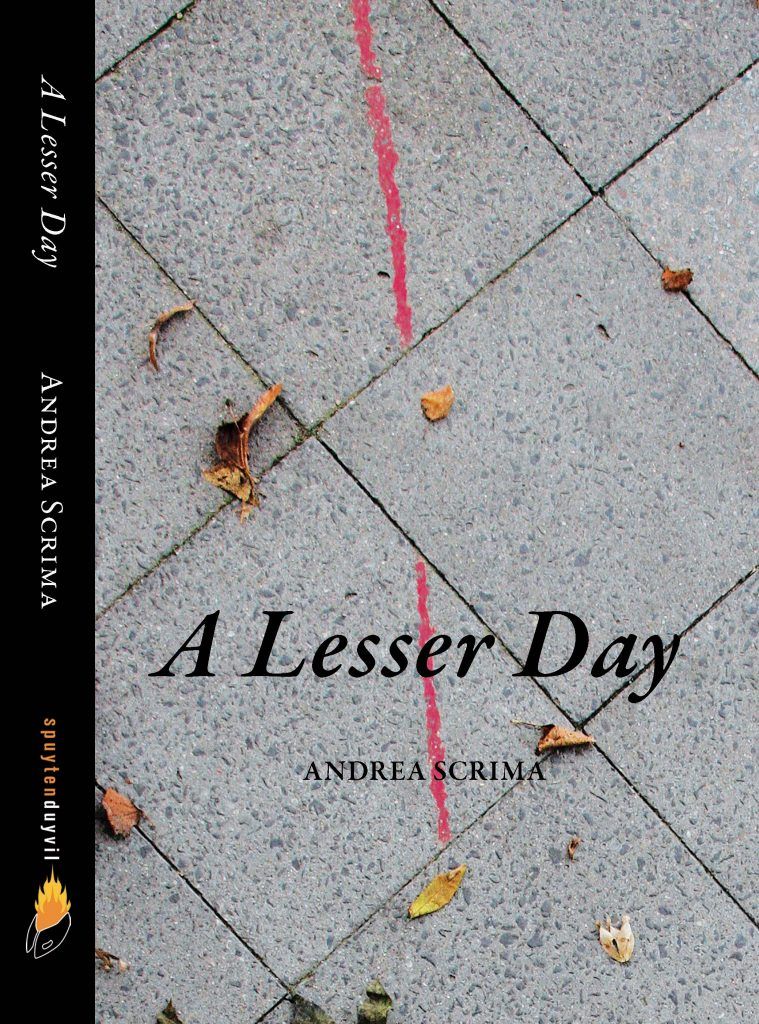 Andrea Scrima: As a visual artist, I worked in the area of text installation for many years, in other words, I filled entire rooms with lines of text that carried across walls and corners and wrapped around windows and doors. In the beginning, for the exhibitions Through the Bullethole (Bemis Center for Contemporary Arts, Omaha), I walk along a narrow path (American Academy in Rome) and it’s as though, you see, it’s as though I no longer knew… (Künstlerhaus Bethanien Berlin in cooperation with the Galerie Mittelstrasse, Potsdam), I painted the letters by hand, not in the form of handwriting, but in Times Italic. Over time, as the texts grew longer and the setup periods shorter, I began using adhesive letters, for instance at the Neuer Berliner Kunstverein, Kunsthaus Dresden, the museumsakademie berlin, and the Museum für Neue Kunst Freiburg. Many of the texts were site-specific, that is, written for existing spaces, and often in conjunction with objects or photographs. Sometimes it was important that a certain sentence end at a light switch on a wall, that the knob itself concluded the sentence, like a kind of period. I was interested in the architecture of a space and in choreographing the viewer’s movements within it: what happens when a wall of text is too long and the letters too pale to read the entire text block from the distance it would require to encompass it as a whole—what if the viewer had to stride up and down the wall? And if this back and forth, this pacing found its thematic equivalent in the text?
 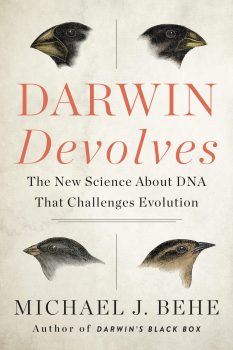 “[T]here is in fact nothing that can alleviate that fatal flaw in Darwinism” says Professor Behe,
  rapture, claiming that “Michael Behe’s Darwin Devolves Topples Foundational Claim of Evolutionary Theory” and that “Anyone interested in knowing the truth about the design/evolution debate will find Darwin Devolves a must read.”
 I wonder whether Behe’s most vociferous supporters actually understand his position. Unlike them, he

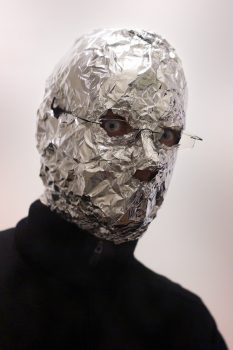 I was lugging several superheavy boxes of dishes up the concrete stairs from the sidewalk to the front door when a guy in a silver suit materialized in front of me. The first rule of moving is that when you pick something up, you don’t put it down until you have it where it goes. This is because picking it up and putting it down are half the battle. So, I tried to go around him.
 The Alps are much grander this morning. I like to think they tiptoed closer in the night, but it’s only an optical illusion created by a local high-pressure system called föhn, which magnifies them and everything else on the horizon. Sitting outside in the loggia, a spacious recessed balcony that resembles a box at the opera, I am audience to many forms of entertainment—weather theater, rainbow theater, sunrise theater, moonrise theater, but best of all, avian theater with its motley cast of bird species performing their life cycles like variations on a theme, in full view.