by Nickolas Calabrese
 When one makes an artwork, something flows from artist to audience. The thing flowing is actually several: concepts, ideas, aesthetic experiences, duration itself, beliefs, attitudes, and probably much more. Artworks work in a similar way to language, although it would be foolish to believe that artworks are language. Their similarities to language end at the transmission from one to another of the things flowing. That’s how language works as well. But for art, as with something like emotion, the flow is vague in how it is sent and received. It seems to me that the best linguistic analogy for what artworks do is located in assertion. Artworks assert a position. Of course it is entirely possible, and even the norm, that their version of assertion is cryptic to the point of being sometimes unintelligible. But assertions don’t need to be crystal clear. One can assert their dominance over another through a series of non-linguistic subtle bodily movements. Likewise, artworks can make assertions through their physical presence.
Formally, an artwork is perched somewhere, on the floor or the wall, installed somewhere in a public park, and so on. The physical position is exceptionally important to the artist. The way the artwork sits is, or should be, crucial to how the artist wants the piece to function. It has an attitude. If we are again to follow the metaphor using language, we could say that an artwork is a propositional attitude, such that it contains the beliefs or disbeliefs of the artist, the series of mental states that amount to this singular crystallization of an artist’s thought. That the work does this duty is critical, otherwise it says nothing and does nothing, and then, what’s the point of making anything at all? No, an artwork has a job to do in the world. Read more »
 Most people see understanding as a fundamental characteristic of intelligence. One of the main critiques directed at AI is that, well, computers may be able to “calculate” and “compute”, but they don’t really “understand”. What, then, is understanding? And is this critique of AI justified?
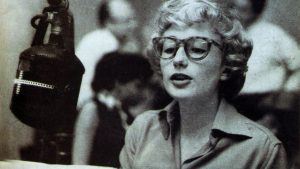 Blossom Dearie: incredibly, it was her legal name. The pianist and jazz singer was born Margrethe Blossom Dearie in 1924; all she had to do to get her stage name was to drop the Margrethe. The name perhaps overdetermines the voice. But you’ve got to hear the voice. Light and slim, with little to no vibrato, Dearie’s voice is ingenuous to such a degree that you begin to wonder whether it isn’t, in fact, the least ingenuous thing you have ever heard. It echoes with the four-square court—or was that the tomb? Imagine a sphinx posing her fatal riddle to Oedipus. Then ditch the immortal growl and try hearing, instead, a girl. That’s Dearie, singing her riddles of love and disaster. But unlike the sphinx, she wagers her own life, not other people’s. She knows the stakes, and still, that light, slim voice, with no vibrato, comes floating onto the air.
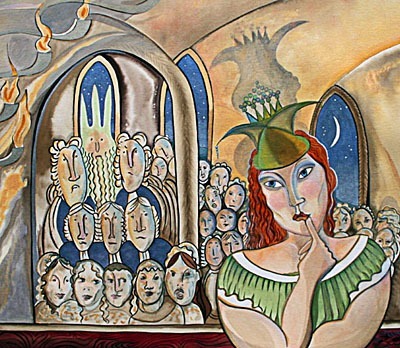

 I don’t know how much you know about Petrarch. My guess is that you know him as a poet, primarily for his sonnets. Maybe you associate him with early Italian humanism and its reinvigorated dedication to the wisdom of classical Antiquity. Or perhaps you think of him as someone who expressed transcendental truths about the soul and its searching and wandering nature.
 History has not always been fair to women: their contributions to history have been either marginalised or, not infrequently, unacknowledged. However, the three books, Nadine Akkerman’s (2018) Invisible Agents: Women and Espionage in Seventeenth Century Britain, Nan Sloane’s (2018) The Women in the Room: Labour’s Forgotten History, and Cathy Newman’s (2018) Bloody Brilliant Women, are examples of excellent research and scholarship that documents many women’s contributions to historical events.
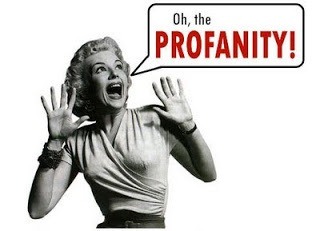 A friend asked me to write a column about Russian cursing a few months ago. I do try to be accommodating, so I looked at several sites to get a better handle on it. In case you were not familiar, cursing in Russian is rich, much more calorically dense than most of what we have in English, except in the rarest cases of accomplished cussers. The problem for me is the translation; it would be so much more gratifying for you to read and imagine the vile torrents of insults than to read a lumpen approximation in English. Therefore, I decided to open up this column to the more universal topic of cursing.

 Step-by-step, breath-by-breath, thought-by-thought, our feet carry us toward our future. (How Things Find Us, Kevin Dann)
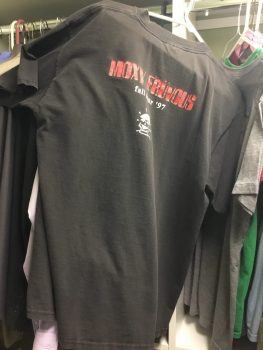 impermanence, I think anything I buy should last forever. (See this shirt?


 Like most people of a certain age, at any one time I have the unfortunate experience of knowing several people, some close, some not, who have cancer. It has become standard for the friend or spouse of the ill person to join one of the many message boards devoted to the subject and post updates to keep their friends and relatives informed. Others use Facebook to share information. Currently there are three people whose lives I follow, mostly from a distance, all with serious forms of cancer, one newly diagnosed but metastasized, two others who have been fighting for months and months.