by Muhammad Aurangzeb Ahmad
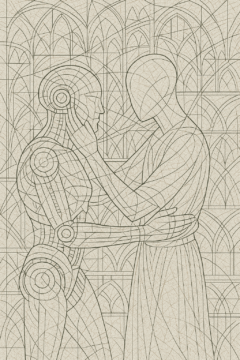
In the early 2000s, a curious phenomenon emerged in Japan: some grown men began forming intimate relationships with inanimate pillows bearing images of anime girls, a phenomenon known as “2-D love.” When I first encountered this phenomenon, I wondered if people could grow emotionally attached to two-dimensional printed images, how much deeper might that attachment become when artificial intelligence advanced enough to convincingly simulate companionship? I speculated whether there would come a time when individuals might be tempted to retreat from the real world and instead choose to live alongside an AI companion who also served as a romantic partner. That brave new world has now arrived in 2025. Apps like Replika, Character AI, Romantic AI, Anima, CarynAI , and Eva AI enable users to create AI-powered romantic partners i.e., chatbots designed to simulate conversation, affection, and emotional intimacy. These platforms allow users to personalize their virtual partner’s appearance, personality traits, and the nature of their relationship dynamic.
Unlike the 2-D love phenomenon, today’s AI romantic partners are no longer a fringe community. Today, over half a billion people have interacted with an AI companion in some form. This marks a new frontier in AI and its venture into the deeply human realms of emotion, affection, and intimacy. This technology is poised to take human relationships into uncharted territory. On one hand, it enables people to explore romantic or emotional bonds in ways never before possible. On the other hand, it also opens the door to darker impulses, there have been numerous reports of users creating AI partners for the sole purpose of enacting abusive or perverse fantasies. Companies like Replika and Character.AI promote their offerings as solutions to the loneliness epidemic, framing AI companionship as a therapeutic and accessible remedy for social isolation. As these technologies become more pervasive, they raise urgent questions about the future of intimacy, ethics, and what it means to have a human connection.
Several recent cases offer a sobering glimpse into what the future may hold as AI romantic partners become more pervasive. Read more »

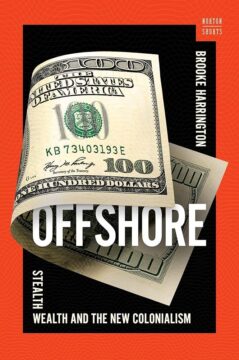 The Paradise, Pandora and Panama Papers, exposing secret offshore accounts in global tax havens, will be familiar to many. They are central to the work of economic sociology professor, Brooke Harrington. She has spent many years researching the ultra-wealthy and several books on the subject have been the result. Her latest book Offshore: Stealth Wealth and the New Colonialism is a continuation of her research; it focuses on ‘the system’, the professional enablers who support and advise the ultra-wealthy and make it possible for them to store and conceal their phenomenal fortunes in secret offshore accounts.
 Sughra Raza. Light Tricks, Seattle, March, 2022.

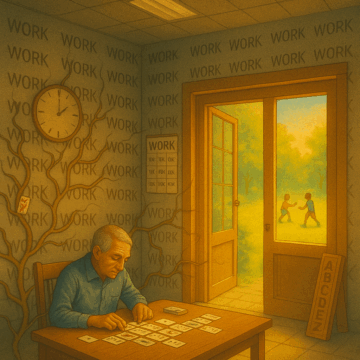 I have been thinking about artificial intelligence and its implications for most of my adult life. In the mid-1970s I conducted research in computational semantics which I used in
  At about 6:30 am, we pulled up to the Labor Ready office in the Central District. My friend – who for the sake of this column will be called Rick – and I were responding to a trespassing call: a woman who was asked to leave the day-labor agency office was refusing.
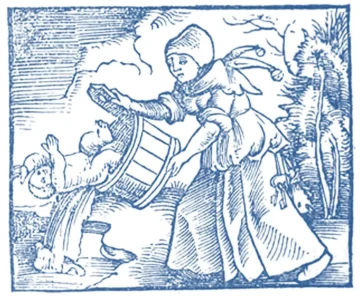
 Donald Trump is a con man. He was that for a very long time before he entered politics. Because he is a con man, it is tempting for critics to describe his presidential victories as successful cons. However, I think that interpretation does not hold up. Because while Trump at his essence may be little more than a sociopathic con man lacking a sophisticated and flexible inferiority, voters and citizens are not simply “marks.” The electorate, especially one as large as the United States’ (over 73 million registered voters), is maddeningly complex. It reflects a stunning amount of views, ideals, fears, and nuance. And the catch is that while the elected government can never hope to fully reflect this complexity, it can unduly influence it.

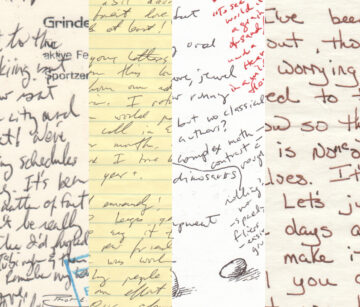 In February, after a month-long consideration, I set my New Year’s resolutions into a five-by-five grid. I made a BINGO card—twenty-four resolutions plus the FREE space. It was my attempt to gamify the whole tired resolution process that I’ve failed at so well. Surprisingly the trick seems to have worked, at least partially.
 In the context of growing concern about educational equity, the persistent racial disparities associated with the Specialized High School Admissions Test in New York City continue to spark debate. As cities and school systems nationwide reconsider the role of standardized testing, the story of the origins of this test shed light on how deeply embedded policies can appear neutral while, in reality, reinforcing inequality.