
by Emrys Westacott
 The coronavirus pandemic has caused a great of suffering and has disrupted millions of lives. Few people welcome this kind of disruption; but as many have already observed, it can be the occasion for reflection, particularly on aspects of our lives that are called into question, appear in a new light, or that we were taking for granted but whose absence now makes us realize were very precious. For many people, work, which is so central to their lives, is one of the things that has been especially disrupted. The pandemic has affected how they do their job, how they experience it, or whether they even still have a job at all. For those who are working from home rather than commuting to a workplace shared with co-workers, the new situation is likely to bring a new awareness of the relation between work and time. So let us reflect on this.
In ‘The Superannuated Man,’ Charles Lamb writes,
that is the only true Time, which a man can properly call his own, that which he has all to himself; the rest, though in some sense he may be said to live it, is other people’s times, not his.
This is a basic and obvious reason that many people resent having to go to work at all. Work takes up time, and time, as many sages have observed, is supremely valuable, irreplaceable, priceless. It is precious because we each know that we are granted only a limited amount of it.
Time is, in the words of Ben Franklin, “the stuff life is made of.” So insofar as work consumes your time, it consumes your life. If your work is what you really want to do, this is not a problem. But if much of the time when you are working–whether you are selling your services to someone else for an agreed number of hours or drudging away at home–you would really prefer to be doing something else, then your working hours represent an enormous sacrifice. You are using up your supply of a decidedly finite, non-renewable resource. Read more »


 I often hear it said that, despite all the stories about family and cultural traditions, winemaking ideologies, and paeans to terroir, what matters is what’s in the glass. If a wine has flavor it’s good. Nothing else matters. And, of course, the whole idea of wine scores reflects the idea that there is single scale of deliciousness that defines wine quality.
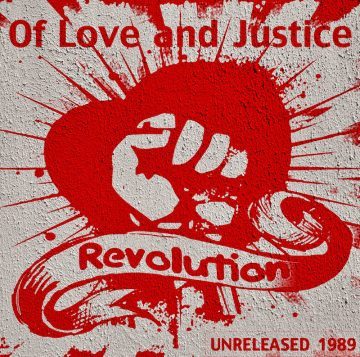 Finally, outrage. Intense, violent, peaceful, burning, painful, heart-wrenching, passionate, empowering, joyful, loving outrage. Finally. We have, for decades, lived with the violence of erasure, silencing, the carceral state, economic pain, hunger, poverty, marginalization, humiliation, colonization, juridical racism, and sexual objectification. Our outrage is collective, multi-ethnic, cross-gendered and includes people from across the economic spectrum. One match does not start a firestorm unless what it touches is primed to burn. But unlike other moments of outrage that have briefly erupted over the years in the face of death and injustice, there seems to be something different this time; our outrage burns with a kind of love not seen or felt since Selma and Stonewall. Every scream against white supremacy, each interlocked arm that refuses to yield, every step we take along roads paved in blood and sweat, each drop of milk poured over eyes burning from pepper spray, every fist raised in solidarity, each time we are afraid but keep fighting is a sign that radical love has returned with a vengeance.



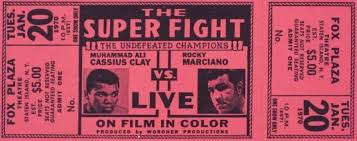


 During the 1990s, the impossibility of a black president was so ingrained in American culture that some people, including many African Americans, jokingly referred to President Bill Clinton as the first “black president.” The threshold Clinton had passed to achieve this honorary moniker? He seemed comfortable around black people. That’s all it took.

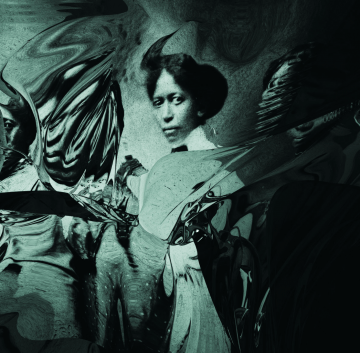 I serve as the family cook as well as the family DJ, so no dinner party preparation is complete without a small stack of CDs waiting for guests to arrive. When the doorbell rings and my wife Alma walks to the front door to greet our earliest guests, I idle the burners on the stove and hurry to the living room stereo, where I press Play for the first CD. A song should already be in progress before the exchange of Hellos, because music, like furniture, is a form of home decoration, filling and defining silence the way a couch or chair fills and defines space. The music must be dialed low, just enough for a home to express quiet domestic welcome. I like to think that I’m long past my ancient feckless undergraduate days of booming a song through an open window.