
by Eric Miller

1.
A robin in the floating height of a pine warbled its fat phrases of three and, with its chest matching the tint of twilight clouds and light on leaves and houses—a lucent, resinous colour such as collected at the lower tip of every cone—, it seemed at once the motivation and the record of the fall of night.
Cartwheeling girls were to be expected. I knew, as one of the few boys in the neighbourhood, girls are more athletic than boys. They spun across the thick grass, not all grass, not meticulously kept; they spun beneath the widow’s white pine, she did not mind all the kids on her grass or depending like apes from her tree. A scent of crushed stems (in equal parts acrid and balmy), the clover-like odour of sweat in hair, made the affinity of plants and us amenable of olfactory proof.
The hill behind the widow’s house, pressing a slow muzzle to its foundation, distorted the building’s shape amiably—amiably, that is, to outward inspection. There must have been interior cracks and derangements. I have no evidence. I never went into it, only looking at it from the porch, or aslant from a higher elevation than the wrested roof. The widow had red hair, redder at dusk.
One girl especially was a virtuoso of jumping rope. She sang out the lyric that helped coordinate her steps; she might have been a sword-dancer, she was so agile; I listened for how her confident rendition of the rhyme became intermitted with gasps as, her pace not slacking, her smile brightening while she held it, her eyes contemptuous of any downward glance, her exertion made her fetch air harder into her lungs. The lyric went, Or-di-na-ry sec-re-ta-ry. Here was nothing ordinary, I would be happy to be its secretary: which has the word “secret” bosomed in it. Besides, I knew that secretaries were among the kindest people in the world. Read more »
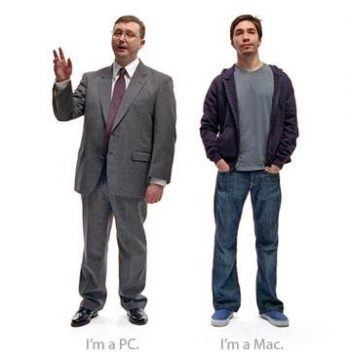
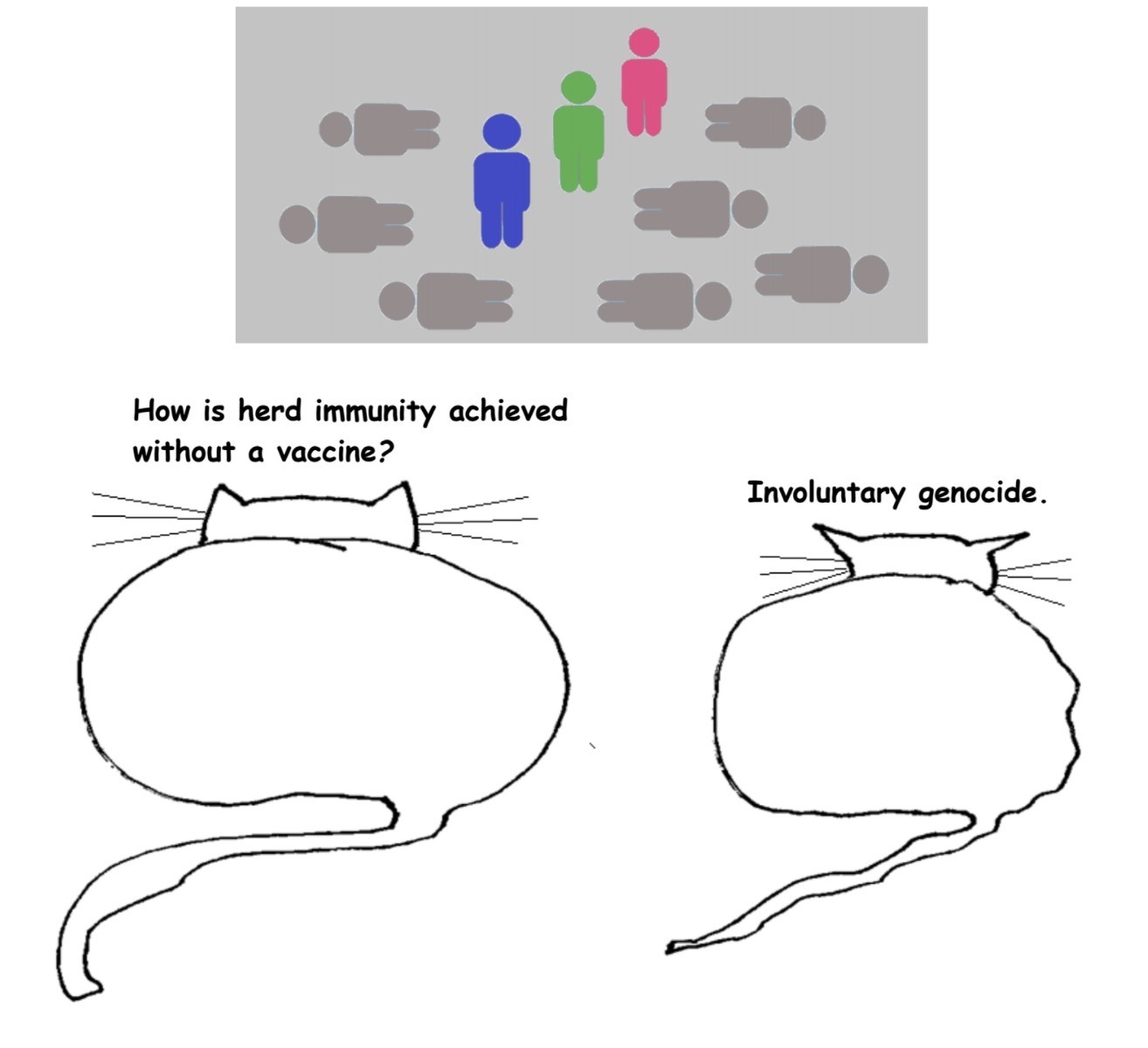
 Last month’s most popular movie on Netflix is a horror show in the guise of a documentary. In 2020, reality has turned scarier than fiction, and The Social Dilemma expends more dread per minute than any episode of Black Mirror. It’s a timely, manipulative film, built for one purpose: to scare the f*ck out of everyday Americans.

 What did the wines that stimulated conversation in Plato’s Symposium taste like? Or the clam chowder in Moby Dick, or the “brown and yellow meats” served to Mr. Banks in To the Lighthouse? Or consider this repast from Joyce’s Ulysses:
 Today in the United States is Indigenous Peoples’ Day, a time to bear witness and remember the savagery of Christopher Columbus and other European explorers when they first encountered indigenous peoples throughout the Americas. It’s also a day to recognize and celebrate the courage, knowledges, and cultures of indigenous peoples throughout the world. It coincides with Columbus Day, a national holiday that triggers a day of protests and celebratory parades, rekindles debates about removing statues of Christopher Columbus from parks, squares and circles throughout the United States, and provokes critical discussions about the kind of stories we should be teaching the Nation’s children about his earliest encounters with indigenous communities.
 Although American history curriculum has always been a site of ideological struggle, historians, history teachers, and curriculum designers have done a good job over the past several decades to revise many historical inaccuracies, distortions, and lies that helped whitewash the historical record in the service of white, male, imperialistic, and neoliberal interests. But with Trump’s latest decree to create a “1776 Commission” charged to design a “pro-American” curriculum of American history coupled with his promise to defund schools that use the 1619 Project as well as other curricular platforms that bring attention to historical facts and truths that counter the “official” curriculum, the Nation’s collective historical memory is under siege with public schools at the center of the assault. Whether Trump and the GOP actually care about how American history is represented and taught in schools or whether they are just cynically using the issue to create a political wedge between people who may otherwise be allied to vote against Trump in November is irrelevant.
 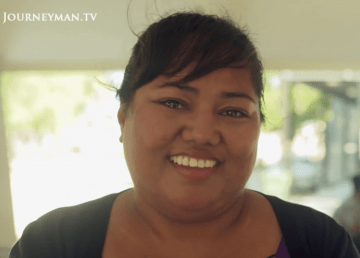 Tabea Bakeua lives in Kiribati, a North Pacific atoll nation. Her country is likely to be the first to disappear completely under the rising seas within a few decades. Asked by foreign documentary filmmakers if she “believes” in climate change, Bakeua considers and tells them, “I have seen climate change, the consequences of climate change. But I don’t believe it as a religious person. There’s a thing in the Bible, where they say that god sends this person to tell all the people that there will be no more floods. So I am still believing in that.” She smiles, self-consciously, as she continues. “And the reason why I am still believing in that is because I’m afraid. And I don’t know how to get all my fifty or sixty family members away from here.” She’s still smiling as tears fill her eyes. “That’s why I’m afraid. But I’m putting it behind me because I just don’t know what to do.” She turns, apologetically, to wipe away her tears. [from “
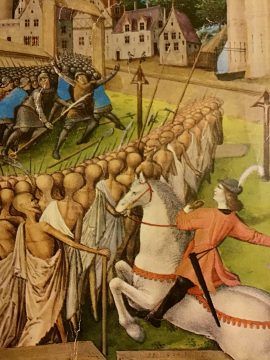 We live in The Year Of Overlapping Catastrophes. Oh 2020, we know ye all too well. The pandemic, our very own plague. Economic depression. A quasi-fascistic con man at the head of government. The discovery that perhaps forty percent of our fellow Americans are truth-hating dupes and low-information racists. (Brits too. Decline of the Anglophone empire?)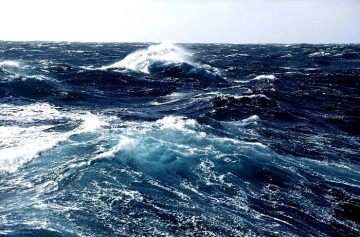
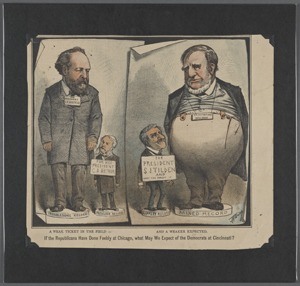 There are times where we are simply unable to surpass our elders.
 A system update recently downloaded to my cellphone included artificial intelligence capable of facial recognition. I know this because, when I subsequently opened the “Gallery” function to send a photograph, I discovered that the refurbished app had taken it upon itself to create a new “album” (alongside “Camera”, “Downloads” and “Screenshots”) called “Stories”, within which I found assemblages of my own pictures, culled from all of those other albums and assorted thematically, evidently because they depicted identical, or similar, figures.
 FRONT PORCH

 Is there anything more clichéd than some spoiled, petulant celebrity publicly threatening to move to Canada if the candidate they most despise wins an election? These tantrums have at least four problems: