
by Chris Horner

It is everywhere: the production of words designed to promote the fiction that something positive and good is happening, even though it isn’t. It comes courtesy of the people you work for, the retail outlets you shop from, and the government organisations that regulate your life. An example: a large organisation develops and with fanfare publishes a document laying out its ‘values’ – under titles like ‘ trust’, ‘inclusivity’, ‘courage’, diversity’, and ‘respect’. It stresses how the individual is valued, the importance of diversity in the workplace, mental health, freedom from harassment and so on. This extends to recruitment and promotion: everywhere diversity, respect and fairness rule: they are ‘investing in people’. Meanwhile, workers at this place have had no real terms pay increase in a decade, overtime and overwork is commonplace, and the complaints system is bureaucratic and agonisingly slow. In the coronavirus epidemic, while desk bound staff were encouraged to work at home, catering and cleaning staff had to appear at the workplace as usual – and naturally, the lower paid stuff doing this are disproportionately female and black. Feeling stressed by the long hours and low pay? There’s an after hours yoga class for that, and a values document to read.
The mass production of warm sounding words with minimal interest in real material outcomes is signifying bullshit (SB). It is nearly ubiquitous. A vast amount of time is spend promoting the idea to consumers that a pair of boots, or a coffee or a shampoo is somehow saving the planet or conquering hunger in Africa; the public is encouraged to tweet or post their reviews of the goods they’ve bought, as retailers and the media outlets that boost them all want your warm words, too. There’s an ocean of participation and inclusivity, although it is not clear who is reading all this stuff. Read more »


 Covid has given rise to a variety of counterintuitive mathematical outcomes. A good example is this recent headline (link below): One third of those hospitalized in Massachusetts are vaccinated. Anti-vaxxers have seized on this and similar such factually accurate headlines to bolster their positions. They, and others as well, interpret them as evidence that the vaccine isn’t that effective or perhaps hardly works at all since even states with very high vaccination rates seem to have many breakthrough infections that lead to hospitalization. Contrary to intuition, however, such truthful headlines actually indicate that the vaccine is very effective. I could cite common cognitive biases, Bayes’ theorem, graphs, tables, and formulas to explain this, but a metaphor involving fruit may be more convincing and more palatable.
 Growing up in India I knew how hierarchical and status-oriented Indian society was, but the city of New Delhi took it to a bureaucratic extreme. I was told that in those days, if you gave out your Government quarters address, people would immediately know your approximate salary scale. The city’s residential pattern, inherited from the colonial rulers, was highly structured. If you are a top Secretary in a Ministry, your assigned quarters will be a large bungalow with acres of gardens in prize real estate in the city center, often a short distance from your office which you traverse in a chauffeur-driven official car. But if you are a lowly clerk or an orderly/peon in the same office building, you’ll come in a crowded bus from many miles away often outside the city.






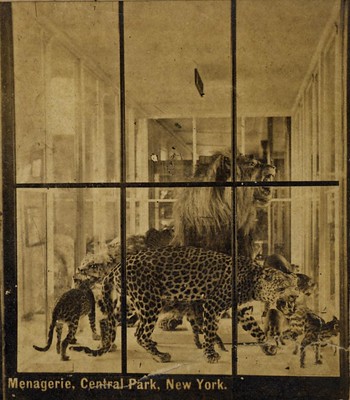

 Sometimes our American ideas about social problems and how to fix them are downright medieval, ineffective, and harmful. And even when our methods are ineffective and harmful, we are likely to stick to them if there is some moralistic taint to the issue. We are the children of Puritans, those refugees who came to America in the 17th century to escape King Charles.

 One of my earliest memories was of Christmas Eve in 1954. I was about 3 or 4 years old, playing under a table at my grandmother’s house. My sister and a cousin were with me, playing with a small wooden crate filled with straw. The crate represents the manger in the stable in Bethlehem 1,954 years ago, where the animals welcomed the baby Jesus, since there were no rooms in the inn. We three kids were waiting for the adults to come to the table to join us for Wigilia, the traditional Christmas Eve feast, after which we would move to the living room, sing Polish Christmas Carols, and wait for an uncle disguised as Santa to arrive with presents for everyone.