
by Eric J. Weiner
We find our voice in solitude, and we bring it to public and private conversations that enrich our capacity for self-reflection. Now that circle has been disrupted; there is a crisis in our capacity to be alone and together. But we are in flight from those face-t0-face conversations that enrich our imaginations and shepherd the imagined into the real. There is a crisis in our ability to understand others and be heard. — Sherry Turkle, Reclaiming Conversation
 Although there might be nothing wrong with our hearing, we are quickly losing our ability to practice three formative modalities of democratic listening: Mindful, Aesthetic and Critical. These three modalities support our active participation in sustained, intimate conversations where we learn with and from each other. Millennials in particular struggle to listen to their friends, parents, and teachers for more than a few seconds without their brains becoming distracted by the ubiquitous hand of technology.[1] Adding to the distractions of technology, both adults and children, when in dialogue, confuse waiting for their turn to talk with the practice of democratic listening. Although we are hardwired for grammar;[2] cognitively mapped to construct, comprehend, and interpret meanings that arise from the soundscapes of language, culture and history; and can distinguish sound patterns, dissonances, silences, and noises in the ether,[3] the brain listens only to what the mind is prepared to hear.[4]
In our current historical conjuncture, the mind is not prepared nor is it being prepared to hear the pangs of hunger in the discourse of poverty; the terrorizing memories of male violence and sexual assault from the mother-tongue of surviving women; the anxieties of dis-ease and economic insecurity in the angry and disillusioned voices of youth; the brutality of homelessness in the quiet drawings of children who sleep in cars and shelters; the academic discourse of white supremacy deeply embedded within the sterilized language of meritocracy; the communality of working-class culture splattered in blood, sweat, and country; the groan of disability pushing against the structural forces of ableism; the tongue-tying of identity within sequestered spaces of difference; the diverse voices of radical love driving the outrage against fascist machineries of death; the intubated wheezing of dying democracies; the hushed courage of LGBTQ+ people navigating the heteronormative and cis-gendered architecture of everyday life; and the incessant white noise of power burying the refrain of negative freedom in the hook of capitalist opportunity. That which the mind is not prepared to hear negates our capacity to listen and understand, to learn from those most in need, and to be mindful, aesthetically sensitive, and critically awake to the radical possibilities that arise out of deep and meaningful conversation.
From this perspective, democratic listening, like its genetic siblings literacy and learning, should be understood as a social practice. Read more »
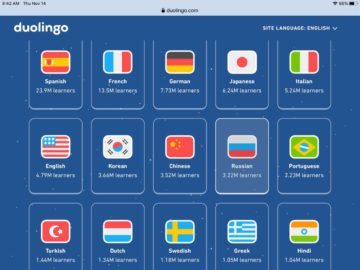 Many years ago, I returned to my old high school for a visit with friends who were classmates back in the ’80s. Exploring the school and marveling over what had changed and what remained exactly the same, we ventured into the language lab. The room smelled exactly the same as it had in 1983, and it took me right back to those days of incredibly boring language lessons and sitting in that room with headphones on repeating monotonous phrases.
 Cogito Ergo Sum? Welcome to the party. There’s a lot more going on out there than we sometimes think: Cephalopods
 At MIT outside the Economics Department there was one scholar, whose several lectures I have attended was Noam Chomsky. I knew of him as a pioneer in modern linguistic theory, but his fame in the outside world is as America’s topmost dissenter (his position is somewhat like what used to be that of Bertrand Russell in Britain, a towering figure in his own subject philosophy, but his fame outside was that of Britain’s leading dissenter).

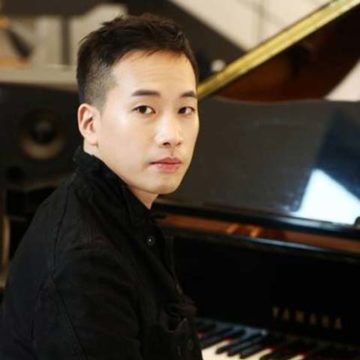 A soft-spoken, self-effacing young man from Seoul may be the most listened-to living composer on the planet right now, with two blockbuster works of cinema and TV on his resumé. Not only did Jung Jaeil compose the score for the Oscar-winning Parasite, but his subsequent gig, Squid Game, has just stormed into the record books: Seen and heard by hundreds of millions by now, it has become a global phenomenon, another sign of South Korea’s approaching and encroaching hegemony over all things cultural.
 Mary Kuper. “… our curious type of existence here.”


 A scar is a shiny place with a story.