
by Pranab Bardhan
All of the articles in this series can be found here.
 Some years after Carlos died, another friend and another noted development economist, Hans Binswanger, was diagnosed as HIV-positive. He initially took that as a death sentence and gave away much of the material things he had. But by then the new antiretroviral drugs were in use, and possibly because of them lived an active life for another quarter century, until he died in Pretoria, South Africa in 2017 at age 74. In 2002, shortly before he left his World Bank job, he founded and endowed an NGO in Zimbabwe, that supported about 100 mostly HIV-positive children and their families by providing education, supplemental health care, and counseling. In South Africa he married his boyfriend Victor in a traditional multi-day Zulu celebration. Since then he has always identified his last name as Binswanger-Mkhize.
Hans was born in Switzerland in a prominent Swiss family. He was a major agricultural economist with pioneering work on peasants’ behavior in the face of risk. This work was based on experiments carried out in India. I think I met him first in Hyderabad at ICRISAT, the International Crop Research Institute for Semi-Arid Tropics, where he was the principal economist for 5 years, before joining the World Bank.
In 1977 he invited me and Kalpana to present papers at a conference in Hyderabad on the subject of rural labor markets (later he co-edited a book where these papers were published). I remember the lavish party he gave for all the conference participants at his home which was a stunning converted-fortress in Hyderabad. The intensive ICRISAT village studies that started under his leadership in India made possible data-intensive work by many agriculture researchers all over the world, and generated over the years hundreds of Ph. D’s. Since then I have interacted with him many times, particularly when he was doing some policy work for the World Bank on land reform in South Africa. He came to Berkeley and addressed my graduate seminar on Economic Development. I last saw him at a meeting in Delhi, just a couple of years or so before his death. Read more »
 Carved in marble above the entrance to the Supreme Court Building is the motto: “Equal Justice Under The Law.”
 Napoleon Jones-Henderson. TCB, 1970.

 Dreams are about questions.


 I had a colleague, a great reader, whose favorite material was mid-century Japanese short-form realism. Frequently epistolary and often featuring at least one frame narrative, these novellas typically have as their narrator someone captivated, not to say obsessed, by a memory; and that memory, it seemed to me when I read the works my colleague lent me, is almost inevitably fed by an erotic or romantic encounter, as well as by its often calamitous sequelae.

 An Immense World; How Animal Senses Reveal the Hidden Realms Around Us, Ed Yong, Random House/Bodley Head, June 2022
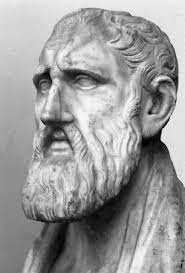 One of the more remarkable developments in popular philosophy over the past 20 years is the rebirth of stoicism. Stoicism was an ancient Greek and Roman philosophy founded around 300 BCE by the merchant Zeno of Citium, in what is now Cyprus. Although, contemporary professional philosophers occasionally discuss Stoicism as a form of virtue ethics, most consider it to be a minor philosophical movement in the history of philosophy with limited influence. Yet it has captured the attention of the non-professional philosophical world with many websites and online communities devoted to its practice.
  Sughra Raza. Be Unvaan. June 11, 2022, Cambridge, MA.

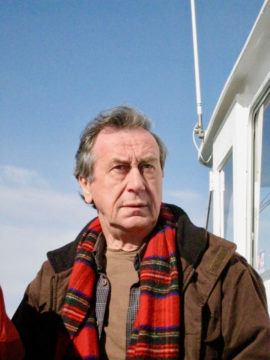 Thomas O’Dwyer, my husband, died on Wednesday. He wouldn’t approve of this beginning. In his articles he always came up with something original or intriguing to draw the reader in.