
by Claire Chambers
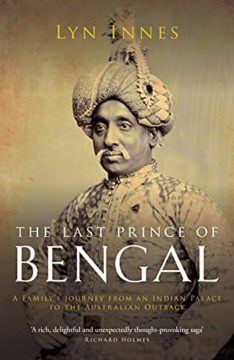 I know Lyn Innes from her career as an eminent postcolonial critic at the University of Kent. Since retirement, Innes has turned her hand to life writing. This is unsurprising when one learns of her unique and fascinating family history.
Her book The Last Prince of Bengal: A Family’s Journey from an Indian Palace to the Australian Outback is a story of two marriages and two British colonies, India and Australia.
Innes’ great-grandfather Mansour Ali Khan (1830–1884) was the final Nawab of Bengal, eighth in succession to Mir Jafar (1691–1765). As is well known, Mir Jafar collaborated with the British East India Company. His payment was to become the Nawab of Bengal, Bihar, and Orissa: the greater part of eastern India. The East India Company also bestowed on Mir Jafar honour and rights, including a large pension or stipend. In return, the Company got freedom to tax the region, which they did with gusto.
Given that Innes is a respected postcolonialist, I was interested in her reaction to the lineage from Mir Jafar, widely regarded in India as a traitor. Furthermore, Mansour Ali Khan and other family members supported the British in the so-called Mutiny of 1857. After this Rebellion, the Governor-General of India was appointed by the British Parliament instead of the East India Company. Many members of Innes’ family were not nationalists and opposed Indian independence. However, it is clear from her dispassionate and rigorous account in this book that Innes is no royalist and that she is neither proud nor ashamed of her ancestors. Read more »

 Some years after Carlos died, another friend and another noted development economist, Hans Binswanger, was diagnosed as HIV-positive. He initially took that as a death sentence and gave away much of the material things he had. But by then the new antiretroviral drugs were in use, and possibly because of them lived an active life for another quarter century, until he died in Pretoria, South Africa in 2017 at age 74. In 2002, shortly before he left his World Bank job, he founded and endowed an NGO in Zimbabwe, that supported about 100 mostly HIV-positive children and their families by providing education, supplemental health care, and counseling. In South Africa he married his boyfriend Victor in a traditional multi-day Zulu celebration. Since then he has always identified his last name as Binswanger-Mkhize.
 Carved in marble above the entrance to the Supreme Court Building is the motto: “Equal Justice Under The Law.”
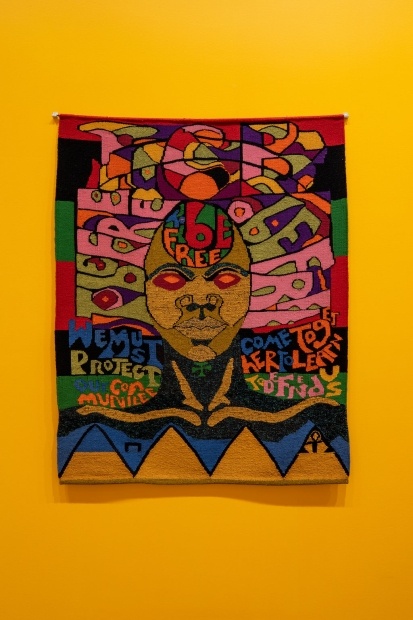 Napoleon Jones-Henderson. TCB, 1970.

 Dreams are about questions.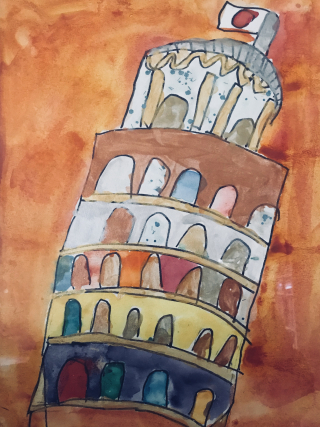


 I had a colleague, a great reader, whose favorite material was mid-century Japanese short-form realism. Frequently epistolary and often featuring at least one frame narrative, these novellas typically have as their narrator someone captivated, not to say obsessed, by a memory; and that memory, it seemed to me when I read the works my colleague lent me, is almost inevitably fed by an erotic or romantic encounter, as well as by its often calamitous sequelae.
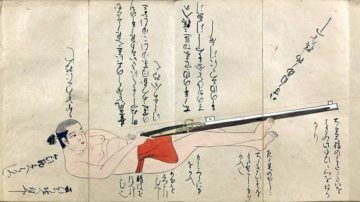
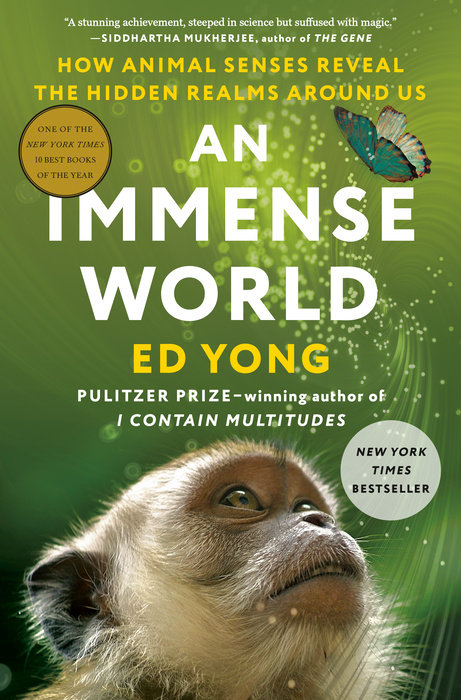 An Immense World; How Animal Senses Reveal the Hidden Realms Around Us, Ed Yong, Random House/Bodley Head, June 2022