
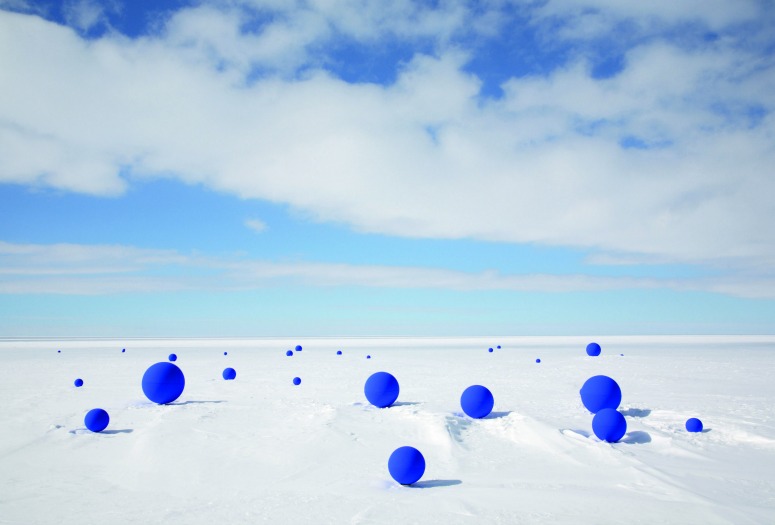
 Lita Albuquerque. Southern Cross, 2014, from Stellar Axis: Antarctica, Ross Ice Shelf, Antarctica, 2006.
Theagony: 2022 adieux
by Rafaël Newman
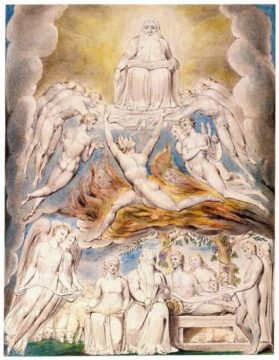
When we began, our gods were junior,
Their profits, and our problems, punier.
The deities who drilled at dawn
Paraded in a pantheon:
Born out of Chaos and castration,
Theirs was a piebald population.
They mingled with a breed of men
And women we’ll not see again,
Who shared those gods’ own groaning board,
Where things were rarely untoward—
Unless you count the odd abduction,
The semi-bestial seduction,
The anthropophagous pot-au-feu,
Or the Promethean pas-de-deux.
But more than this, our gods were many,
Though not, for all that, two-a-penny.
A deathless numen dwelt within
Whatever was, would be, had been,
And granted every abstract noun
Its aegis, buckler, crest, or crown;
Its anvil, lightning bolt, caduceus;
Its cuneiform, and its cartouches.
There was a holiness at large,
A broadly scattered, sacred charge.
But now? Our gods have been compress’d,
And we, in consequence, less bless’d:
From Twelve Olympians downgraded
To single Seigneur. We have traded
That polychrome diapason
For a grimly grayscale monotone.
At best, our world is Manichaean,
Though not as praised in Persian paean.
The tyrants twain who rule this globe
Are those that frame the Book of Job:
A sadist, distant from the Earth,
And Satan, who assays the worth,
In worship and obedience,
Of hominid ingredients. Read more »
Rumi and the Clock of Shams Tabrizi
by Shadab Zeest Hashmi
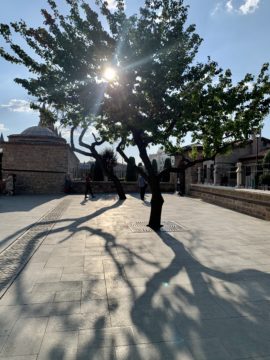 A tree in the vicinity of Rumi’s tomb has me transfixed. It isn’t the tree, actually, it is the force of attraction between tree-branch and sun-ray that seems to lift the tree off the ground and swirl it in sunshine, casting filigreed shadows on the concrete tiles across the courtyard. The tree’s heavenward reach is so magnificent that not only does it seem to clasp the sun but it spreads a tranquil yet powerful energy far beyond itself. It is easy to forget that the tree is small. I consider this my first meeting with Shams.
Of average human-height, the tree is non-descript, other than how its heavenward reaching creates an embrace that enricles and enlarges everything around it, so that motion ripples out of stillness, light edges shadows. In a moment such as this, the senses deepen spirit; words fail, words fail. All that we know evaporates, we are left with spirit. Here is the limit of knowledge, the Sufis teach us; no amount of book learning alone can bring us closer to the Divine than the spirit engaged in making a wide embrace. The Divine is an experience, and knowledge is only a part of it. If there is one word that comes close to describing this, it is love. But of course, the word is insufficient. No single word in conventional language can contain love. Poetry, arguably, owes its existence to the impossibility of defining love in the dictionary. In Maulana Rumi’s case, it was Shams who brought this awakening, this great desire for the Divine beloved that colored every thought, action and word that was to come out of him in the future. Read more »
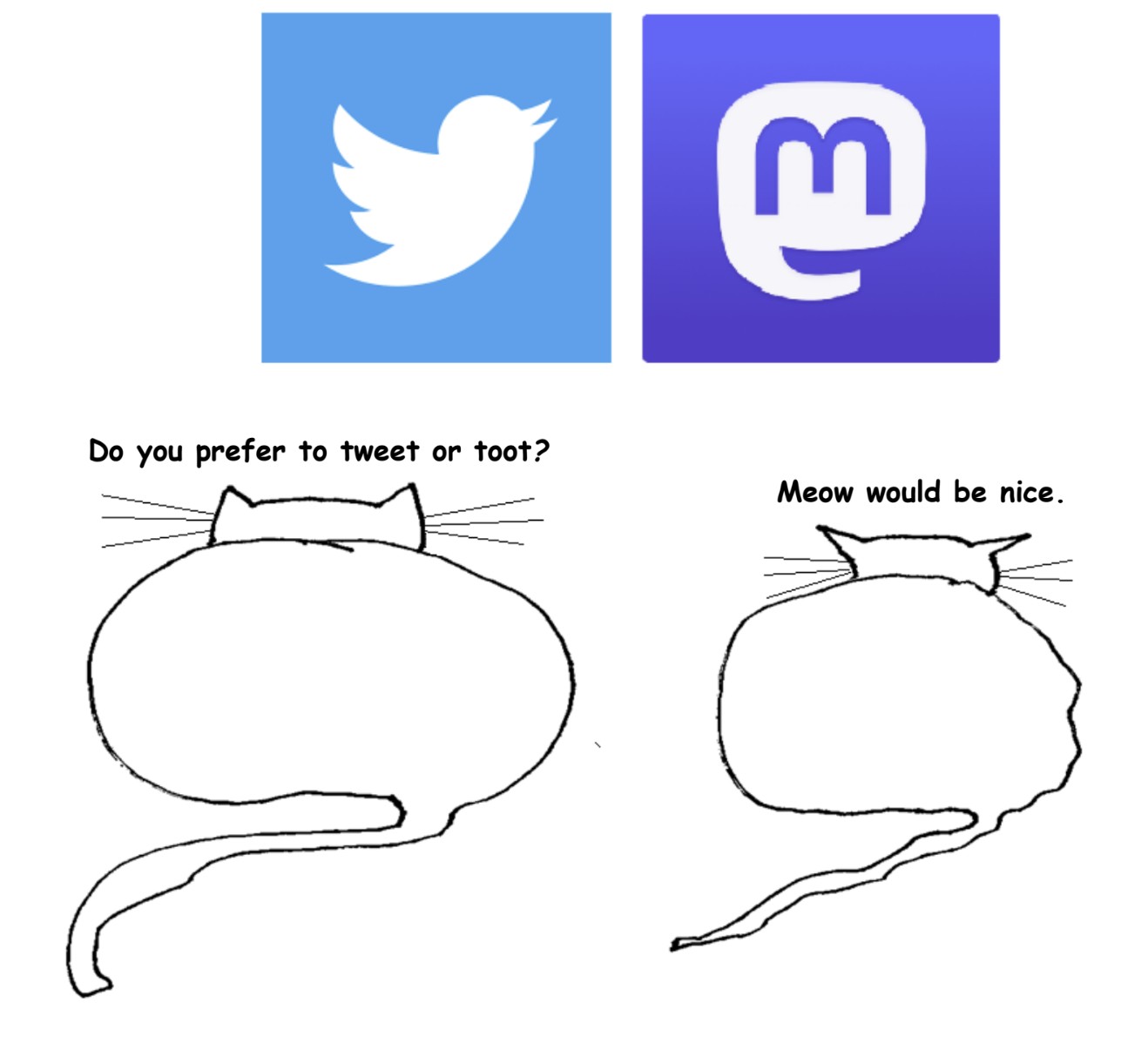
Catspeak
by Brooks Riley
Plagiarism in the Era of AI
by Akim Reinhardt
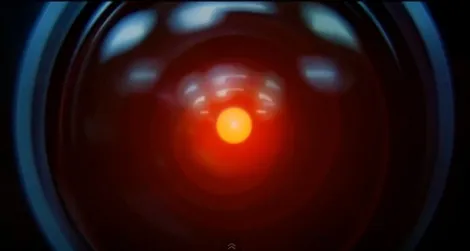
The ChatGPT Bot has changed everything! That’s the basic vibe I’m getting from frantic press reports, early return think pieces, and even public-facing academicians. Specifically, this new, free AI software, only a few weeks old and still improving, is already churning out high school-quality essays on just about any subject a teacher might assign, and it now stands as a real threat to the very concept of high school and even college term papers.
As a History professor myself, I suppose I should be duly panicked. However, I don’t see the rise of the bot as something to fear or even resent. That’s not to say there isn’t cause for concern. There absolutely is, and adjustments are required. But my own personal history leads me to see charlatanism as something you simply have to deal with. Growing up in New York City, we learned to dodge it from a young age, with an understanding that it was up to us to spot it. Suckers may not deserve to get taken in a sidewalk game of Three Card Monty, as hustlers love to claim, thereby muddying their own immorality. However, even if the victims are to be pitied, suckers fill an ecological niche: they function as an object lesson to the rest of us: Don’t be like them. Don’t be a chump. I also wasn’t a very good undergraduate college student, though I didn’t cheat (too much pride, not enough giving a shit).
Add it all up, and I’m primed to stop cheaters. I know how a lazy student thinks, and I’m always on the alert, guarding against getting taken. I’ve also been designing and grading college student assignments for close to a quarter-century. So for me, this new AI bot is not scarey, or even revolutionary. It’s just the latest con for those who would seek to dupe me out of my most prized professional possession: passing grades. A quick rundown shows how the academic bunko game has changed just in my time as a professor. Read more »
Would it be so bad if I’d used ChatGPT to help write this blog?
by Sarah Firisen
 I’m going to date myself in a significant way now: when I was in high school, we had to use books of trigonometric tables to look up sine and cosine values. I’m not so old that it wasn’t possible to get a calculator that could tell you the answer, but I’m assuming that the rationale at my school was that this was cheating in some way and that we needed to understand how actually to look things up. I know that sounds quaint now. I also remember when I used an actual book as a dictionary to look up how to spell words. Yes, youth of today, there were actual books that were dictionaries, and you had to find your word in there, which could be challenging if you didn’t know how to spell the word to begin with.
These days, if you have turned in a paper without putting it through basic digital spellcheck, you deserve to fail the class. And most editing tools have some at least rudimentary grammar checking. In addition to those built-in tools, I use Grammarly and have encouraged my college-age daughters to use it. It used to be the case, at least when I was in school and college, that you lost marks for bad spelling and grammar. There is no good reason a piece of writing today shouldn’t have mostly correct spelling and basic grammar. But spelling and grammar checking doesn’t make you a good writer, and a scientific calculator doesn’t make me a better mathematician. They’re just tools. By the way, I also used to get marks deducted for my bad handwriting. Bad handwriting isn’t an issue for anyone over ten or so (or maybe younger these days) when almost all communication is electronic. So does bad handwriting matter? I can’t remember the last time I wrote anything longer than a greeting card. These days, it’s far more important to be computer literate than to be able to write good cursive.
Which brings me to ChatGPT, a new AI chatbot created by OpenAI, an artificial intelligence research company. Read more »
Monday Photo
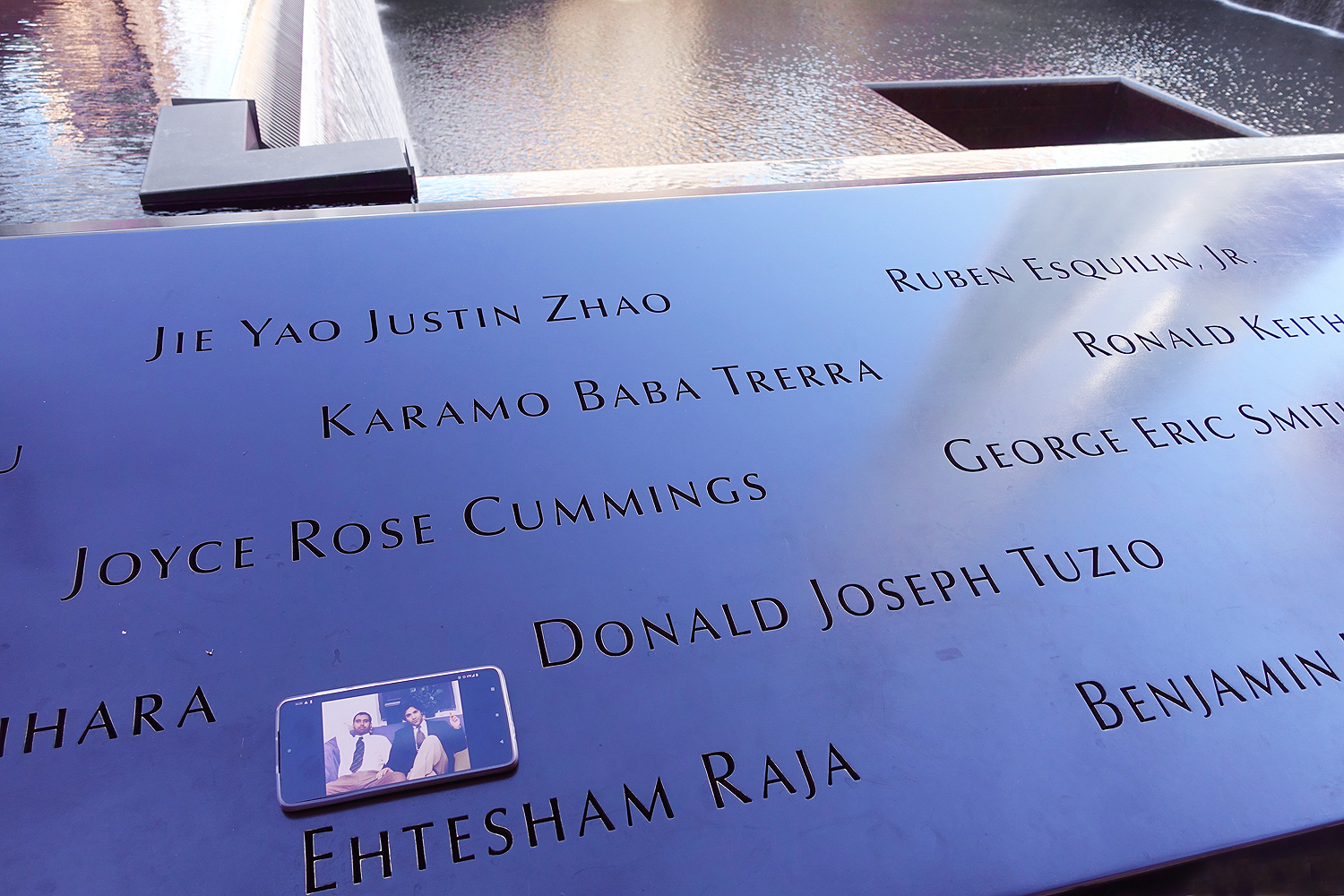
Went to the 9/11 Memorial in lower Manhattan on New Year’s Day for the first time and found my friend Ehtesham Raja’s name among the many who died that day. The phone placed above his name shows a photo of him and me in my Manhattan apartment earlier in 2001.
A Buddhist Perspective on Addiction: Nothing is Vital
by Marie Snyder
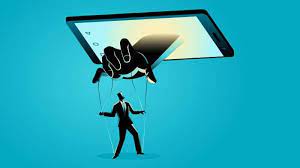 Now that the hangover from New Year’s Eve is abating for many, and we might be freshly open to some self-improvement, consider a Buddhist view of using meditation to tackle addictions. I don’t just mean for substance abuse, but also for that incessant drive to check social media just once more before starting our day or before we finally lull ourselves to sleep by the light of our devices, or the drive to buy the store out of chocolates at boxing day sales. Not that there’s anything wrong with that on its own– it’s a sale after all–but when actions are compulsive instead of intentional, then this can be a different way of approaching the problem from the typical route. I’m not a mental health professional, but this is something I’ve finally tried with earnest and found helpful, but it took a very different understanding of it all to get just this far (which is still pretty far from where I’d like to be).
Meditation is not about escaping the world but sharpening our awareness of it. Addiction comes from the Latin dicere, related to the root of the word dictator. It’s like having an internal dictator usurping our agency. And Buddhist mindfulness meditation can help to notice that voice and then turn the volume down on it so we can get our lives back.
In many ways the Buddhist perception is closer to Stoicism than to Freudian tactics, but don’t toss the baby out with the bathwater. Many people benefit from the psychoanalytical method of finding themselves before they can work on losing themselves. This is particularly true with traumatic experiences that might need to be worked through enough before allowing the mind to wander into dark recesses unrestrained. Read more »
SBF from Girard to Dawkins to Xanadu and back
He liked being known as “SBF.” Why? It is kind of cool on its own terms. But I wonder it there might not be some mimetic desire lurking there. After all, there IS an enormously wealthy and well-known man who is known by his three initials, two of which are shared by SBF. I’m talking about MBS of course – Mohammed bin Salman Al Saud, Crown Prince and Prime Minister of Saudi Arabia. Does SBF want to be like MBS?
And there’s that luxurious Bahamian compound, a bit like Xanadu. As you know, Xanadu was the name of Charles Foster Kane’s mansion in Orson Welles’s Citizen Kane. It is also the nickname Bill Gate’s house. DJT (aka 45) has said that that’s his favorite film. Back in the mid-70s a group of developers made plans to build a hotel in Las Vegas to be called Xanadu. The project fell through, but not before considerable architectural work had been done, preliminary plans, renderings, models, etc. Donald Trump knew about this and was influenced by it in his Atlantic City Casino, which had a night club called Xanadu. All of this is online.
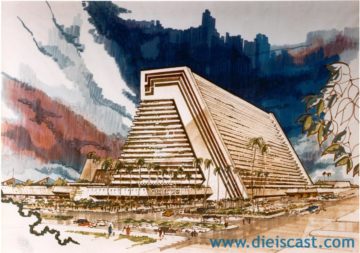
I discovered this some time ago when, on a whim, I did a web search on “Xanadu.” Why? Because I have a long-term interest in Coleridge’s “Kubla Khan,” with its famous opening couplet: “In Xanadu did Kubla Khan/A stately pleasure dome decree.” Just like that – Make it so! – and there it was. What billionaire wouldn’t thrill to that?
I digress. Much to my surprise the web search turned up millions of hits. Why? Coleridge’s poem is well known, about as well-known as poems can be. I searched the Oxford English Dictionary for uses of the name, and found a few. I also searched the archives of the New York Times and found, for example, mention of a Xanadu yacht in the 1930s. It became clear, however, that it was Citizen Kane that put “Xanadu” on the socio-cultural map, leading to what I have called a sybaritic cluster of associations, which is about wealth and luxury. Read more »
Monday, December 26, 2022
The Short Shelf Life of “Longtermism”
by Tim Sommers

Despite what you might have heard, it almost certainly wasn’t Yogi Berra or Samuel Goldwyn who said it. It may be an old Danish Proverb. But it is probably a remark made by someone in the Danish Parliament between 1937-1938, recorded without attribution in the voluminous autobiography of one Karl Kristian Steincke. It being:
“It is difficult to make predictions, especially about the future.”
This is one reason you should probably be much less concerned with the end of the world than longtermists like Sam Bankman-Fried, Elon Musk, Peter Thiel, and William MacAskill are – or claim to be.
Here’s a slightly more accurate, if more pretentious, way of putting it, this time unequivocally from Wittgenstein:
“When we think of the world’s future, we always mean the destination it will reach if it keeps going in the direction we can see it going in now; it does not occur to us that its path is not a straight line but a curve, constantly changing direction.”
That’s the moral. Here’s the story.
It was not MacAskill, Hilary Greaves, or Nick Bostrom – much less Bankman-Fried – that came up with longtermism, perhaps the most controversial element of the most controversial and visible philosophical and moral movement of the twenty-first century, “effective altruism.” Longtermism, specifically, is the view that we owe the future a certain priority over the present, especially when it comes to existential risks, like nuclear war, pandemics, artificial intelligence, and nanotechnology. Read more »
Human Flourishing in the Age of Machines
by Jonathan Kujawa

Recently some colleagues and I were out to lunch. It was our University’s “Dead Week.” This is the week before finals when students are in a last-minute rush to finish projects and study for exams, and faculty are planning how to wind up their courses and beginning to draft their final exams.
My colleagues and I joked that writing a final exam is basically an analog version of the Turing Test: You try to craft questions that can distinguish between the students who actually understand the material and those who “solve” problems by being skilled at pattern recognition and applying rote algorithms.
Coincidently, around the time of this lunch, OpenAI released ChatGPT. As 3QD readers no doubt have heard, ChatGPT is a large language model which was trained on a significant chunk of text in 2021. Using that text, it developed a model of which words and phrases most often follow one another. Using that model, ChatGPT then writes replies to prompts submitted by the user. The results are equally amazing and banal. Read more »
Perceptions
 Sughra Raza. Cactus In My Window.
Digital photograph.
Seen and Heard
by Chris Horner
A choice of ‘cultural things’ I enjoyed in 2022 and which you might like, too. Some were from well before this year, but discovered by me in ’22. Novel, non fiction, concert, recording, exhibition. Here we go:
- Novel: The Odd Women – George Gissing.
 This is the kind of novel which when read makes you wonder why it isn’t better known and more widely celebrated. The late 19th century saw a wave of plays and novels dealing with ‘the New Woman’ – the educated, worryingly independent, vote-seeking, bicycling women of the late Victorian/Edwardian age. Examples include Victoria Cross’s Anna Lombard (1901), Ella Hepworth Dixon’s The Story of a Modern Woman (1894) Many of these were predictable rubbish: marriage or death solves everything. Exceptions among plays are Ibsen’s Hedda Gabler, Shaw’s Mrs Warren’s Profession, and among novels HG Wells’ Ann Veronica (1909), but it’s the Gissing that is really the winner among novels. Gissing avoids most of the cliches and stereotypes and produces a narrative that is genuinely absorbing and a set of themes and characters one remembers long after the book is put down. Gissing is an odd fish: he has real empathy for the plight of the poor and the rejected (both here and in The Nether World and his more famous New Grub Street), but has an ‘official’ conservative ideology which, when he lets it, blocks him from being able to imagine how the agency of working class or (as here) mainly lower middle class women might work for their liberation. In this he isn’t alone: many great novelists have said more through their literature than their ‘official’ beliefs ought to allow them to do (think of Dostoyevsky) In The Odd Women, he largely lets his imagination take him places his philosophy could never encompass. The book emerges as a fascinating account of the situation of the ‘superfluous’ women of the 1890s – and shows how they either succumbed to or overcame the world that seemed to have no place for them. Read more »
Catspeak
by Brooks Riley
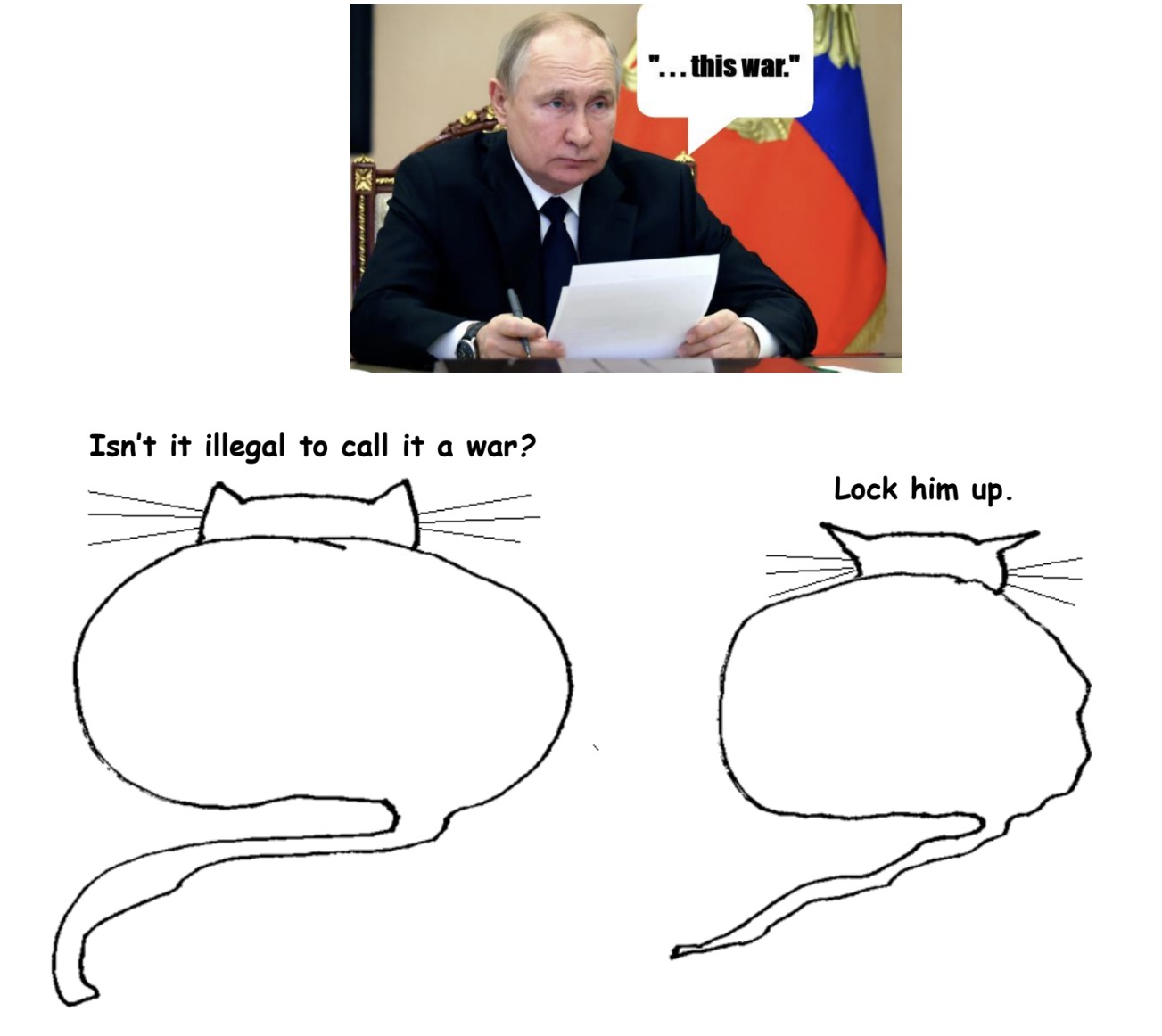
Ahead to the Past: Parsing 2022
by Brooks Riley
Looking back at the year gone by is the tedious task of news editors who aim to make sense of the senseless, find connections where none exist, and leave us with a neat package of nostalgia to file away in our collective memory. I’ve never been partial to such wrap-ups, with their facile interpretations of events, their mining for relevance where none exists.
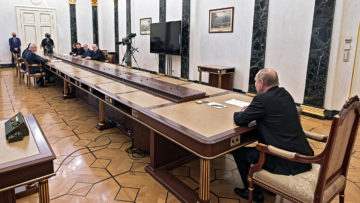
Another thing that makes such year-end assessments so difficult, is the necessary conjunction of events of varying levels of gravitas: Imagine talking about Twitter king Elon Musk in the same breath as Vladimir Putin, mentally blending images of a digital town meeting with a security council meeting at the Kremlin. One shudders at the juxtaposition of wounded infants in Ukraine with the trivial issue of buccal fat surgery. After a while, all newsworthy events in a given year begin to appear surreal, existing side by side inside separate vacuums that bump into each other like bumper cars at an amusement park.
Part of me doesn’t care much for the immediate past. Part of me wants to get on with it, whatever ‘it’ is. Slowly but surely, I’ve evolved from being a participant in life to being an observer of it. From my modest command center I gaze out at the world through a digital lens and try to understand what’s going on. It’s becoming much harder to do that.
As an observer now, I am less tolerant of the rampant vanities let loose on social media. I find many more public figures ridiculous, and many viral trends simply absurd. (Is it me, or is it them?) My inner curmudgeon stretches its limbs like a newborn, even as it is forced to coexist with my inner teenager who, for some reason, is still alive and kicking. Read more »
Monday Photo: Jupiter Rising
 Jupiter rising above a mountain in Brixen, South Tyrol.
Washington Square, December
by Ethan Seavey
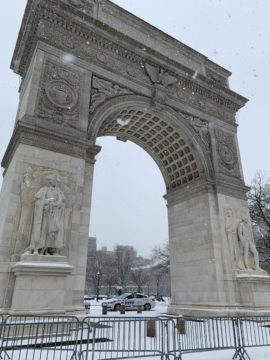 It’s halfway through the month of December and New York is filled with pine boughs and small yellow bells and horse-drawn carriages and scarves. We are seated on the edge of the fountain in Washington Square Park, though this time of year the water has been shut off. A group of five skateboarders are practicing jumps in the large basin. We just bought a pre-rolled joint from one of the stands in the park, of which there are many. But we only buy from one of them. Weed is legal in the city now, but it’s not legally sold, so it can be questionable, and you never want “questionable” when you’re prone to paranoia. We trust the woman who runs this stand, though, because we know where she buys it and she has a rainbow flag on the front of her table.
So we sit queerly on the edge of a queer fountain smoking some queer weed. We talk about something, I don’t know, maybe how Halloween is a gay holiday but Christmas is a straight one and we have fatigue. A New York Christmas is not one of comfort or much joy. Starting in November, there’s a pressure in the air that pushes you to believe you need to do a long checklist of items. You need to see Rockefeller Center, you need to go to this small pop-up and that department store extravaganza. You need to go to the holiday markets at Union Square, where people shuffle by long lines of other people waiting to shop at little stands, and the ones at Bryant Park, which you never see because Union Square was such a nightmare. A New York Christmas is hearing tinny bells played on speakers for weeks and drunk Santas racing from bar to bar. A New York Christmas is one where you can only find silence and darkness when you’re tucked away into your tiny apartment.
Certainly there is magic in the season as well and I am rarely as gleeful as when I have a quiet Christmas moment with friends. But it is finals week and I can’t see past a devastating head cold. Read more »
On Indices of First Lines
by Eric Bies

There I sat (or stood (or, who knows, hovered )), trying to read Osip Mandelstam…
(…not, to be sure, the early Stone poems; not the later Poems poems; not the Egyptian Stamp, not even the essay on Dante, but his final literary effort: cobbled together from the vantage of that characteristically Soviet brand of exile-cum-vacation, about 500 klicks south of Moscow), in this case, the Andrew Davis translation of the Voronezh Notebooks.
As I sat, etc., and perused the table of contents, I noticed that the book contained—in addition to its eighty-nine numbered poems and introduction—an index of first lines.
I remembered the first time I’d noticed such an index. The memory of the encounter was fresh enough—not quite far enough back to not resound so readily with the powerful shame of my nervousness in the company of poems. I remembered how, once, attempting to temper this skittishness, I’d picked out a couple of battered volumes of Auden and Coleridge, friendly clothbound entries into the Everyman’s Library Pocket Poets Series that are with me still. Now as then they remain neat, tidy, approachable: they were, for a reader who’d made the frosty acquaintance of Eliot and Pound, poetry on training wheels. And instrumentally, at the back of them, one could and still can make alphabetical reference to each poem by the words with which it starts. So, too, I remember noticing this then: that that Auden began with “A cloudless night like this” and ended up “Wrapped in a yielding air, beside.”
Later, but not too much later, I took notice (if not any interest in the real utility) of similar indices appended as yet more backmatter to yet other editions of bound selections, collections, and completions of the poetry that continued to unman me. Read more »
Monday, December 19, 2022
Numerology, Quantum-Generated Numbers, and Coincidences
by John Allen Paulos
 Numerology can easily result from free association and, given its assertions, it certainly seems like it has been. In any case, I thought I’d try my hand at it.
In particular, the date 9-11 and the destruction of the WTC twin towers have together given rise to all sorts of numerological claims. Here are a few more.
The twin towers were destroyed, so to the numerologist this might suggest the number 11, since 11 has twin digits and looks like the twin towers. The Pentagon was also damaged, suggesting the number 111.
Combining the omens implicit in the date of the attack and the three buildings involved yields 9111, which can be viewed as suggesting the product 91 x 11.
But the number 91 x 11 itself has a twinning property. What do I mean? Well, take any 3 digit number and multiply it by 91 x 11 and note that 643 x 91 x 11 = 643,643 and 819 x 91 x 11 = 819,819, and 547 x 91 x 11 = 547,547, and so on.
Moreover, 91 = 7 x 13, and 13 is widely considered to be a most unlucky number, easily outweighing the good luck that 7 often indicates.
Conclusion: 9111, the exact date of the destruction of the twin towers and the damaging of the Pentagon were numerologically foretold. After all, what is the probability that a 4-digit number would become so relevant to these tragic circumstances? It would seem the chances are a minuscule 1 in 10,000. Read more »
Monday Poem
I learn to reap without violence
listen without taking; I yield —Lauren Turner, Poet
Learning How to Write a Poem
A time ago I thought, and
something said, Get out of the way, Jim
you’re occluding the sun
you make a mess of things
with your insistence
how do you expect a poem to come?
how do you expect a song to come?
how do you expect anything good to come?
how do you expect anything to breach
the dikes of yourself, to spin the hinges
of your gates, to split the mortar joints
you’ve pointed up so assiduously
laying brick upon brick year upon year?
Are you waiting for something else to come and
shatter or clean the panes of your casements
crusted with dust?
You stand there, a dumb dolomite, still
in a stream of love & pain which merely
splits itself, surging round, moving on
as if to say, you fool, come along,
this is the only stream there is with all its
joys and bereavements,
the only one there is—
come, learn, wait,
then speak
©Jim Culleny, 11/17/22