I learn to reap without violence
listen without taking; I yield —Lauren Turner, Poet
Learning How to Write a Poem
A time ago I thought, and
something said, Get out of the way, Jim
you’re occluding the sun
you make a mess of things
with your insistence
how do you expect a poem to come?
how do you expect a song to come?
how do you expect anything good to come?
how do you expect anything to breach
the dikes of yourself, to spin the hinges
of your gates, to split the mortar joints
you’ve pointed up so assiduously
laying brick upon brick year upon year?
Are you waiting for something else to come and
shatter or clean the panes of your casements
crusted with dust?
You stand there, a dumb dolomite, still
in a stream of love & pain which merely
splits itself, surging round, moving on
as if to say, you fool, come along,
this is the only stream there is with all its
joys and bereavements,
the only one there is—
come, learn, wait,
then speak
©Jim Culleny, 11/17/22

 In 1995, I made two Christmas mixtapes that I labeled A Very Mary Christmas. I had recently gone through a period of wondering whether it made sense to go on celebrating Christmas, given that I’d stopped believing in the Christian story years earlier. In particular, I’d thought about whether I wanted to go on listening to Christmas music—especially the old traditional carols I love, many of which have explicitly religious lyrics. In the end, I decided that there were other good reasons to celebrate the time around the winter solstice. I made the mixtapes in a spirit of enjoying winter and celebrating both the darkness and the light to be found in family and friends. I kept some of the traditional carols (some only in instrumental versions) and religious music—Handel’s Messiah, for example. In addition, I included music that’s not traditionally considered Christmas music or even winter music; hence the now mildly embarrassing substitution of Mary for Merry.

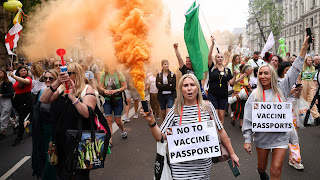 When people take to the street to protest this is often supposed to be a sign of democracy in action. People who believe that their concerns about the climate change, Covid lockdowns, racism and so on are not being adequately addressed by the political system make a public display of how many of them care a lot about it so that we are all forced to hear about their complaint and our government is put under pressure to address it.
 Carl Weinberg, in his excellent
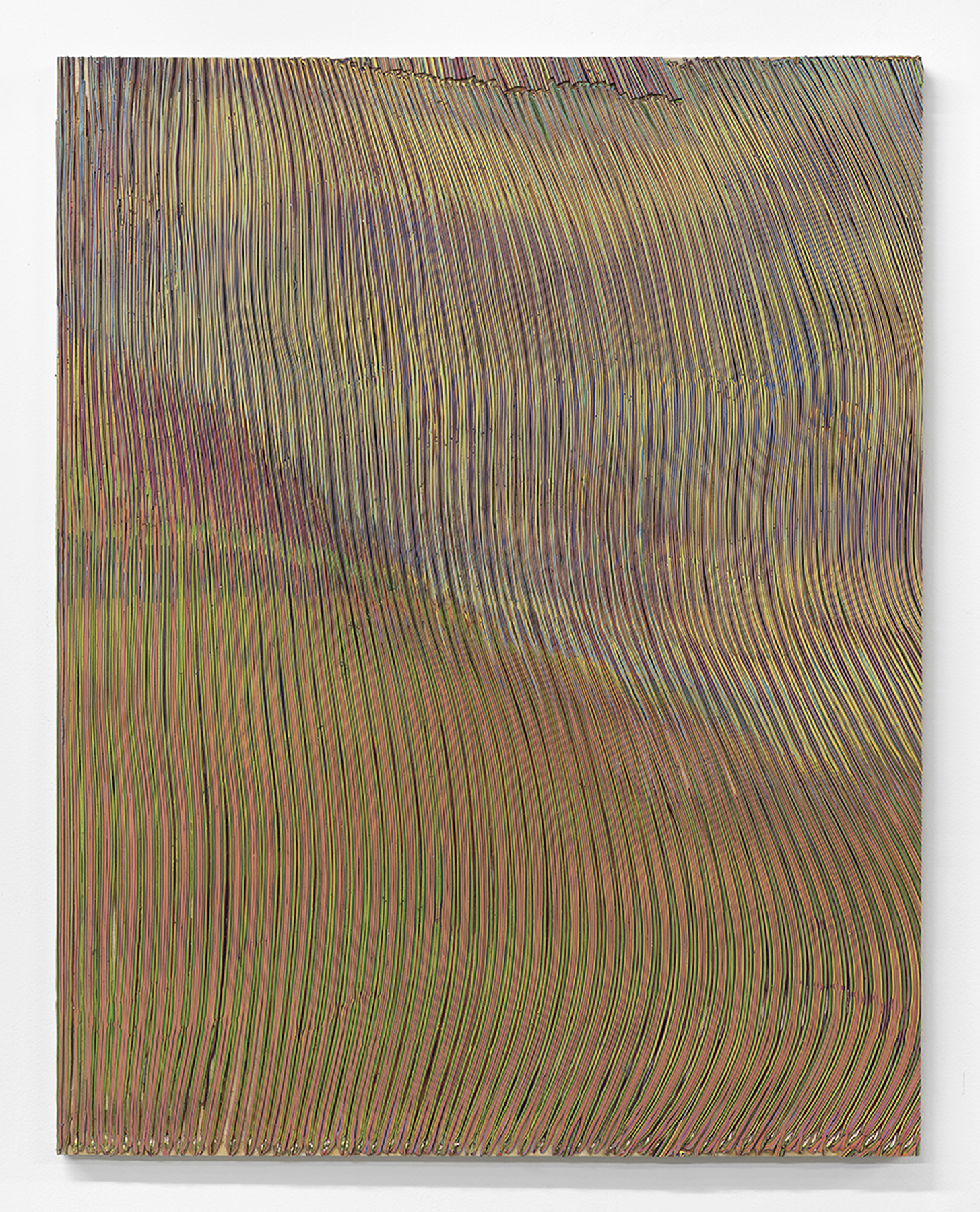 Loriel Beltran. P.S.W. 2007-2017