Editor’s Note: Frans de Waal’s new book, Different: Gender Through the Eyes of a Primatologist, has generated some controversy and misunderstanding. He will address these issues in a series of short essays which will be published at 3QD and can all be seen in one place here. More comments on these essays can also be seen at Frans de Waal’s Facebook page.
by Frans de Waal

Short answer: No.
Long answer: Physical dominance is not the same as power and leadership.
Photograph: For over forty years, Mama was the alpha female of the large chimpanzee colony at Burgers’ Zoo. Portrait by Frans de Waal.
A century ago, the London Zoo put about one hundred hamadryas baboons together in the wrong sex ratio. Over 90% of the monkeys were male. They fought for years, and by the end the females had died as well as most of the males. The scientist in charge, Solly Zuckerman, who was quite prominent (Fellow of the Royal Society), popularized this unmitigated disaster. In the primates, he claimed, males rule brutally and supremely. Females have no say whatsoever. His observations hinted, he felt, at the origin of human society. Repeated over and over by others, this view became mainstream even though we, primatologists, wisely don’t mention Zuckerman much anymore. Too embarrassing!
The male supremacy view still holds in the public mind, though, such as in the 2002 book “King of the Mountain” by American psychiatrist Arnold Ludwig: “Most humans have been socially, psychologically, and biologically programmed with the need for a single dominant male figure to govern their communal lives. And this programming corresponds closely to how almost all anthropoid primate societies are run.”
This statement resembles Sigmund Freud’s reconstruction of the first human family as a “primal horde” around an overbearing father figure.
There is little support for the notion of the obligatory male overlord, however. Read more »

 As forced migration in the wake of war and climate change continues, and various administrations attempt to additionally restrict the movement of people while further “freeing” the flow of capital, national borders, nativism, and a sense of cultural rootedness have re-emerged as acceptable topics in a globalized order that had until recently believed itself post-national. In the German-speaking world, where refugees have been met with varying degrees of enthusiasm depending on their provenance, national pride, long taboo following the Second World War, at least in Germany, is enjoying a comeback. As the last generation of perpetrators and victims dies and a newly self-confident, unproblematically nationalist generation comes to consciousness, it is again becoming possible to use a romantic, symbolically charged term like Heimat.
 Sughra Raza. Don’t Step On The Jewels, 2014.
 technology will somehow amplify itself into a superintelligence and proceed to eliminate the human race, either inadvertently – as a side effect of some other project, such as creating paper clips (a standard example), or deliberately.

 About eight years ago, I was in downtown Manhattan and went into a Warby Parker store, an eyewear retailer. I didn’t post anything on social media about it, but I did have location services enabled on Facebook. Later that day, Facebook started showing me ads for eyewear (something it had never done before.) How and why it did that wasn’t a giant leap of understanding, and I immediately turned location services off for Facebook. But of course, this was sticking one thumb in the crumbling dam that is my data privacy. I own an Alexa, and I have an iPhone, an Apple watch, and an iPad. And that’s just for starters. I use Google all day long, subscribe to multiple online publications, use Amazon regularly, have used Instacart in the past, and the list goes on.
 In the middle 1990’s my friend from the September Group, Sam Bowles, and I were invited by the Chicago-based MacArthur Foundation to form an inter-disciplinary and international research network to study the effects of Economic Inequality, with the two of us as co-Directors. I have known Sam for nearly four decades now. He is one of the brightest economists I know, with a large vision and wide-ranging interests that are often lacking in many bright economists. His landmark 2013 book Cooperative Species with his frequent co-author Herb Gintis uses experimental data and evolutionary science to show how genetic and cultural evolution has produced a human species where large numbers make sacrifices to uphold cooperative social norms. He himself has been socially alert and active in public causes all through his life, starting from writing background papers for Martin Luther King’s 1968 Poor People’s March to most recently providing leadership in the revamping of undergraduate Economics curriculum to include upfront non-standard issues like inequality, the environment and reciprocity and altruism in human behavior, and making it available free online worldwide. He is also one of the most generous and genial people I know.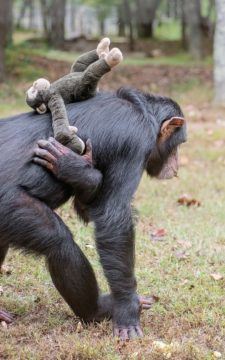




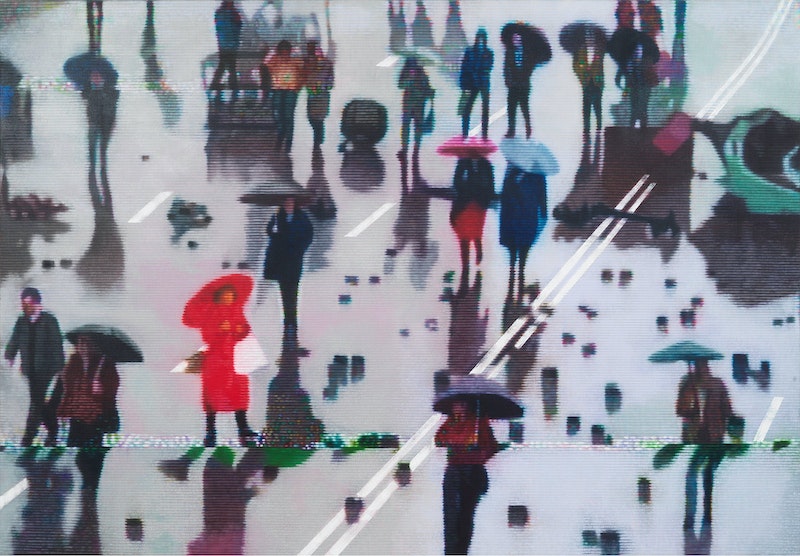 Kon Trubkovich. The Antepenultimate End, 2019.
 It seems we’re always tinkering with those eternities, not just to cherish their value or find their meaning, but to transform them into something else. Maybe that’s what creative writing ultimately is—momentary eternities arranged so that they somehow move the reader the way a perfect arrangement of musical notes might do. Reading is a compelling pastime for millions because words function as artfully selected indicators of events and images that readers will complete in their own minds, as they follow verbal guideposts for the imagination to begin to do its work.