
by David Kordahl
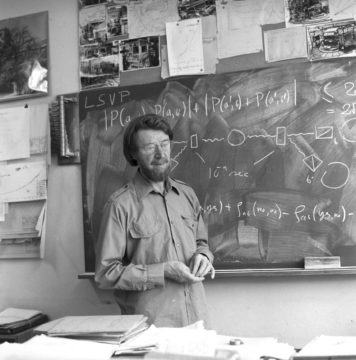
Every October, I try to carve out a little time to enjoy Nobel Season. This past week marked the climax of the last year’s iteration, with the winners of the various Nobel Prizes announced on successive days of the week. I had fun following the picks, and learning a bit about new things in the fields I don’t follow closely—which, frankly, is most of them.
Physics, however, was a different story. The physics Nobelists this year were familiar to me and most other physicists, seemingly obvious choices, if not exactly household names. Alain Aspect, John Clauser, and Anton Zeilinger have become standard characters in the physics lore of the past few decades. Their stories have even bled out into the wider culture. In Les Particules élémentaires, the 1998 novel by Michel Houellebecq, Aspect’s experiments are positioned as part of a “metaphysical mutation” comparable only to the birth of Christianity and the rise of science itself.
Well, as one might say of many grand claims…sounds important, if true. Here, I’ll be expressing my doubts about a few articles of common faith. Read more »
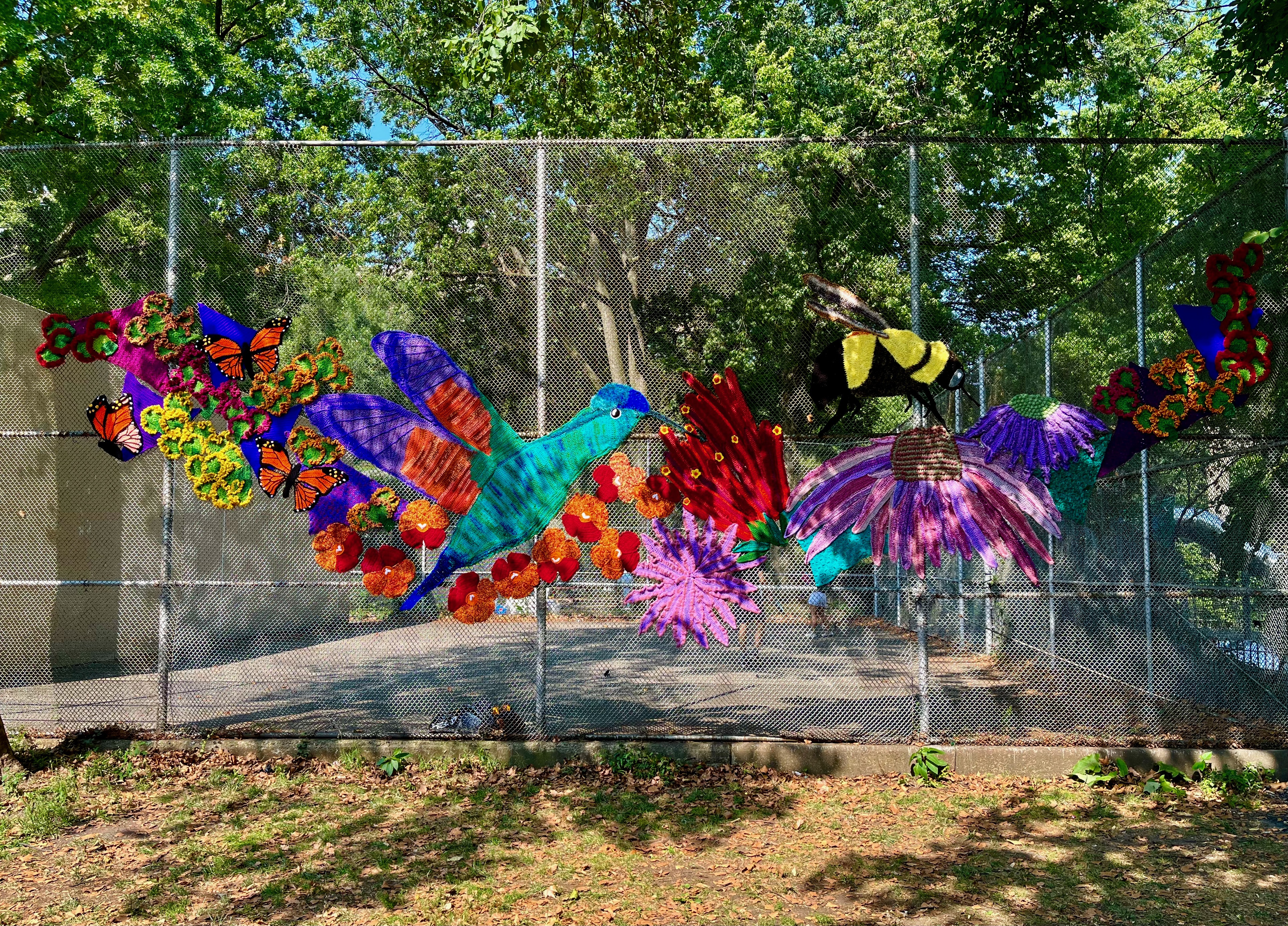 Naomi Lawrence. Tierra Frágil, 2022.
 Come die with me.
 by Leanne Ogasawara

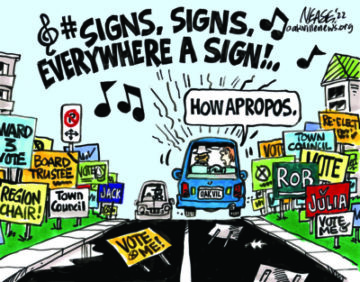 trustee. It’s a relatively minor position and non-partisan, so there’s no budget or staff. There’s also no speeches or debates, just lawn signs and fliers. Campaigning is like an expensive two-month long job interview that requires a daily walking and stairs regimen that goes on for hours. Recently, some well-meaning friends who are trying to help me win (by heeding the noise of the loudest voices) cautioned me to limit any writing or posting about Covid. It turns people off and will cost me votes. I agreed, but then had second thoughts the following day, and tweeted this:
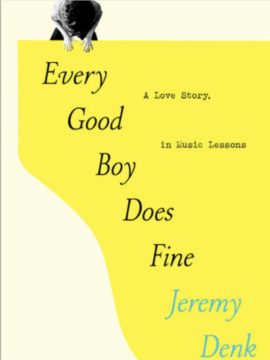 Before leaving Santa Fe I spent (yet another) morning at a coffeehouse. It’s an urban sort of behavior, and a Bachian one too – you might know about Zimmerman’s in Leipzig, the coffeehouse where Bach brought ensembles large and small to perform once a week. It seems to have been a chance to make some non-liturgical music, a relief from Bach’s otherwise very churchy employment.
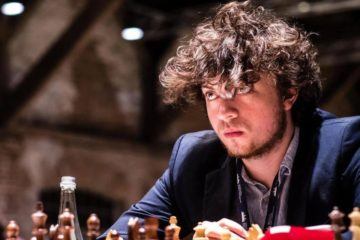 At a recent tournament sponsored by the St. Louis Chess Club, 19-year old Hans Niemann rocked the chess world by defeating grandmaster Magnus Carlson, the world’s top player. Their match was not an anticipated showdown between a senior titan and a recognized rising phenom. The upset came out of nowhere.
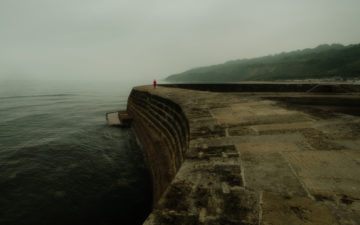 They all want it: the ‘digital economy’ runs on it, extracting it, buying and selling our attention. We are solicited to click and scroll in order to satisfy fleeting interests, anticipations of brief pleasures, information to retain or forget. Information: streams of data, images, chat: not knowledge, which is something shaped to a human purpose. They gather it, we lose it, dispersed across platforms and screens through the day and far into the night. The nervous system, bombarded by stimuli, begins to experience the stressful day and night as one long flickering all-consuming series of virtual non events.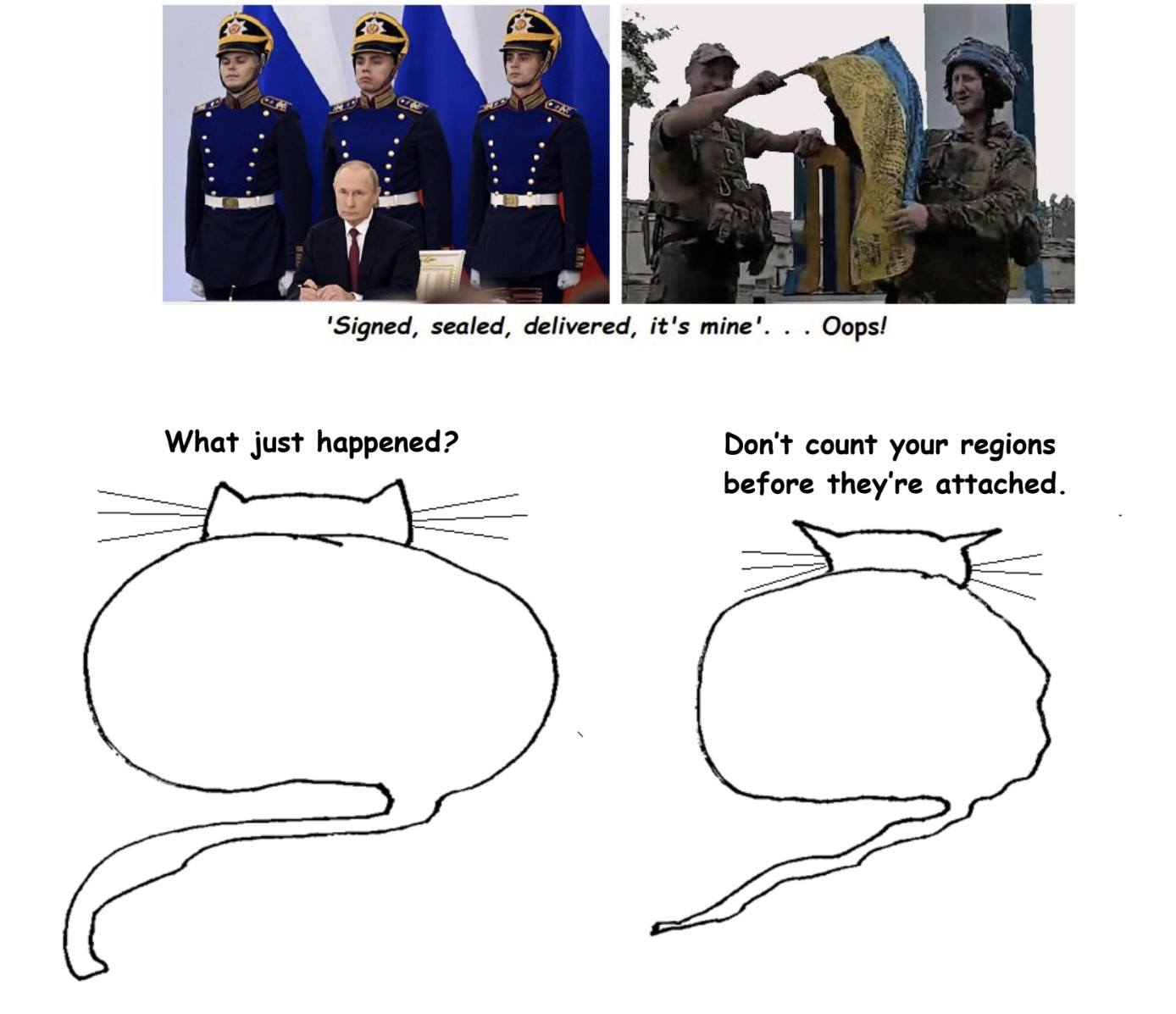
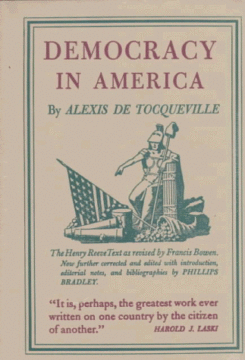
 Today “skepticism” has two related meanings. In ordinary language it is a behavioral disposition to withhold assent to a claim until sufficient evidence is available to judge the claim true or false. This skeptical disposition is central to scientific inquiry, although financial incentives and the attractions of prestige render it inconsistently realized. In a world increasingly afflicted with misinformation, disinformation, and outright lies we could use more skepticism of this sort.

 If you look at my profiles online, they are catered to appear normal, if dated. I haven’t posted very much over the past few years, and those that I have posted have been relatively mundane, which mark the relatively mundane moments of my life. They’re honest and small, like a photo of the street as I walk to school, or a picture of my friends at a park. My profile molds itself to match me.