by Rafaël Newman
Because I work part time developing a terminology database at a large econometric institute; and because it is important that, in this capacity, I remain abreast not only of raw vocabulary but also of the substance of recent developments in financial technology, known by its Orwellian moniker “FinTech”; and because the owl of Minerva flies at dusk—for all these reasons I recently dusted off my book-bag, packed my reading glasses and a roll of antacid, and registered for a course on blockchain, crypto, and digital currencies.
The three-month program I attended, leading to a so-called Certificate of Advanced Studies (CAS), was offered at the University of Zurich’s Blockchain Center, an interdisciplinary institute ranked fourth for university teaching of distributed ledger technology worldwide. And indeed, my fellow students had come from as far afield as Australia, India, and Brazil, as well as from various corners of Switzerland and Europe, presumably in the hopes of profiting from cutting-edge technical expertise in their work back home as computer programmers, bankers, and jurists.
Instruction was provided by a changing roster of professors in three modules of several full days each, devoted respectively to the IT, economic, and legal dimensions of the new(ish) technology. Each module was punctuated by an assignment, to permit evaluation of the participants: the IT module closed with an online multiple-choice test; the economic component was rounded out with a series of group-work exercises; and the legal section, and thus the course as a whole, concluded with a written essay, on a topic chosen from among suggestions made by the various professors, one of whom, depending on the student’s choice of topic, would then serve as supervisor. Read more »


 It’s not so much that I’m like my father. Rather, I sometimes feel as I understood him to be.
 The anger that escalated at a recent Ottawa-Carlton school board meeting when a trustee proposed and lost a motion to mandate masks, in a setting that typically elicits polite discussion, makes it seem like this type of anger is new and shocking in its inappropriateness. But this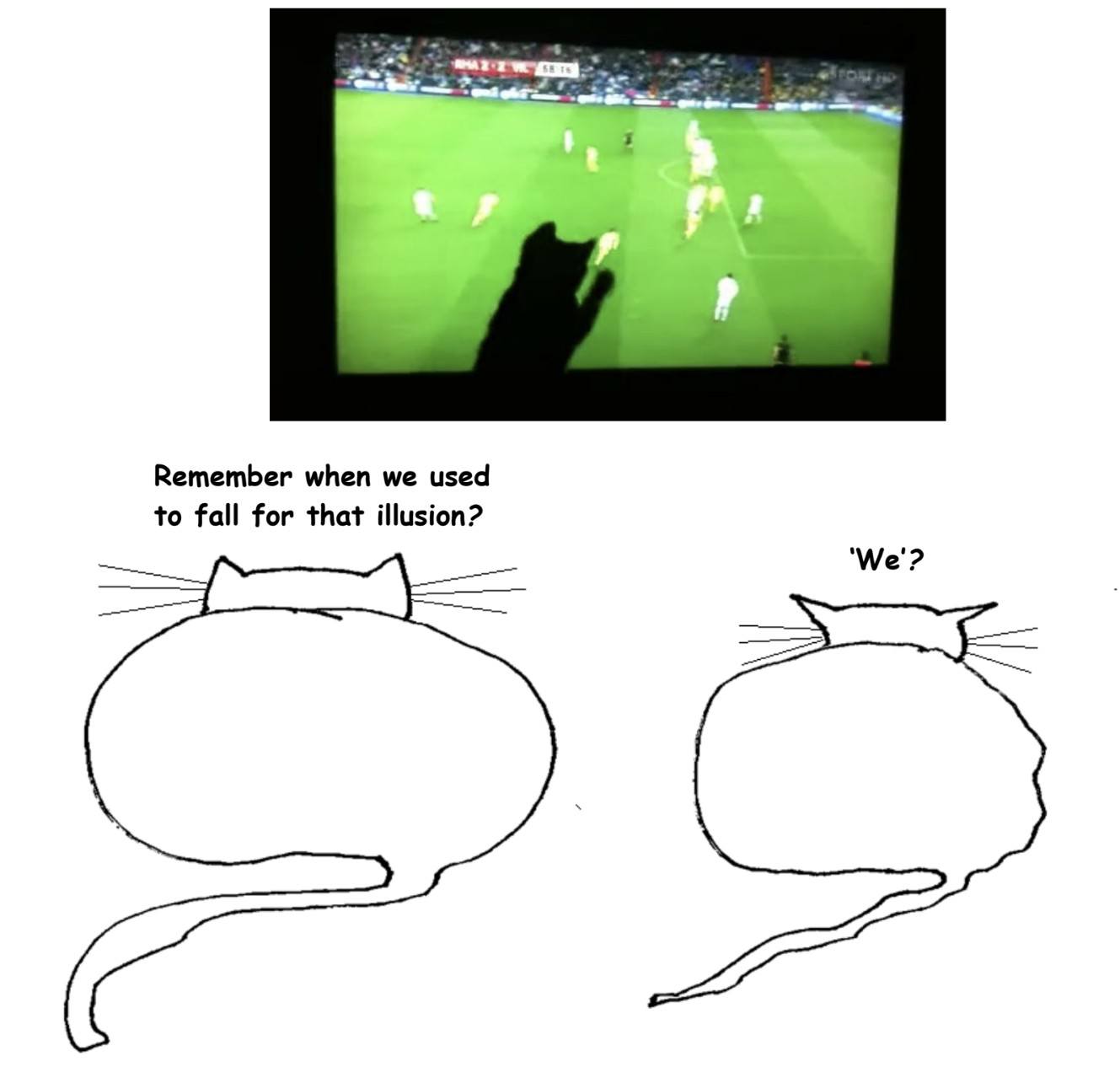

 The word arrived from the furniture store. They have come! After five months of supply-chain suspended animation, our 15 feet of 72-inch-high bookcases are here. Bibliophiles everywhere (well, everywhere in my family) raised their voices in praise.



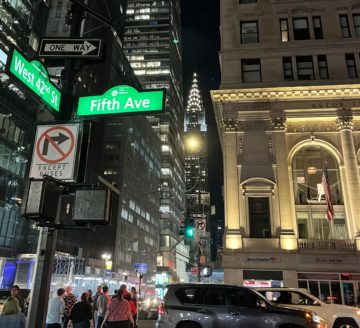 There was a period in my life when I believed that all humans came from one man. This included his wife Eve. After that followed a period when I believed nothing and I thought that was enough.
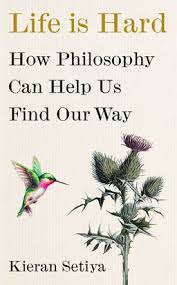 Does philosophy have anything to tell us about problems we face in everyday life? Many ancient philosophers thought so. To them, philosophy was not merely an academic discipline but a way of life that provided distinctive reasons and motivations for living well. Some contemporary philosophers have been inspired by these ancient sources giving new life to this question about philosophy’s practical import.
 Wendy Red Star. Winter – The Four Seasons Series, 2006.