by Bill Benzon
“I’m trying to treat her as an equal.”
– Moe, talking about Sutan
Of philosophy and food
Moe, the name has two syllables, is Moto’s wife and Sutan’s mother. Though it may also be a play on “a Japanese word that refers to feelings of strong affection mainly towards characters in anime, manga, video games, and other media [and] has also gained usage to refer to feelings of affection towards any subject.”
“Tan” is an honorific, roughly meaning small, and is used with babies, though I would say that Sutan is more a toddler at this point than a baby – at least in the usage common in my own (American) culture. She was a baby of 10 months when Moe started making Kimono Mom videos.
Moto, then, is Moe’s husband and Sutan’s father. When Moe started making her Kimono Mom videos Moto worked in the restaurant and hospitality business. But now he is business manager and partner in Moe’s YouTube business, which is centered on Japanese home cooking. And on Sutan.
Kimono Mom, though, is a cooking show in the way that Anthony Bourdain’s Parts Unknown was a food and cooking show. Yes, Bourdain traveled all over the world and showed us the food of many different cultures. But he used food as a vehicle for revealing and reveling in human diversity, for talking philosophy in plain language, for fun. Think of Kimono Mom as a philosopher with Sutan as her Socrates. She uses the cooking video the way Plato used the dialog form. It’s a vehicle.
Let’s walk through the video at the head of this article. (When watching the video be sure to click the “cc” button at the lower right. That will give you English language captions for people’s speech. You can set the language with this settings menu, the small “gear” to the right of cc.)
Moe, Sutan, Moto.
Sutan, Moto, Moe.
Moto, Moe, Sutan.

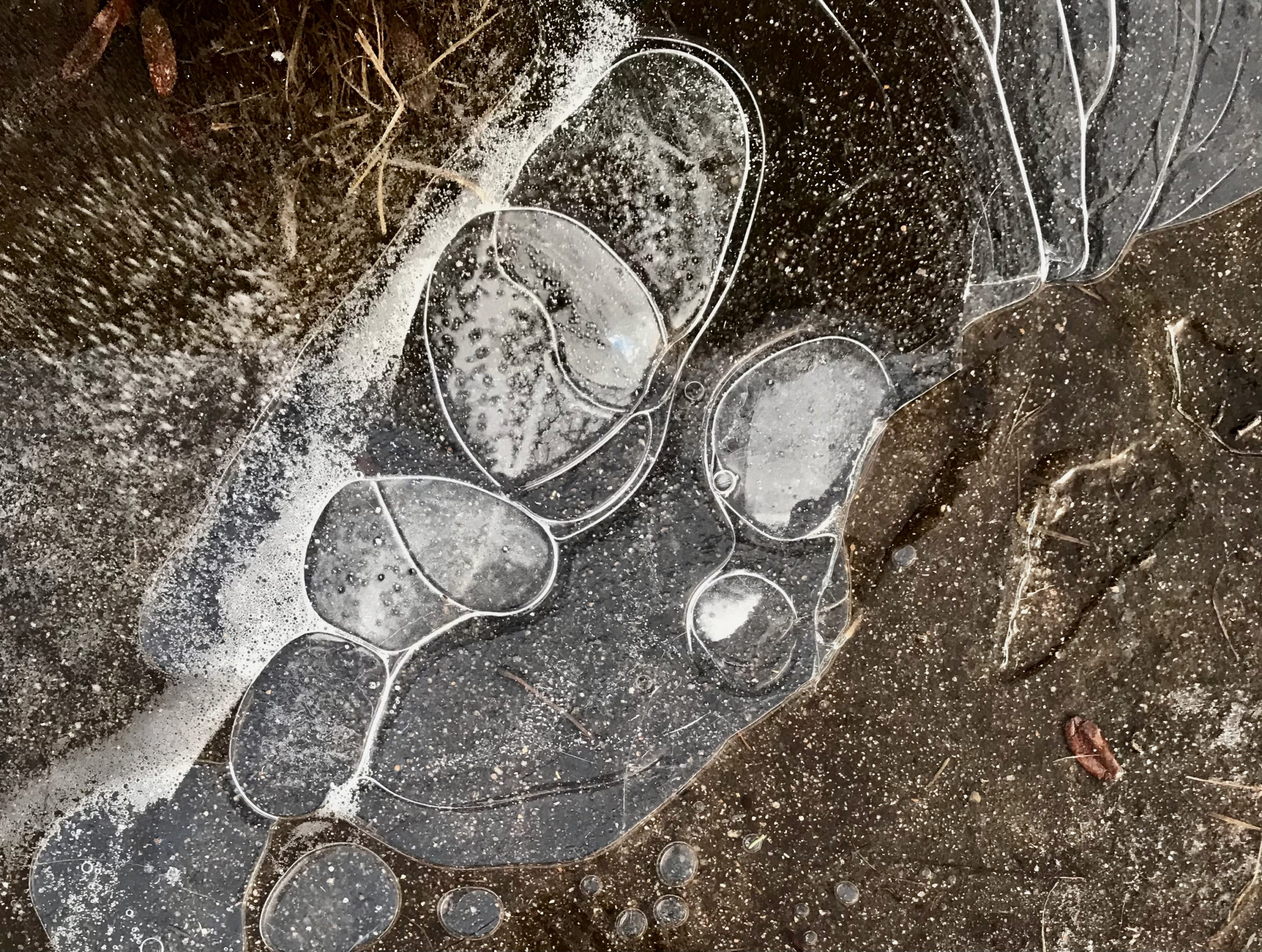 Sughra Raza. Early Winter Shapes, January 2022.
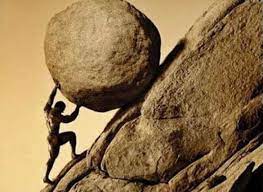 If we are to believe the most prominent of the writers we now lump under the category of “existentialism,” human suffering in the modern world is rooted in nihilism. But I wonder whether this is the best lens through which to view human suffering.
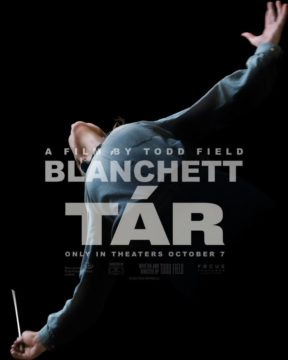 Blanchett’s performance has been much praised, and it is indeed a tremendous thing: she must be near the head of the queue for an Oscar this year. It’s a great performance in a genuinely worthwhile and absorbing film. I don’t think it really expands our understanding of the themes it features: power and the exploitation young hopefuls by the (seemingly) all powerful star, the question of great art and flawed artists and so on, but it’s possible to come out of the movie thinking that it has. Blanchett’s performance has a lot to do with that. So a great performance in a very good rather than great film (assuming such categories can really be employed so neatly).

 In
In  For the last several years, elected Republicans, full of anti-trans zeal, have challenged their opponents to define the word “woman.” They aren’t really curious. They’re setting a rhetorical trap. They’re taking a word that seems to have a simple meaning, because the majority of people who identify as women resemble each other in some ways, then refusing to consider any of the people who don’t.
 Let’s get the humble-bragging out of the way first: I’ve always had a remarkable memory.