by Oliver Waters
 Panic about runaway artificial super-intelligence spiked recently, with doomsayers like Eliezer Yudkowsy prophesising that, if current progress continues, literally everyone on Earth will die.
In a way, he’s right. Humanity will probably die out as technology progresses, but not quite in the depressing way he imagines. ‘Humanity’ after all, refers to two distinct things. The first is our biological species – homo sapiens. The second is our collective cultural existence – the beliefs, attitudes, and creations that make us truly who we are. Our biology is merely a platform for our humanities to dance upon, and it is a platform that transhumanists wish to eventually supersede.
If all goes well, we will design and build better bodies and neural systems that more seamlessly integrate with our information technologies. On this trajectory, there will be no grand dichotomy between humans and ‘Artificial General Intelligences’. All persons, whether descended from apes or designed in a lab, will be constantly upgrading their cognitive systems to be ever wiser and sturdier.
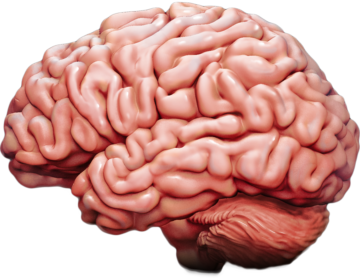
The first big step on this journey will involve scanning your brain for all relevant neural information, which would then be loaded into a synthetic brain, attached to a comfortable artificial body. Science fiction has already imagined the countless benefits of existing in such a digital, computational brain. Practical immortality is at the top of the list, given you can ‘download’ your backed-up state of mind into a new body if you happen to be hit by a train or are notoriously assassinated. Read more »
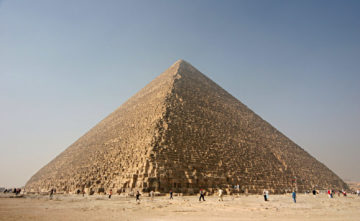 Not long ago, I went to the Yale University Art Gallery and saw their collection of Egyptian art. Seeing the dates on some of the pieces, it occurred to me that I had never really considered just how old Egyptian civilization is. I looked up some historical events to get perspective, and learned that I am closer in time to the assassination of Julius Caesar (44 BCE, which is 2,066 years ago) than Julius Caesar was to the construction of the Great Pyramid of Giza (circa 2500 BCE, over 2,400 years before Caesar’s death). Caesar’s death is ancient history, and the building of the Great Pyramid is also ancient history, but – for the sake of perspective here – the Great Pyramid’s construction was also ancient for Julius Caesar. That’s how old Egyptian civilization is.
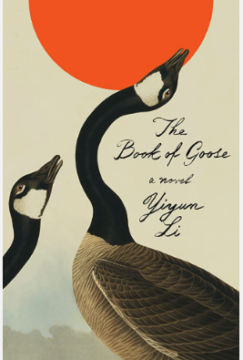 When Yiyun Li took questions about her new novel, The Book of Goose, at my local bookstore, someone said her new novel felt awfully dark. (I don’t remember the precise wording, though Yiyun might, as she sometimes offers people she has met briefly “a detailed account” of their encounter
  Twenty-six years ago, on a late-afternoon, late-summer sojourn down Liverpool’s Bold Street, a High Street of dark pubs and record stores, Donner kebab counters and chip shops, Frank accidentally walked into 1965. On his idyl perambulations to meet up with his wife at Waterstone’s, where she was grabbing a copy of Trainspotting, and Frank noticed a different slant of light, an alteration in the atmosphere, a variation in the sounds from the street, a drop in temperature. The summer odor of warm beer and fetid air replaced with the crispness of Christmas time. Approaching the bookstore, the Cranberries blaring on the music system, and mid-tune it’s replaced with a tinny radio playing a Herman’s Hermits number. Bold Street’s pedestrians were no longer wearing Oasis and Blur t-shirts, now they were men in boating jackets and mop tops, women in Halston dresses and pixie cuts. The road no longer paved, but cobblestoned. Frank noted that the Waterstone’s façade was now of a shop named “Cripps,” a woman’s clothing store that had been on this spot but closed decades before. Just as he crossed the threshold, and Cripps was abruptly transformed back into a bookstore. Misapprehension, misconception, misinterpretation? Hallucination or hoax? Vortex or ghosts? As paranormal writer Rodney Davies helpfully opines in Time Slips: Journeys into the Past and Future, “One theory state that past, present, and future are all one… But our limited consciousness can only experience time by being in what we know as ‘the present.’” Mayhap.

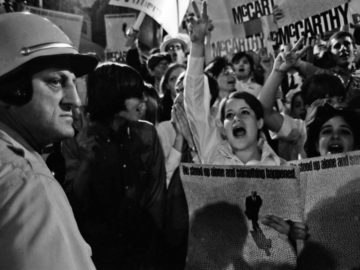 When I heard that Chicago will host the 2024 Democratic National Convention next August, (August 19-22,) it brought back a flood of memories. Memories, not only of the convention itself, but of the 60’s. “The 60’s” did not exactly span the decade but began in 1963 , when John F Kennedy was shot, and ended in 1975, when the war in Vietnam ended. During this relatively short period, our country went through a large number of societal changes, including political changes, changes in gender stereotypes, in racial interactions, in acceptable speech, in sexual mores. This was the time when we Baby Boomers came of age, when the 76 million Americans born between 1946 and 1954, began to flex their muscles and recognize how much they could accomplish, and what a loud voice they had when acting as a group. For example, they influenced clothing styles and music. They had tremendous purchasing power, as most of the clothing for sale after the 60’s was more appropriate for a-19–year-old than for a 40 or 50- year old American!


 Nanni Moretti has always been a melancholic in denial. Perhaps more than any other film-director raised on the French New Wave – born in 1953, shooting his first short in 1973 – Moretti has been turning around the question that François Truffaut posed as a key to the seventh art: is cinema more important than life? But where for Truffaut, or Rossellini, as for many amongst their long and glorious lineage (from Spielberg to Tran Anh Hung) the dilemma has been between a painful reality full of obstacles on one side and a ‘harmonious’ path where ‘there are no traffic jams’ (to speak like Truffaut in his 1973 Day for Night), on the other – in other words, where cinema is the path of escape towards a world where dreams (or nightmares) come true – for Moretti, it is the dilemma itself which is the essence of cinema.