by Terese Svoboda
What says grief to you? Probably not a sunlit meadow. What about the scent of too many lilies, a blank stone, netting over the eyes, an all-black outfit? So chic, all that black – but nothing says dead better than pavement. The premier Parisian color, it practically insists Dig Here. On the other hand, sympathy cards declare the overwhelming woodenness of my feelings, folded, with only the lick on the envelope possibly authentic. The thank you cards in response even come pre-printed. Few eulogies are delivered with the stamp of cynicism or irony that might authenticate individual mourning, as distinguished from the above puddle of saccharine responses. To soften the blows of grief, survivors pull linguistic veils over their brains, even unto the word itself, death. “Passing” replaces it, as if life were something given up bowels-first, completely ignoring the visceral start “death” gives the griever, feeling the dead suddenly present, which is instinctual grief, really just a variation on mouse- or snake-fear. What can you say back to grief?
You mount the pulpit and look over the heads of the grieving and see a bobbing white form afloat in the ether. Your job as eulogist is to conjure this ghost back to life by retelling the tangle of mishaps and crazy love and signature tics that made up the dead him or her or they. You’re very sad that you can’t go on forever cherishing this singularity because like sea foam, the details quickly disappear. To capture it temporarily, you create a story about the deceased in which good things happen, which will put him in whatever bed by means of your largesse, forgiveness, and perhaps exaggeration. You’re probably mourning yourself at the same time anyway – this could happen to me! That bit of self-administered horror provides a little thrill, mid-sadness, and makes the life of the dead you mourn more poignant. Haunting even.
When my mother died, the officiator said no speeches were allowed either at the funeral or the viewing. He wanted total control, no messy emotions. No one should get carried away except the dead. The only occasion left for us to say anything was over cookies and milk in the church basement, not conducive to the kind of toasts that might make her sound as difficult as she was. What my dad wanted at his funeral was any rendition of “I’m a Coca Cola Cowboy” played loud and long on the organ. Although his service was held in a Catholic church, we compromised with “Onward Christian Soldiers,” the tune he liked to sing while marching with his drip pole. Just telling you that cheers me up, signals my grief all over again. Read more »

 I’ve been visiting Ontario this month. Which is a wildly non-specific thing to say, since the province of Ontario, though only the second largest of Canada’s constituent divisions, boasts a surface area greater than those of Germany and Ukraine combined. But while I would normally designate as my destination the city in Ontario in which I mean to stay during my annual visit to my home and native land—as for instance Toronto, the provincial capital, where I went to high school and university; or Kingston, once Canada’s Scottish-Gothic capital, where my brother has settled with his family—the particular reason for this year’s sojourn, which began with a brief visit to relatives in Montreal, was my niece’s wedding, on August 12, celebrated at her fiancé’s family home in Frankford, with guests put up in the towns surrounding that hamlet on the River Trent, in Hastings County, the second largest of Ontario’s 22 “upper-tier” administrative divisions. Which all feels to me quite uncannily foreign, not to say unutterably vague. Hence simply: I’ve been visiting Ontario this month.
 Sughra Raza. Untitled, July 2020.
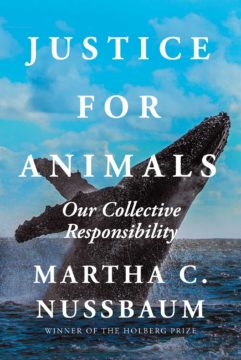 The cover of Martha Nussbaum’s Justice for Animals (2023) shows a humpback whale breaching: a magnificent sight, intended to evoke both respect for the animal’s dignity, and interest in its particular forms of behavior. Here is a creature which has moral standing, without being a direct mirror of our human selves.

 Resmaa Menakem’s
  Dear Peridot Child,


 I met Kseniia during my second visit to Ukraine, in June 2023. The moment I met her, I knew that this thirty-four-year-old woman is a special one. Kseniia belongs to the type of women who made Molotov cocktails to help defend Kyiv in March 2022. “I had some romantic idea to create these Molotov cocktails, because I heard that it might come to urban warfare, and I wanted to help. We spent a whole day making them, but the smell of petrol was awful.” Nevertheless, Kseniia made several boxes.
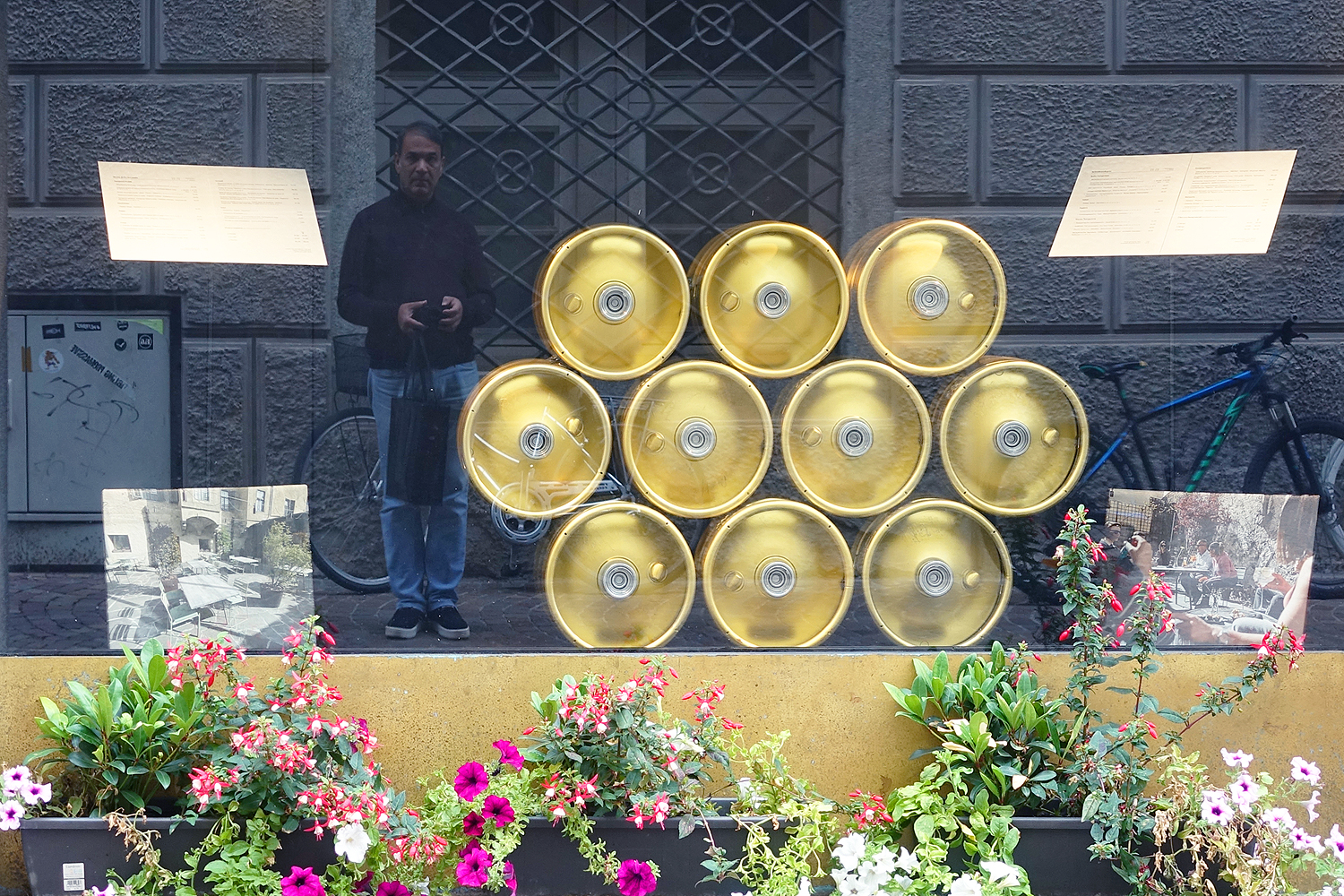
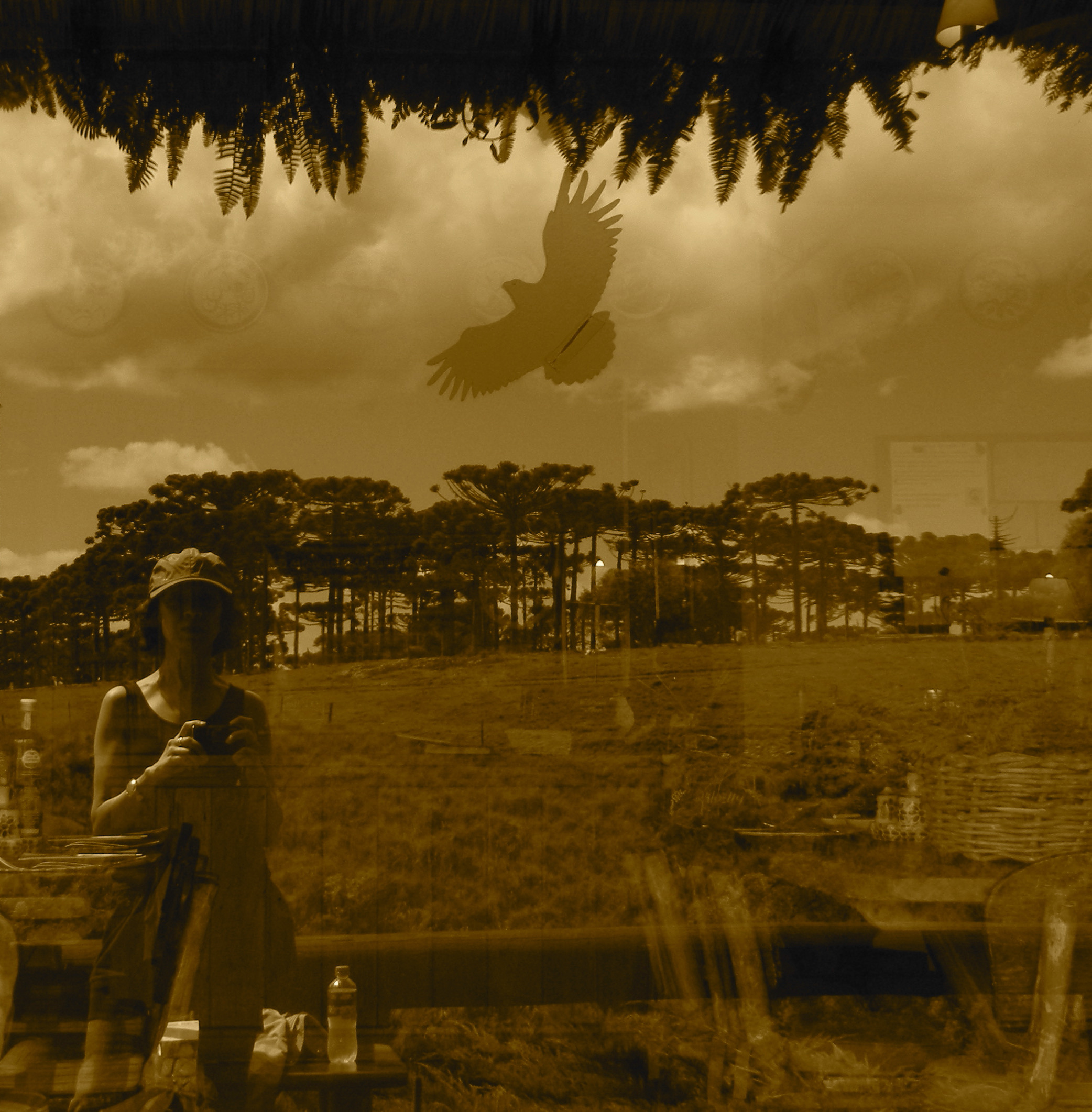 Sughra Raza. Self-portrait at Itaimbezinho Canyon, Brazil, March 2014.