
by Mindy Clegg
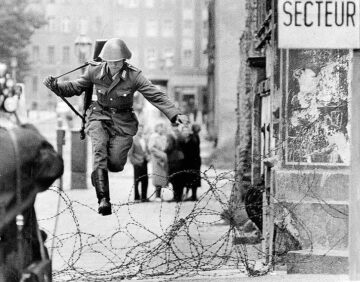
The Cold War ended somewhere between 1989 and 1991 or if you take the disintegration of Yugoslavia into account, maybe into the 2000s. It is now seen as the end of an era, a closed loop in history. It started with the Communist revolution in 1917 and ended with the end of one-party communist rule in Eastern Europe. The dissolution of the Soviet Union especially signaled the end of the debate about the two supposedly opposing economic systems. The argument goes that communism as practiced in the second world proved unable to keep up with the productive capacity and flexibility of the western capitalist systems, which (many believed) were underpinned by truly democratic norms.
But what if it’s not the struggle between capitalism and communism that was really at the heart of the twentieth century, but was really a more expansive struggle within the world system that developed since the sixteenth century? What if we’re still in the midst of it? I argue that there was a deeper conflict rooted in the debate over who gets to decide how our societies function. This struggle reaches back to the past and shapes our present. We can see this deeper struggle within the communist-capitalist conflict, as that narrative allowed the US and the Soviet Union to double-down on various bad-faith actions with regards to either their own populations or their actions abroad. The fight is between democracy and authoritarianism, the people and the powerful. Democracy clashed with the authoritarian reactionary forces since before the age of revolutions, making the Cold War merely a part of a larger dialectical discourse of the modern world. Read more »


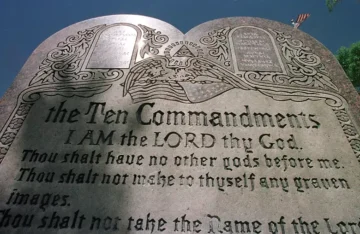 In 1762, Jean-Jacques Rousseau prophetically declared that “we badly need someone to teach us the art of learning with difficulty.” Two hundred and fifty years later, Rousseau’s words seem clairvoyant in their relevancy to schooling in the United States. Education has come to the forefront of the array of issues emerging in the post-Covid era. The abandonment of the alphabet soup of standardized tests, student reliance on Chat GPT, and rampant grade inflation all point to a wider problem. And though some politicians see the Ten Commandments as the solution to classroom troubles, universal progress toward a real solution seems far away. Not that some don’t try.



 Sanford Biggers. Transition, 2018.
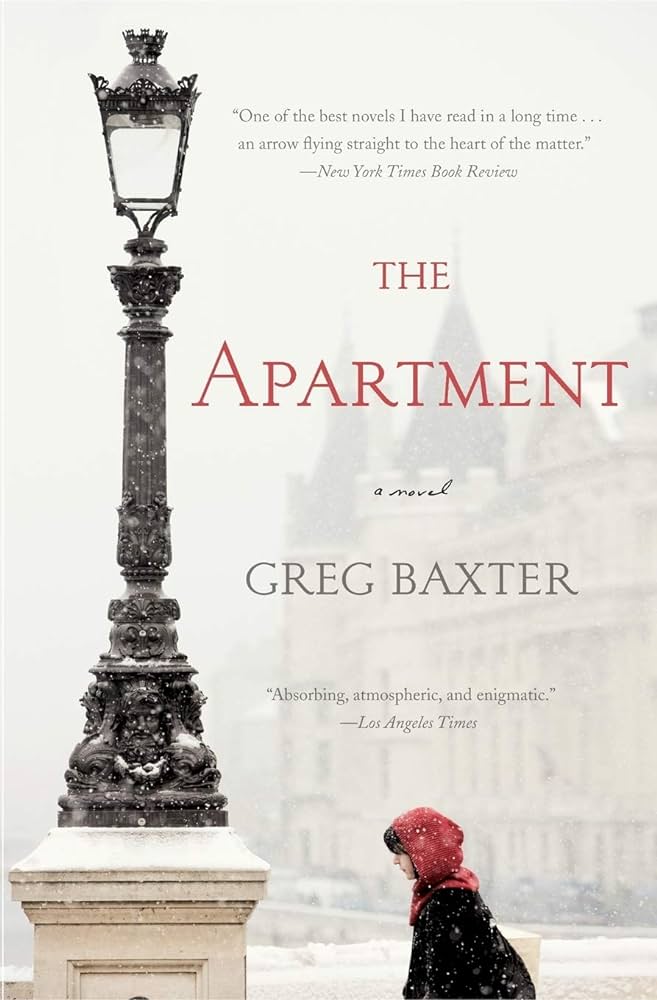 Have you ever read a book that you thought you were going to write? A book that captures something you’ve experienced and wanted to put into words, only to realize that someone else has already done it? The Apartment by Greg Baxter is that book for me.


 It was my birthday last month, a “round” one, as anniversaries ending in zero are known in Switzerland; and in gratitude for having made it to a veritably Sumerian age, as well as for the good health and happiness I am currently enjoying, I threw a large party for family and friends. Then, not quite one week later, I flew off to Albania, a land I have come to associate with the sensation and enactment of gratitude.
 Introduction