by John Allen Paulos

Election season has put an increased focus on the stock market, but little attention is ever paid to the Efficient Market Hypothesis (the EMH, for short). As I’ve written in A Mathematician Plays the Stock Market, it is a fundamental and important notion, but it is also a little weird. Its recent formulation derives from the work of Eugene Fama, economist Paul Samuelson, and others in the 1960s. The basic idea, however, dates back more than 100 years when Louis Bachelier, a student of the great French mathematician Henri Poincare, formulated an early version. Roughly, the hypothesis maintains that stock prices reflect all relevant information about the stock. As Fama put it, “In an efficient market, competition among the many intelligent participants leads to a situation where, at any point in time, actual prices of individual securities already reflect the effects of information based both on events that have already occurred and on events which, as of now, the market expects to take place in the future.”
The EMH depends crucially on what information is assumed to be reflected in the stock price. The weakest version maintains that all information about past market prices is already reflected in a stock price. A stronger version maintains that all publicly available information about a company is already reflected in its stock price. The strongest version states that information of all sorts, even inside information, is already reflected in the stock price.
It was probably this last rather implausible and all-encompassing version of the hypothesis that underlies the joke about the two efficient market theorists walking through town. They notice a hundred dollar bill on the sidewalk and simply ignore it. If it were real, they conclude, someone would have been picked it up already. Even more risible is the question: How many efficient market theorists does it take to change a light bulb? Answer: The answer is none. If the bulb needed changing, the wisdom of the market would have insured that it had already been changed.
So why do people think that the market efficiently, and more or less immediately, responds to changes in the conditions for a particular stock or even for the market as a whole? The answer is that investors are always seeking an edge to increase their gains or decrease their losses, and they try to do so in a multitude of ways. They’re on the lookout for new bits of information possibly relevant to a company’s stock price that may be enough to quickly raise or lower it. Because of this swarm of profit-hungry and loss-averse investors, the market rapidly responds to new information, and efficiently – there’s that word again – adjusts prices to reflect it. The changes take place so rapidly, or so the story goes, that even utilizing technical rules or fundamental analyses aren’t fast enough to be fully exploited, and investors who pursue them will see their excess profits shrink to zero. Read more »
 Because I have taken some medical leave from 3QD in the past few weeks, we have not had magazine posts for a while, though we have continued to post curated articles in the “

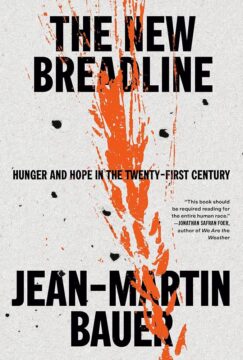 Many decades ago, I was fortunate to have had the opportunity of living in India for several years. I was enthralled by that country: its cultural richness; the environment; the food, but most of all the friendliness and warm hospitality of its diverse people. There were, of course, issues that confounded me and stark contradictions stared back at me from many directions, but of particular concern was the scale of the poverty amongst vast sections of the population, an issue that visited me at home frequently. A small begging community gathered regularly at my front gate, hungry and calling out for food. As my knowledge of the Indian social structure deepened, I came to understand that these people belonged to the most oppressed castes in Indian society and not only they, but a multitude of others were living in poverty, and with hunger.





 Chakaia Booker. Romantic Repulsive, 2019.
 I will use this column to defend myself against the accusation, first made by my surgical assistant Mr. Alan Turing, that I was negligent in the death of an individual under my medical care. Or, as one armchair prosecutor has said, that I am “a stereotypically British sentimentalist who thinks dogs are more human than people.”
 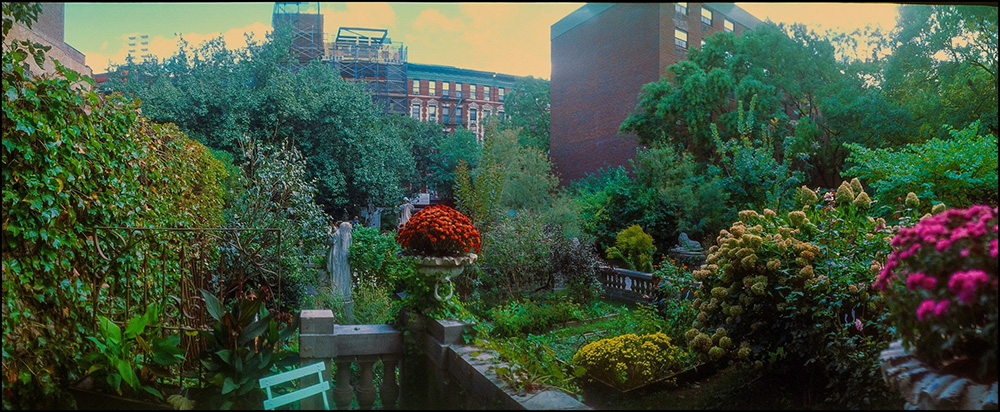 There is a beautiful garden in a quiet tree-lined street in Manhattan’s Little Italy. There are rows of flower, lush, abundant and slightly wild, a stone balcony you can imagine Romeo climbing up to, stone balustrades, several lions, one with climbing vines adorning his face, a sphynx, various other statues, a copy of a Hermes medallion from the late antiquity, a fig tree and a hydrangea tree, giant shady pear trees, and many small hidden paths that lead to gazebos and intimate garden spaces. People in the garden sit and while the time or read by a little table. In a very small space, Elizabeth Street Garden has been able to replicate the richness of life, spaciousness of spirit, the magnanimity and dedication to beauty of the best Italian gardens. It is one of the truly great places in NYC. But after 12 years of struggle between the city and garden advocates, on June 18, 2024, the