
by Rafaël Newman
 It was my birthday last month, a “round” one, as anniversaries ending in zero are known in Switzerland; and in gratitude for having made it to a veritably Sumerian age, as well as for the good health and happiness I am currently enjoying, I threw a large party for family and friends. Then, not quite one week later, I flew off to Albania, a land I have come to associate with the sensation and enactment of gratitude.
Albanians in official capacity are fond of giving each other elaborately worded certificates of gratitude, presented in velveteen dossiers at formal ceremonies. I know this because I have attended several of these ceremonies. I have even received such a certificate myself—for, although not a native of Shqipëria, I have now twice been invited to participate in Albanian cultural affairs.
The first occasion, in 2019, was a literary festival in Pejë, in northwest Kosovo, where I joined a host of poets from across the Balkan region and beyond to read poetry in memory of Azem Shkreli (1938-1997), a local man of letters. During the closing ceremony, surrounded on the stage of Pejë’s municipal theater by the many poets in attendance and congratulated by various Kosovar dignitaries, I was handed my certificate by the woman who had invited me to the festival, my friend Entela Kasi, president of the Albanian PEN Centre. Read more »
 Introduction
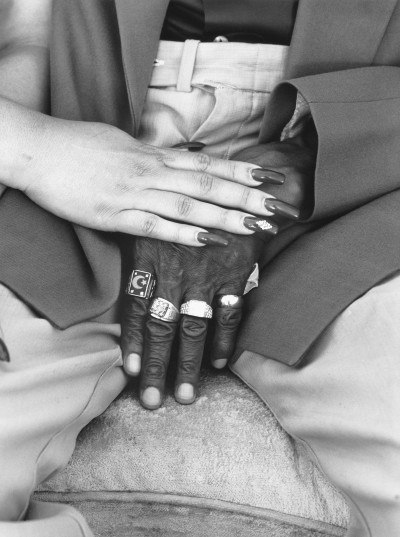 LaToya Ruby Frazier. Mom and Mr.Yerby’s hands, 2005.
 The turn of the 21st century saw a burst of atheistic declarations and critiques in the United States and Great Britain, led by a small group of celebrity atheists including Philosopher Daniel Dennett, Biologist Richard Dawkins, and journalist Christopher Hitchens. I have always found this New Atheism, as the movement is often called, to be a mixed bag. It was long overdue, and many good (if obvious) points were made. However, there was also a fair bit of navel-gazing and even stupidity. And among some of the celebrity leaders, I believe, there was also a profound misunderstanding of religion, how it functions, and even its basic purposes.
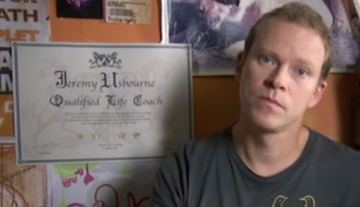



 According to the anthropologist James Bielo
 This is the first in a series of three articles on literature consider as affective technology, affective because it can transform how we feel, technology because it is an art (tekhnē) and, as such, has a logos. In this first article I present the problem, followed by some informal examples, a poem by Coleridge, a passage from Tom Sawyer that echoes passages from my childhood, and some informal comments about underlying mechanism. In the second article I’ll take a close look at a famous Shakespeare sonnet (129) in terms of a model of the reticular activity system first advanced by Warren McCulloch. I’ll take up the problem of coherence of oneself in the third article.
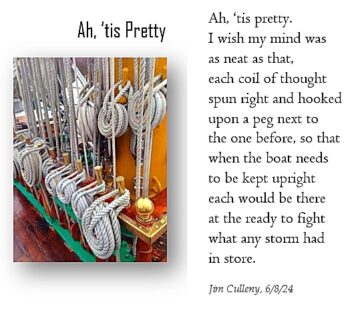
 Jaffer Kolb. Untitled, June, 2024.

 One longstanding debate in aesthetics concerns the relative virtues of formalism vs. contextualism. This debate, which preoccupied art theorists in the 20th Century, now rages in the culinary world of the 21st Century. Roughly, the controversy is about whether a work of art is best appreciated by attending to its sensory properties and their organization or should we focus on its meaning and the social, historical, or psychological context of its production. The debate is similar in the world of cuisine. How best should we appreciate the food or beverages we consume? Should we focus solely on the flavors and aromas or does authenticity and social context matter?