by Christopher Horner
Here’s an imaginary conversation, based on real ones that I’ve heard or taken part in. The names I use mainly relate to the USA and UK, but the points apply more widely than that.
All these mugs voting for Trump, or Reform, Le Pen and so on. They either don’t know the truth, or don’t want to know it – and they vote for grifters that don’t represent their best interests. Right wing populists get into power, promise to improve things, then just reward their super rich buddies. I despair: these people are just watching fake news on Fox, GB News etc, and swallowing the lies.
You need to ask deeper questions than that. What was the state of things before the rise of these ‘grifters’? People didn’t suddenly become stupid 10 years ago. In fact, I don’t think ‘stupid’ has much to do with it.
Isn’t voting for Trump or Brexit stupid, since he is an obvious liar and Brexit was an obvious con?
There’s more to it than that. See how things got this way. Places like the UK, the USA etc have been ruled for decades by a managerial elite, one a bit to the Right, the other very slightly Left. In all those years, what did they do to enhance public trust in politicians? Look at the Iraq war, for instance. People were lied to. Or the enormous increases in inequality – think of the rust belts created by the wholesale embrace of ‘globalisation’. People were either told that the money didn’t exist to fix the problems, or that the problems didn’t exist at all. The message received was ‘you don’t matter’. Meanwhile lobbyists poured money into ‘their’ politicians and who then furthered the interests of the 1%, who clearly did matter. The result was a loss of trust in democracy itself. A class of elite politicians with more in common with each other than with most citizens. A minority did very well out of this: the majority did not. Read more »

 Graham Foster from the
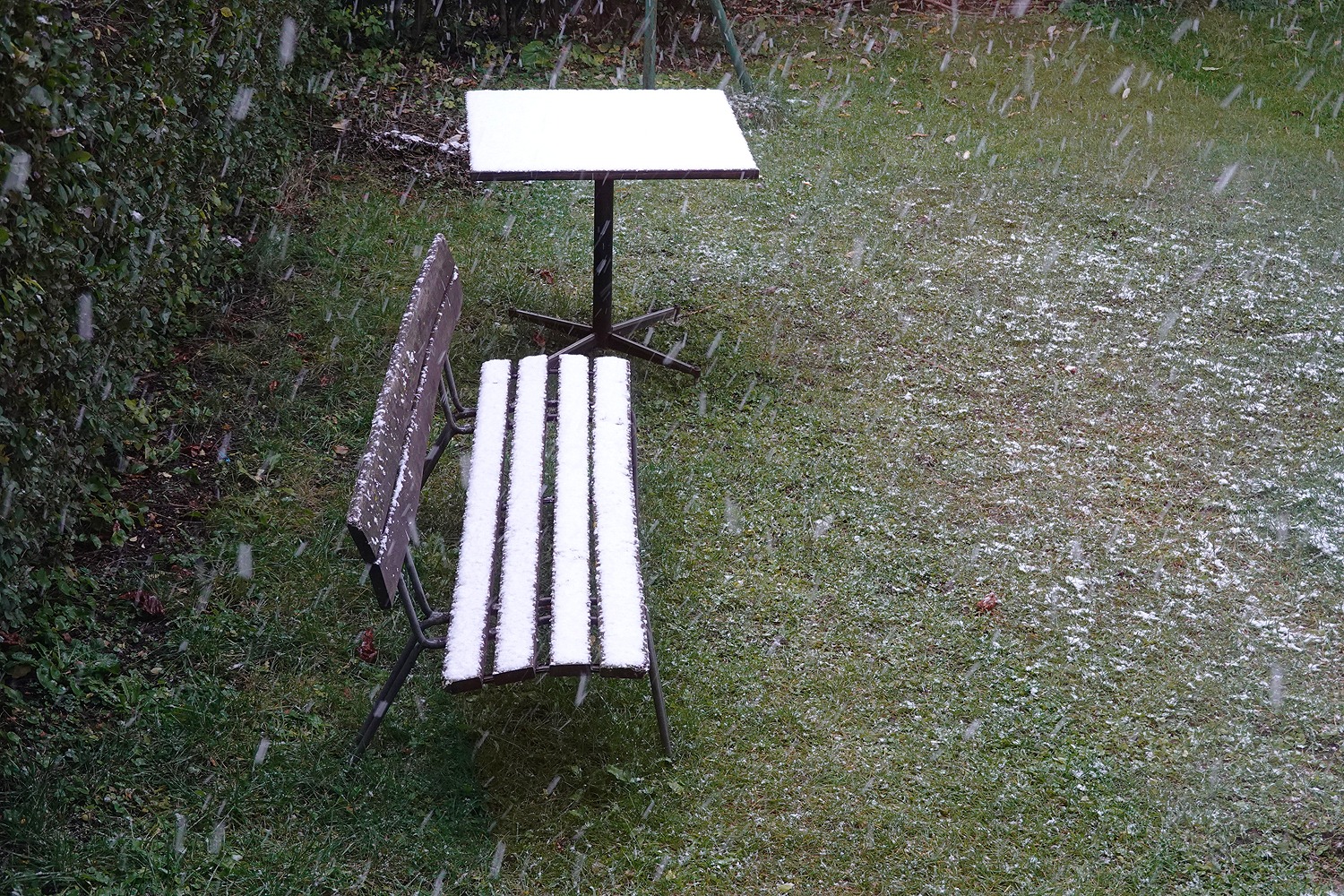
 unenlightened temperature scales) is a kind of touchstone temperature for Canadians – a midsummer sort of heat, usually restricted to July and August, permissible in June and September, but out of its proper place elsewhere. (Its mirror image, -30 degrees (-22 degrees F) is likewise to be restricted to the depths of January and February – though increasingly infrequent even there.) These 30 degree days at the beginning of October had intruded on a moment when every instinct was attuning itself to the coming rituals of autumn, and it thus accorded jarringly, like the rhythm section had suddenly lost its way in the middle of the song.
 In earlier essays, I argued that beauty can orient our desires and help us thrive in an age of algorithmic manipulation (
 The full title of Charles Dickens’ 1843 classic is “A Christmas Carol in Prose: Being a Ghost Story for Christmas.” Inspired by a report on child labor, Dickens originally intended to write a pamphlet titled “An Appeal to the People of England on behalf of the Poor Man’s Child.” But this project took a life of its own and mutated into the classic story about Ebenezer Scrooge that virtually all of us think we know. It’s an exaggeration to say that Dickens invented Christmas, but no exaggeration to say that Dickens’ story has become in our culture an inseparable fixture of that holiday.