by Michael Liss
… I watched with increasing apprehension the Third Republic go downhill, its strength gradually sapped by dissension and division, by an incomprehensible blindness in foreign, domestic, and military policy, by the ineptness of its leaders, the corruption of its press, and by a feeling of growing confusion, hopelessness, and cynicism (Je m’en foutisme) in its people. —William L. Shirer, The Collapse Of The Third Republic
“Do you think America’s political system can still address the nation’s problems or is it too politically divided to solve its problems?” 33% said “can still address”; 64% “too politically divided.” —Results of a nationwide New York Times/Siena poll of 1,313 registered voters conducted from Sept. 22 to 27, 2025.
Let me take you back 10 years, to the fall of 2015. An email from a good friend, the type of person America doesn’t manufacture anymore—both a scholar and an international businessman, multilingual, connected to an array of influential institutions and people, and a moderate Republican.
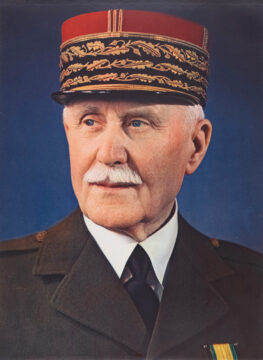
He was writing just after the November 2015 Islamic State-sponsored Paris and Saint-Denis terror attacks, which left over 100 dead and 400 injured. The breakdown in civic culture was part of his concern, but it wasn’t the only one. He was profoundly worried about the startling rise of Donald Trump. He wondered if we in the United States weren’t also turning toward the anger, the xenophobia, and the dysfunction that characterized the discourse in 1920s and 1930s Europe. That was the atmosphere that brought then to a Hitler and a Mussolini, the “confusion, hopelessness and cynicism” in France that Shirer wrote of. Could it happen here?
For context, Trump had entered the contest for the GOP Presidential nomination on June 16, 2015. In his announcement speech, he mentioned economic themes like deficits and offshoring of jobs, but also pounded (with explicit, highly charged language) on illegal immigration and the threat of Islamic terrorism. Deficits and immigration were standard topics for any Republican, but Trump wasn’t “any Republican”—he was on his own island, launching what seemed a vanity candidacy by a man with a potty-mouth who sprayed people and entire ethnic groups with insults. His opponents scorned him, advertisers distanced themselves from him, and odds-makers were positive he had almost a negative chance of winning. Public polling seemed to bear them out. A June 2015 NBC/WSJ Poll had Jeb Bush in the lead at 22%, Scott Walker at 16%, Marco Rubio 14%, Ben Carson 11%, then six others (Mike Huckabee, Rand Paul, Rick Perry, Ted Cruz, Chris Christie) …. and, in 10th, the last position to qualify for the first GOP debate, Carly Fiorina. Not a Trump amongst them. There was something Trump did excel at—he was soundly rejected by the Republican public—16th out of 16 to the question of “Could you see yourselves supporting this candidate or not?” at a formidable minus 34%. It wasn’t that the Republican voter didn’t know Trump. They did know, and what they knew they didn’t like.
But Trump had found something most of the major Republican candidates, conservative commentariat, and the media, had missed. His inflammatory language, which they saw as crude, un-Presidential (and they hoped) disqualifying was heard as a beat to quarters by others. Trump might be a blowhard, but at least he didn’t sound like a lawyer or a professional politician. All those guys did was talk, and for all the rounded, consultant-tested phrases they laid out like tapas on a tasting menu, it was Trump, with his ill-mannered vitality, that got through. Read more »

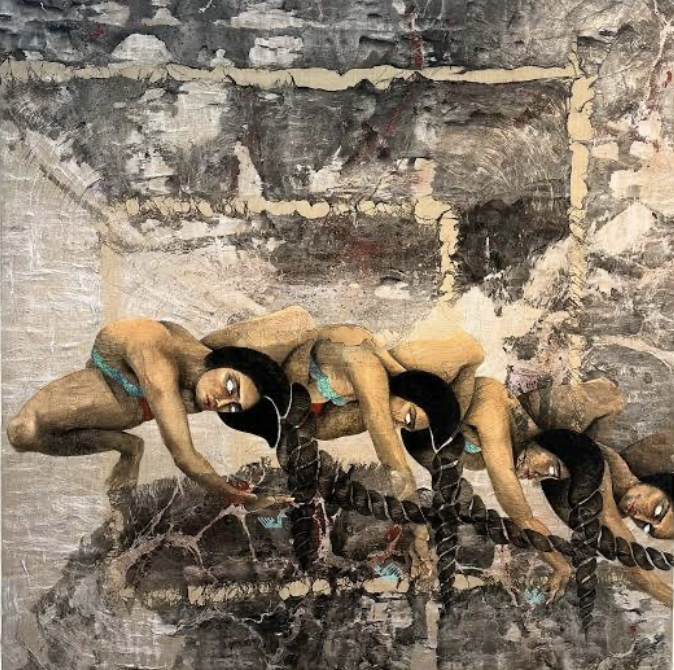 Hayv Kahraman. Rain Birds Ritual, 2025.
 Morgan Meis and I have been talking about art for years. We’re friends and interlocutors, so I’ll refer to him by first name here for the sake of transparency. Morgan writes about painting; I write about movies. We spent the pandemic exchanging letters with each other about films by Terrence Malick, Lars von Trier, and Krzysztof Kieślowski. These letters were later collected in a mad book called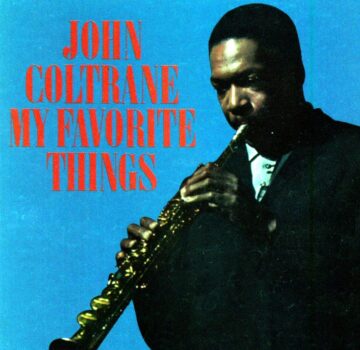


 The other day, in a cavernous sports superstore, I thought of J.G. Ballard. Echoey. Compartmentalised. Fluorescent. Stuffed with product. It was, probably quite obviously, the sort of place Ballard might have imagined the norms of society suddenly collapsing in on themselves, unable to carry their own contradictions.


 Dante begins The Divine Comedy in a dark wood, lost. He cannot see the way forward. His journey out of confusion and despair depends on a guide—not just Virgil, who leads him through Hell and Purgatory, but ultimately Beatrice, whose beauty awakens in him a love that points beyond itself. Beatrice is not simply an object of desire. She is a source of orientation, a reminder that desire itself can be educated, elevated, and directed toward what is most real and most nourishing.
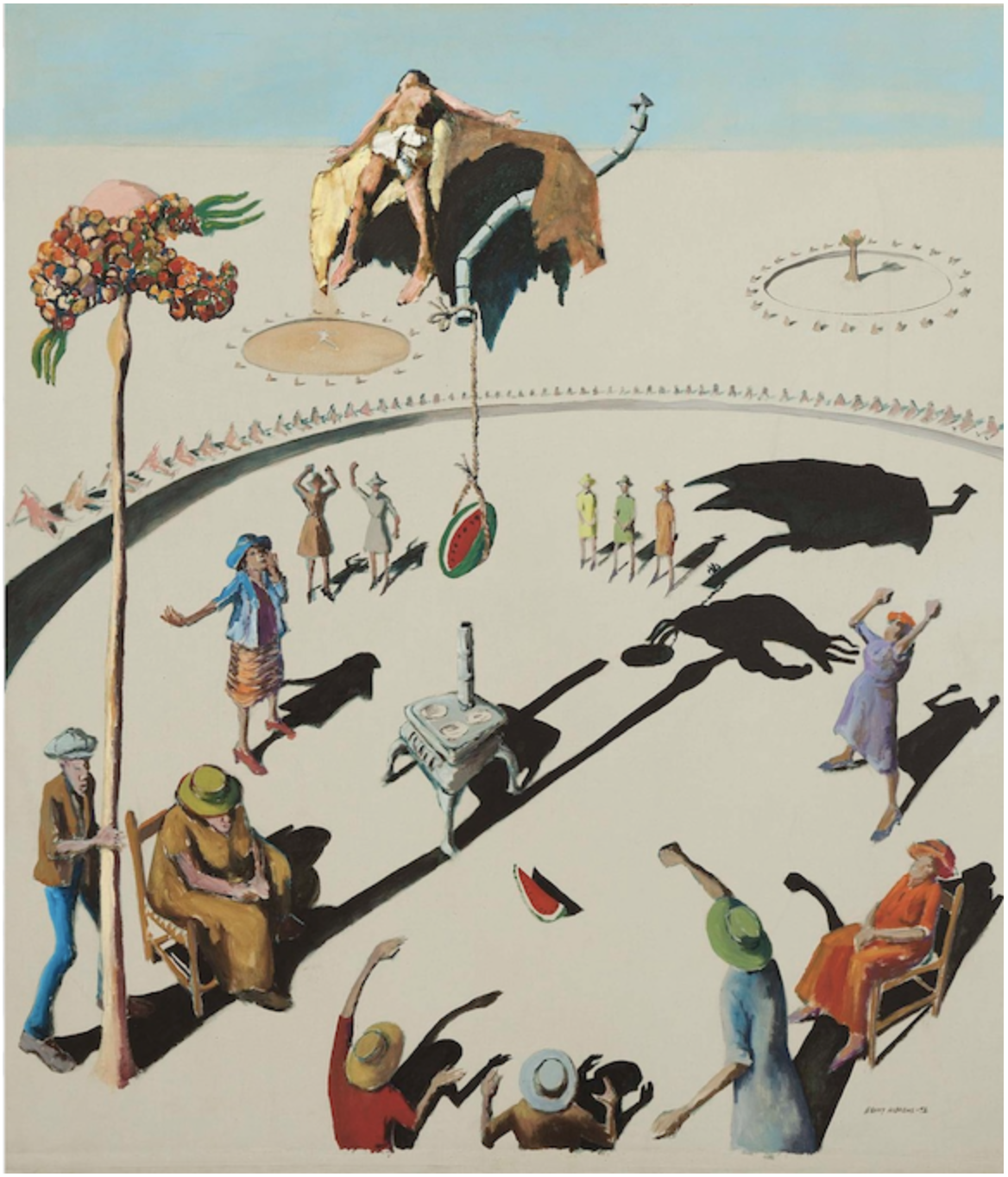 Benny Andrews. Circle Study #2, 1972.