by Brooks Riley
Enjoying the content on 3QD? Help keep us going by donating now.

by David Beer
Could there be anything more insulting for a writer than someone assuming that their writing is an output of generative artificial intelligence? The mere possibility of being confused for a neural network is enough to make any creative shudder. When it happens, and it will happen, it will inevitably sting.
By implication, being mistaken for AI is to be told that your writing is so basic, so predictable, so formulaic, so replicable, so obvious, so neat, so staid, so emotionless, so stylised, so unsupervised, that it is indistinguishable from the writing of a replication machine. Your writing, such a slur will tell you, lacks enough humanity for it to be thought of as being human. The last thing any writer needed was another possible put-down for their work.
Over a decade ago, in the 2012 book How We Think, Katherine Hayles’ concluded that being immersed within and operating alongside advancing networked media structures, with changing cognitive abilities, changes thinking itself. This shift in how we think inevitably has implications for how we write too. Beyond this, there is a new pressure now. As we interface with it, AI will not just directly change what and how we know, but will also impact on how we anticipate being judged in comparison to those generative systems.
With the fear of the insult and the anxiety of comparison in the background, the objective of writing may be to avoid the threat of someone wondering, if only for a moment, if you had simply typed a prompt into your preferred app and then comfortably reclined to stream a TV show. Will we now push ourselves to write in a style that means we can’t possibly be confused for AI? Might we try to sound more human, more distinct, more fleshy, and therefore less algorithmic. As we adapt our writing in response to the presence of AI, we will enter into a version of what Rosie DuBrin and Ashley Gorham have called ‘algorithmic interpellation’. That is to say that when we are incorporated into algorithmic structures, even acts of resistance are defined and directed by those very circumstances. What AI writing looks like will become the thing to avoid replicating, meaning that the form AI takes will also define attempts at its opposition. Read more »
by Ken MacVey
 One argument for the existence of a creator /designer of the universe that is popular in public and academic circles is the fine-tuning argument. It is argued that if one or more of nature’s physical constants as mathematically accounted for in subatomic physics had varied just by an infinitesimal amount, life would not exist in the universe. Some claim, for example, with an infinitesimal difference in certain physical constants the Big Bang would have collapsed upon itself before life could form or elements like carbon essential for life would never have formed. The specific settings that make life possible seem to be set to almost incomprehensible infinitesimal precision. It would be incredibly lucky to have these settings be the result of pure chance. The best explanation for life is not physics alone but the existence of a creator/designer who intentionally fine-tuned physical laws and fundamental constants of physics to make life physically possible in the universe. In other words, the best explanation for the existence of life in general and ourselves in particular, is not chance but a theistic version of a designer of the universe.
Here I will discuss problems as to why I don’t think the fine-tuning argument works. Before I start, one caveat. You don’t have to be a non-believer in theism to find the argument doesn’t work. In fact, particularly trenchant technical arguments for rejecting versions of the argument have been presented by evangelical Christian analytic philosophers Timothy McGrew and Lydia McGrew.
Another caveat. I am not a professional philosopher, physicist, cosmologist, biologist or mathematician. I am a litigator and trial lawyer. But one of the fun things about being a litigator and trial lawyer is you get to depose experts in depositions and cross exam them at trial. Sometimes when I give presentations to other lawyers on how to examine experts, I point out that lawyers don’t have to be experts in the relevant field but they should aspire to be experts on how to deal with experts. That means not being cowed by jargon, arrogance, or credentials while being ready and able to challenge the logical and factual foundation of the expert’s opinion. Read more »
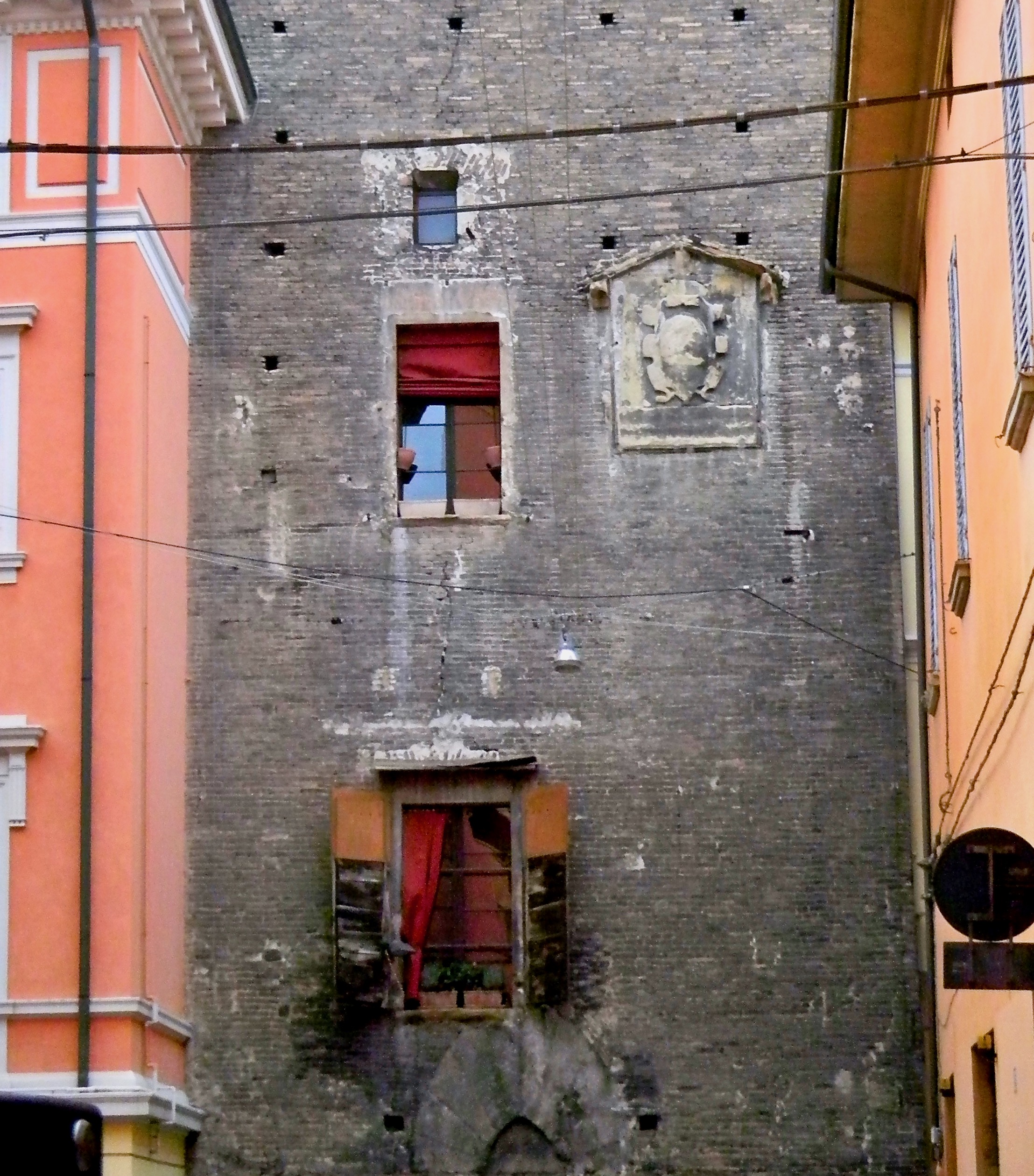 Sughra Raza. Scattered Color. Italy, 2012.
Digital photograph.
Enjoying the content on 3QD? Help keep us going by donating now.
by Ashutosh Jogalekar
 There are physicists, and then there are physicists. There are engineers, and then there are engineers. There are government advisors, and then there are government advisors.
And then there’s Dick Garwin.
Richard L. Garwin, who his friends and colleagues called Dick, has died at the age of 97. He was a man whose soul imbibed technical brilliance and whose life threaded the narrow corridor between Promethean power and principled restraint. A scientist of prodigious intellect and unyielding moral seriousness, his career spanned the detonations of the Cold War and the dimming of the Enlightenment spirit in American public life. He was, without fanfare or affectation, the quintessential citizen-scientist—at once a master of equations and a steward of consequence. When you needed objective scientific advice on virtually any technological or defense-related question, you asked Dick Garwin, even when you did not like the advice. Especially when you did not like it. And yet he was described as “the most influential scientist you have never heard of”, legendary in the world of physics and national security but virtually unknown outside it.
He was born in Cleveland in 1928 to Jewish immigrants from Eastern Europe, and quickly distinguished himself as a student whose mind moved with the inexorable clarity of first principles. His father was an electronics technician and high school science teacher who moonlighted as a movie projectionist. As a young child Garwin was already taking things apart, with the promise of reassembling them. By the age of 21 he had earned his Ph.D. under Enrico Fermi, who—legend has it—once remarked that Garwin was the only true genius he had ever met. This was not idle flattery. After Fermi, Dick Garwin might be the closest thing we have had to a universal scientist who understood the applied workings of every branch of physics and technology. There was no system whose principles he did not comprehend, whether mechanical, electrical or thermodynamic, no machine that he could not fix, no calculation that fazed him. Just two years after getting his Ph.D., Garwin would design the first working hydrogen bomb, a device of unprecedented and appalling potency, whose test, dubbed “Ivy Mike,” would usher in a new and even graver chapter of the nuclear age. Read more »
by Jonathan Kujawa
Recently, Chris Drupieski and I released a new research paper. If we were a tech company, we would announce the paper at a lavish event. There, every lemma would be amazing, every proposition would be magic, and every theorem would be world-changing.
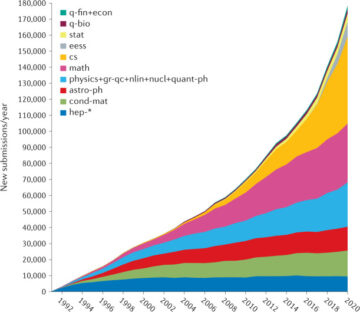
Instead, we put it on the arXiv.
The arXiv (pronounced like “archive”) is a moderated online archive of research preprints. In large swaths of math, physics, computer science, and data science it is customary for researchers to post their latest paper on the arXiv once it’s ready for release. Indeed, the arXiv has 5,000,000+ monthly users, hosts over 2,000,000 research papers, and approximately 200,000 new papers are added each year.
Publishing on the arXiv makes the research immediately and freely available to everyone in the world. In mathematics, a paper describes the results and provides all the data and logical arguments necessary to verify and reproduce those results [1]. Anyone in the world can read my paper with Chris and decide for themselves if it is correct and use what we’ve done in their own work.
It is easy to underestimate the impact the arXiv has had on scientific progress.
There is a flywheel effect in scientific research: the more quickly new advances are shared, the faster the new results and techniques can be incorporated by other scientists into their own research. They then use this information to accelerate their own progress, share that work, and further stoke the scientific engine.
In mathematics, preprints and the arXiv play a crucial role in this flywheel. Read more »
If I could un-ring certain bells and un-wind time I
would, but can’t, so instead, I’ll just ride this bucket
of bones till the wheels fly off; till ball-joints grind
and drop from sockets, till this xylophone of ribs
riffs the music of the spheres, until my funny bone
tells its last joke, till my shoulder blades cleave the
universe in two and find the nut within, until I’m
hipper than both hips and happier; till I’m savvy at
last, slicker than elbow grease, and mute as a smart
metatarsal, until I’m wiser than a thought-stuffed
skull, until I knee-cap my inner sonofabitch to stop
his useless jawin’ so I can hear one clear day
resound off tiny anvils and ride the lyrical looped
song of a backyard bird round Lew Welch’s ring of
bone —Instead, I’ll just splint what needs splinting
right here at home.
Jim Culleny; 5/19/05
I wrote this in response to Lew Welch’s ‘“Ring of Bone”
—a poem I took immediately to heart.
Enjoying the content on 3QD? Help keep us going by donating now.
by Mike Bendzela
Tending to a partner who manages a chronic illness means I don’t travel much. Luckily, he has been stable for some time now, meaning he continues to jack up portions of the farmhouse to replace rotted sill timbers, lay pine board flooring in the kitchen, and repair chairs, doors, and woodwork throughout the place. Even so, aside from the odd banjo camp or old time music festival, I usually stay at home. That’s fine with me as most of the notable sites in the US — even the world — have become traffic shit-holes anyhow.
What I would most like to do is stand in the presence of old things, especially ancient ones. Granted, living in an 18th century farmhouse on a country road is a one such gift, but there is architecture from earlier periods I would like to experience; also museum exhibits and archeological sites; stupendous paleontological finds and geological formations. It would be nice to stroll through Cahokia, Göbekli Tepe and Jericho; to view in person the existing cave paintings and petroglyphs that have not been closed off to the teeming masses; to smell the fumaroles in the volcanic field of Campi Flegrei and marvel that hundreds of thousands call the place home.†
One may have ersatz experiences of such things on the internet, and with the launching of artificial intelligence, artificial experience will likely be heightened by orders of magnitude, but so what? This is as ephemeral as the fossil energy sources used to conjure it. And the totalitarian implications of such tricks seem reason enough to stay at home, offline, tending one’s flock of actual hens.
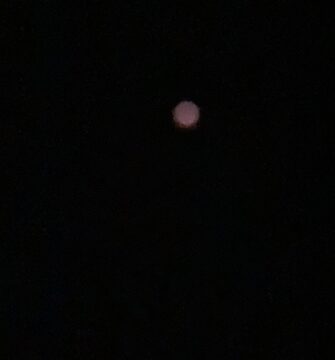
Then, on May 11, something remarkable happened, which only struck me as profound in retrospect. Coming after nearly a solid week of rain and fog, a brilliant full moon rose in clear skies over the woods directly beyond an adjoining open field. Said shiny object nested in the top of a huge pine tree nearby while I closed and latched the chicken house door for the night. Meanwhile, the little pond close by and the surrounding hardwood trees virtually shrieked with spring peepers and tree frogs.
I paused for a minute to take in the spectacle. That rising stone was so luminous the field of stars it floated in was reduced to only the most high-magnitude objects, such as Spica and Arcturus. I marked the stark shadows of tree trunks sprawled on the grass and felt the cool, moist air that might be described as buffered by satiny light. Read more »
by Mindy Clegg
Since the start of the second Trump term, people have noticed the destructive nature of this regime, even those who at one time dismissed him as an actual threat to the country (looking at you David Brooks). Those of us who avoided the Flavor Aid understood the great harm that another Trump presidency would visit upon us. Like the deportations and tariffs, this was foreseeable. Last time I touched on the attacks on the nation-state and international institutions that have shaped our world since the end of the second world war. Universities are also under attack by Trump and other autocrats, modeling their approach to academia on Victor Orban’s authoritarian takeover on Hungarian universities.
This is less an attempt to completely take universities apart and more an attempt to redirect them back to what some see as their original mission: empowering the elite classes to shape our society for their own benefit. In other words, Trump and his cronies seek to undo the democratic work of the last century, where education started to be seen as a universal good and necessity. In doing so, they attack an important foundation of modern society which they themselves benefited. But this is not new with Trump as there have been years of attacks by the far right. If higher education does need reform, what they propose is not that. It is, in fact, an attempt to gut democratic institutions, an important social leveler of the past 70 years.
Academia is a set of institutions (universities, colleges, technical schools, publishers, journals, and so on) that deserve both criticism and praise for its role in modern society. On one hand, the expansion of universities—along with unionized blue color work—have been an effective engine of social mobility in the global north since the end of the second world war. This was true in both the first and second world, with some countries making college essentially free. In the US, college became more affordable thanks in part to programs like the GI Bill and Pell Grants. Starting in the 1940s, this helped more working and middle class young people access college in greater numbers with the biggest beneficiaries being the Baby Boomers. As more people went to college, the need for more faculty sky-rocketed and public universities grew in size. Access to a college education contributed to upward mobility and the expansion of the postwar American economy. Read more »
by Alizah Holstein

Here are some books that have long been available for consultation on Level 2 of Pusey Library, which is not exactly a library in itself but an underground extension of Widener Library at Harvard. The Erotic Tongue: A Sexual Lexicon; The Erotic in Literature: A Historical Survey of Pornography as Delightful as it is Indiscreet; Eros: The Meaning of My Life; and Truth and Eros: Foucault, Lacan, and the Question of Ethics.
You might choose a Paris café to read your Foucault, but Pusey Level 2 in fact seemed to me back then, in the 1990s, like the ideal place for Ivy League eros. It was fitting for New England, I thought, perfectly representative really, that scholarship on erotica be consigned to a distant and wholly underground location. In our eleventh-grade French class, our teacher liked to say, “Symbolisme, mes amis,” while we watched Hiroshima mon amour with our eyes peeled for symbols.
At that time I worked at Widener, and it too was rife with symbols. To get to Pusey book storage from the circulation desk, you take a tiny, rickety elevator down to Level D, the lowest level, always empty, which you traverse in dim light, passing incidentally by the Dante section, also consigned (fittingly?) to the library’s lowest rung, and where I also liked to fritter away time. Passing Dante, you push open a set of heavy doors. The wind from the corridor beyond pushes against you, a strong headwind. Which should be noted is a feature of the bottommost pit of Dante’s Inferno—Lucifer, the fallen angel, bats his wings and creates a windstorm, which freezes the water of the lake in which he stands, icing himself stationary, for being motionless is the very definition of Hell, in Dante’s terms, motionlessness being the absence of motion—and motion, of course, is movement, which entails both sensuality and intellect, which when harnessed together, lead to a higher understanding of love and virtue. In Dante’s terms at least.
I always found this deserted wind tunnel between Widener and Pusey a heady space, a liminal place where my physical body felt freed and my mind full of hope and idea. But this might be because when I worked at Widener in the 1990s, I was eighteen, and as a circulation desk employee, I was corralled behind a desk for hours a day. Or maybe it was because real freedom of any kind was still a thing so new that even in its most mundane form—a break from work—it tasted sweet.
Also sweet was the feeling of having a theory. In this case, that Harvard librarians placed the university’s collected monographs on eroticism in Pusey’s moveable stacks because the underground location symbolized their suppressed sexuality, and that that location furthermore was accessible through an obviously Freudian tunnel. Read more »
by Steve Szilagyi
The year was 1960. Kennedy, U-2, the Twist. Our family now included two parents and nine children. The house was too small for us. Our father searched the inner-ring suburbs for something bigger. He got a deal on an enormous house nobody else seemed to want. The seller was an Italian-American grocery magnate. He was willing to let it go for a handful of cash.
The Neighborhood
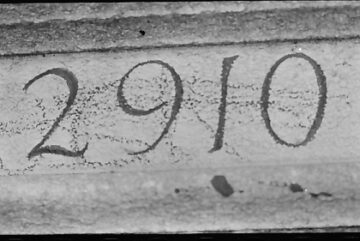
The surrounding neighborhood was as suburban fantasy land , built in the 1910s and ’20s for wealthy urbanites with literary tastes—Sir Walter Scott, Thomas Hardy, Jane Austen. Cotswold cottages, Tudor manors, and Georgian palaces lined the streets, nestled among mature trees and manicured lawns. Our new house, though, was no Austen idyll. It was pure Charles Addams: dark, brooding, with lancet arches and steep gabled roofs. Heavy chimneys loomed over a dour brick façade. An earthen bridge spanned a ravine with a shallow creek (pronounced “crick” in our part of the world) to reach the front door. Unlike some haunted houses, 2910 Berkeley Boulevard did not have a deceptively benign presentation. It laid its dark, heavy essence on you at first glance.
Exploration
Deed in hand, my father piled us into the station wagon to let us explore our new home. We tumbled out of the tailgate and swarmed over the property: a child’s paradise. Woods to explore; a creek to splash in; and a salamander under every rock. Inside, we raced up and down the grand staircase. Tested the banister for slide-ability (too wobbly). And fought over who would get what bedroom. Further upstairs, we found the old servants’ quarters. More bedrooms. A ballroom lined with benches. And an ominous closet. Read more »
by TJ Price
1.
It’s no secret that every society thinks its days are the last days. “But there’s something different about these days,” each cycle of humanity insists, and circumstances provide the breeding ground for our justifications in believing such. In these days, there’s unprecedented amounts of strife and calamity, as evidenced by the ever-more-definite probability of climatological oblivion and global political unrest with the rank scent of war in the wind—not to mention that the lower classes don’t trust the upper classes, but now the upper classes have learned how to hide better from the guillotine.
We are all distracted from what matters, if we’re to believe the headlines and the studies, by inessential, vain pursuits. We spend hours of our lives moving our thumbs up and down over screens, or else sitting in front of one kind or another. Now, there’s the threat of Large Language Models—so-called “AI”—to contend with, too, which routinely and with ever more speed replaces us on a functional level. Though it is fairly clear this new technology is not universally reliable, it perhaps says something about us that we are so eager to embrace even a flawed substitute for human work.
I’m with Wordsworth when he says, in his now-famous sonnet,
“The world is too much with us; late and soon,
Getting and spending, we lay waste our powers;—
Little we see in Nature that is ours:
We have given our hearts away, a sordid boon!”
Now we do not only give our hearts away, but also our brains, perhaps even (to wax dramatic) our souls. We seem determined to shed ourselves in favor of a desiderative mode. I think that we are tired, all of us—exhausted. We have sliced ourselves to ribbons on the cutting edge. I see the signs and symptoms all around, from a slackening of empathy and a rise in frustration with the systems in place to outright violence and sanguine disregard for the lives or wellbeing of others. Society has never been a place where one can call oneself totally safe, but now it has become necessary to protect oneself in addition.
We shoulder carapace on top of exoskeleton. We develop weapons fashioned from whatever sharp edges we can. Knives. Keys spiking out between fist-clenched fingers. Words. Anything to threaten, to ward off.
To empathize is to reveal, and to reveal is to be made vulnerable. So down comes the portcullis. Up goes the bridge. The alligators snap in the moat, their tails frothing the water. Read more »
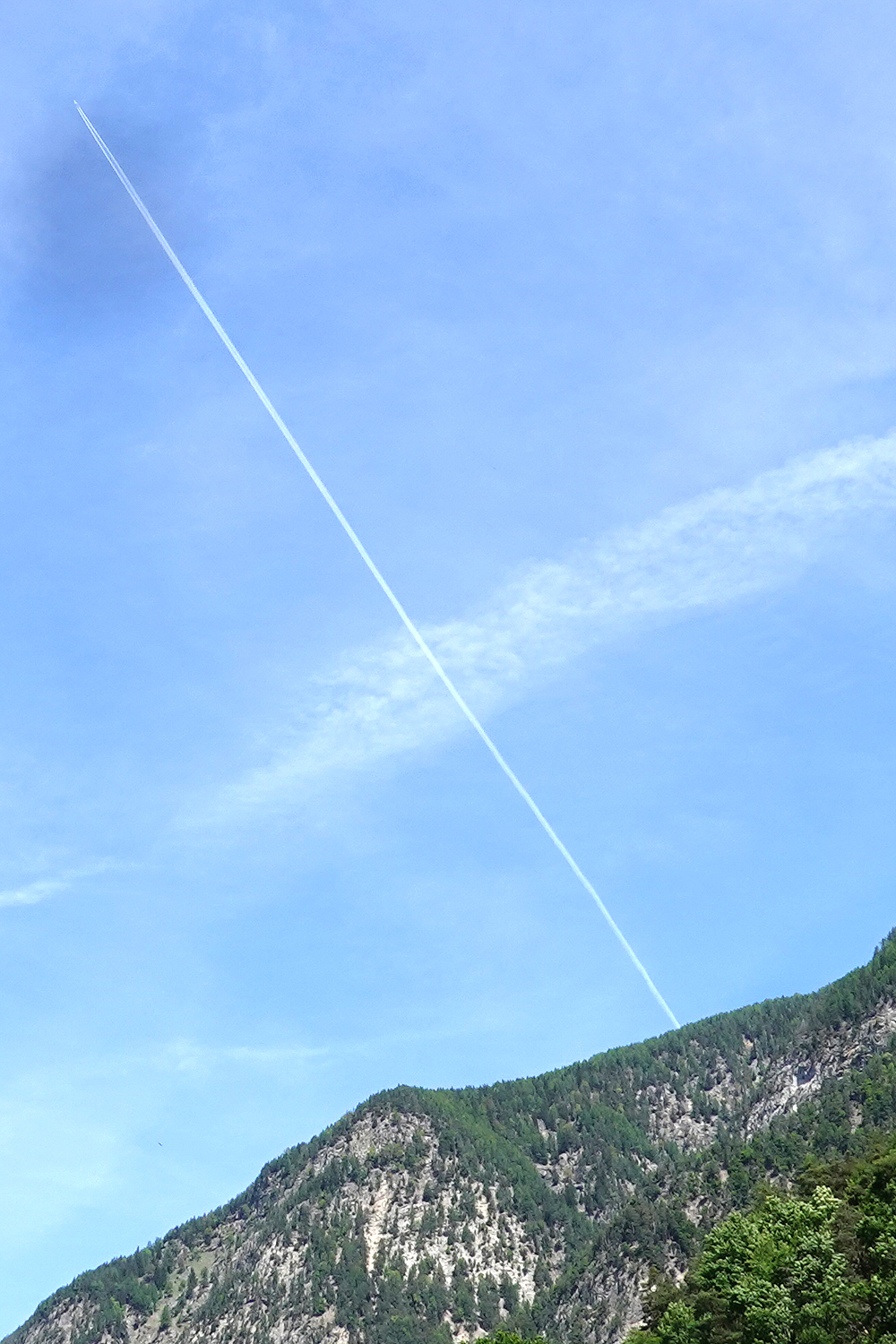
Airplane shoots out from behind a mountain in Franzensfeste, South Tyrol.
Enjoying the content on 3QD? Help keep us going by donating now.
by John Allen Paulos
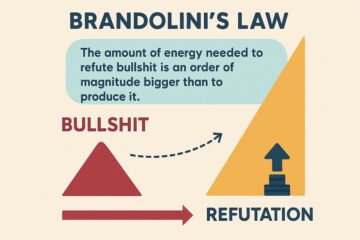 As atrocious, appalling, and abhorrent as Trump’s countless spirit-sapping outrages are, I’d like to move a little beyond adumbrating them and instead suggest a few ideas that make them even more pernicious than they first seem. Underlying the outrages are his cruelty, narcissism and ignorance, made worse by the fact that he listens to no one other than his worst enablers. On rare occasions, these are the commentators on Fox News who are generally indistinguishable from the sycophants in his cabinet, A Parliament of Whores,” to use the title of P.J. O’Rourke’s hilarious book. (No offense intended toward sex workers.) Stalin is reputed to have said that a single death is a tragedy, a million deaths is a statistic. Paraphrasing it, I note that a single mistake, insult, or consciously false statement by a politician is, of course, a serious offense, but 25,000 of them is a statistic. Continuing with a variant of another comment often attributed to Stalin, I can imagine Trump asking, “How many divisions do CNN and the NY Times have.”
I note that his brutish actions and policies are supplemented almost hourly by his scrofulous postings on his Truth Social platform. They, in effect, constitute a kind of denial of service attack on news coverage by reputable platforms and sites. A so-called “denial of service” attack is employed by hackers to overwhelm a website with so many requests and bits of information that the site can’t respond and shuts down. It may be a bit of a stretch, but we’re a bit like the websites that shut down when overwhelmed. Our attitude too often is that the relentless stream of nonsensical rants spewing out of Truth Social is “just” Trump talking, rather than that it’s methodically Trump undermining American democracy. The belief that “He’s all talk, don’t worry” is Intended to be reassuring, but it may be the most dangerous counsel of all.
All the more reason to find anodyne advice dangerous is provided by Brandolini’s Law of Refutation. It’s a profound idea whose formulation is due to the Italian programmer Alberto Brandolini. Sometimes described as the bullshit asymmetry principle, it states, “The amount of energy needed to refute bullshit is an order of magnitude bigger than to produce it.” (Brandolini wrote that the principle was inspired by the late Daniel Kahneman’s Thinking Fast, Thinking Slow.) It might also be thought of as implying that insanity, inconsistency, and untruths are the likely destinations of political discourse if we don’t expend the considerable energy needed to insure sanity, consistency, and truth. Read more »
by David J. Lobina
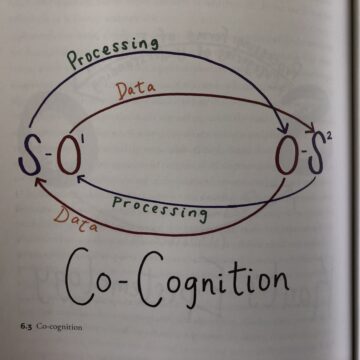
‘Philosophy is a prolonged meditation on death’, so starts what may well be Mark C. Taylor’s 35th book, After the Human. A Philosophy of the Future, published by Columbia University Press. I must admit that I didn’t know Taylor’s work before reading this book, though this is perhaps unsurprising, as for most of his career Taylor seems to have focused on the study of topics and thinkers that are not particularly close to my own interests. This remains somewhat the case in After the Human: there is some discussion of Descartes and Kant – so, yea! – but there is far more of Hegel, Nietzsche, Heidegger, and Derrida – a big nay.
At the same time, Taylor devotes the bulk of his book to arguing that cognition is widespread in the world, from humans and other animal species to even plants and computer programmes, and all things cognitive are clearly up my street (by cognition Taylor means information processing tout court; more below). And yet most of the discussion keeps coming back to Hegel and co., even though most of the evidence, and some of the arguments, pertain to cognitive science proper and engaging with some of the contemporary literature in the philosophies of psychology and cognitive science would have been more fruitful considering the final result on display. I think this constitutes a missed opportunity.
I also think that in the end the book fails to deliver what it promises – a philosophy of the future – and instead God sneaks up on us quite unexpectedly at the very end, for no apparent reason (I should add that religion is one of Taylor’s areas of expertise, though it doesn’t feature all that much in the book). Before getting to the actual contents of the book, though, I would say that the volume could have done with a different style of argumentation.
The book is fairly eclectic, with various personal recollections intermixed with plenty of long quotes from a great number of thinkers and scholars. It is quite hard to keep up with, and keep track of, Taylor’s myriad references, points, and asides, and the presentation clearly could have benefited from a bit of signposting (oddly enough, though, the book is quite repetitive at times). In addition, and this may well be a personal shortcoming, I fear I missed out on a number of important points here and there, especially in relation to the many quotes from Hegel and company. I didn’t feel like a great many of these quotations helped the reader much or were added for the elaboration of a particular argument, but rather they were in there for exposition purposes and one needed to be acquainted with the ideas referred to already in order to understand them – and to understand how they fit in within the overall story Taylor wants to tell. Read more »
by Scott Samuelson
The sole cause of man’s unhappiness is that he does not know how to stay quietly in his room. —Blaise Pascal
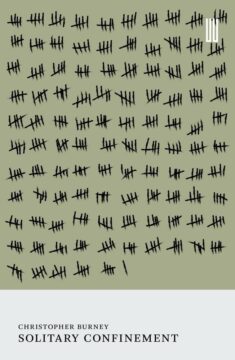
In its “Recovered Books Series,” Boiler House Press has just republished Christopher Burney’s Solitary Confinement, originally released in 1951, a profound, steely, and even sometimes funny account of the five-hundred and twenty-six days the author spent in a Nazi prison cell during World War II. Ted Gioia, who’s written a preface to the new edition, calls it “one of the great masterpieces of contemplative literature.” Even though I’ve made a point of exploring the masterpieces of contemplative literature, I hadn’t heard of Solitary Confinement until a few weeks ago. Given its publishing history, it seems that the book’s fate is to be praised as a masterpiece (by luminaries like Roberto Calasso and Frank Kermode), fall immediately into oblivion, and then be rediscovered a decade or so later—only to go through the same cycle all over.
The backstory of Solitary Confinement has the makings of a good movie. Christopher Burney (1917-1980) was born in England to upper-class parents, spent part of his childhood in India, dropped out of school at the age of sixteen (shortly after his beloved father keeled over from a heart attack around the tea table), and then wandered around Europe for a few years picking up languages. Because Burney had learned to speak French idiomatically without an accent, the British army enlisted him as a secret agent during the war. Blind-dropped into occupied France, he made his way to a crew of fellow operatives to disrupt German supply lines. When it was discovered that a double agent had infiltrated his group, Burney attempted to flee to Spain with the Nazis in hot pursuit. Surprised in his sleep by Abwehr agents who were tipped off by a hotel clerk, he was thrown into solitary confinement at Fresnes Prison in the south of France.
His cell was just ten feet long by five feet wide. The space was mostly taken up by a bed and a small table, which he turned on their side during the day to do exercises and walk back and forth. Read more »
by Mary Hrovat

After my power went out during a recent round of severe storms, I turned on my battery-operated Realistic Weatheradio. I bought this cubical radio at Radio Shack many years ago, and it sits on a bookshelf in the living room, largely ignored until extreme weather happens along. It can be tuned to one of two wavelengths on which the National Weather Service broadcasts a loop of information on current and predicted weather conditions. It has a large, obvious on-switch; the two dials on the bottom are labeled “Tuning” and “Volume.”
When I turned the radio off after the storms had moved on, it occurred to me that it would probably look very old-fashioned to young people; I was thinking of my grandchildren and nieces and nephews. The sides are covered in wood veneer, a nod to the fact that radios used to be pieces of wooden furniture. I wondered if anyone else still uses a radio that you tune with a dial. For some reason, the radio was defamiliarized so that even to me it seemed to be slightly out of place in time. (I feel that way myself sometimes.) And it unexpectedly conjured an entire lost world.
I looked up the Weatheradio and learned that it was sold between 1982 and 1992. Realistic was a house brand of Radio Shack, which for many years sold consumer electronics. It was a standard fixture of malls in my youth, like Orange Julius and WaldenBooks. In 2015, the company declared bankruptcy, in part because it couldn’t compete well as the market for electronics—in fact, the nature of consumer electronics—changed dramatically. It changed hands several times and is currently an online business called RadioShack (losing a space in its name, among many other things). The only actual radios it currently sells are four models of a vintage three-band radio (AM, FM, shortwave). (So I guess there are other people who tune their radios using a dial.) It’s a familiar story, and it encapsulates one of the ways the world has changed in my lifetime.
I can’t remember when I bought my radio, but my life has also changed considerably since the decade it was on the market. Seeing the weather radio as a vintage object brought home to me how many things that used to be familiar have vanished. I don’t miss Radio Shack, or malls, and I don’t particularly mind that some of the more recent technology I use is now considered vintage. But sometimes it feels as if the world has moved on and left me behind. I’ve always been a bit of an oddball, but the world I learned to adapt myself to was the one I grew up in, and that world is largely gone. Read more »
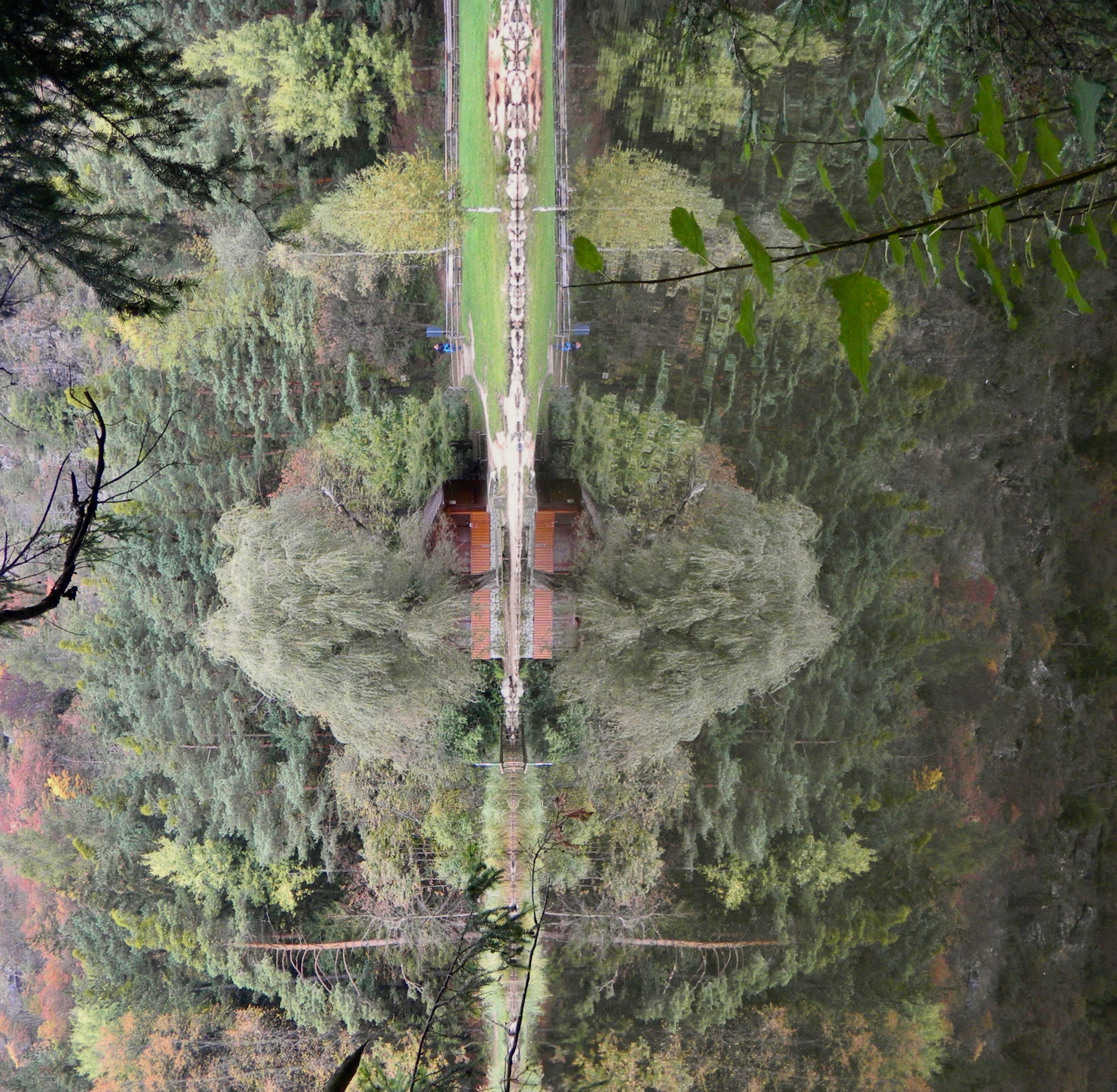 Sughra Raza. Seeing is Believing. Vahrner See, Südtirol, October 2013.
Digital photograph.
Enjoying the content on 3QD? Help keep us going by donating now.
by Richard Farr
 It’s a ritual now. Every Sunday morning I go into my garage and use marker pens and sticky tape to make a new sign. Then from noon to one I stand on a street corner near the Safeway, shoulder to shoulder with two or three hundred other would-be troublemakers, waving my latest slogan at passing cars.
Others are waving the Ukrainian or Canadian flag. Or Hire a Clown and Get a Circus. Or Support Our Troops: Fire Hegseth. In my small town we’re perhaps 2% of the population — not yet one of those mass movements to which the future’s textbooks will devote a chapter, but we are fearful enough to need the hope of that outcome. With America’s vaunted institutions and much-hyped freedoms on fire, we desperately want more people to (as one of my own signs says) Join Us Before It’s Too Late.
We try to take comfort from the fact that we occupy three corners of the intersection, greatly outnumbering the Trumpers, a dozen people blasting patriotic country music on the northwest corner. But we know the truth: the only consequence of our protests, at least until ICE comes to town and starts handing out free tickets to El Salvador, is that it buys us a little dignity, a little solidarity, a little courage in the face of disaster.
Some of us are “leftists,” which is American English for “centrist neoliberals who look back wistfully to the era of Barack and Hillary.” Some are “radical leftists,” which is American English for “people so naïve that they actually care about things like climate change, the minimum wage, Citizens United, Gaza, nuclear command and control, universal healthcare, starving Yemeni children, and Ukraine.” All of us are appalled that Donald Trump and his one-eyed yellow minions are vandalising central functions of the state, especially the ones that involve anti-corruption oversight.
So that makes us the statists and him the anarchist, right? Read more »