by Rafaël Newman
 The National Library of Kosovo is perched above downtown Prishtina. Built in the early 1980s and now with holdings of some two million, the complex resembles a mashup of Moshe Safdie’s Habitat with a flying squadron of geodesic domes, the whole unaccountably draped in chainmail. During the war in Kosovo in the late 1990s, the building served as a command center for the Yugoslav Army, which destroyed or damaged much of its collection of Albanian-language literature; the Library’s refurbishment and maintenance today thus signals the young Republic’s will to preserve and celebrate its culture.
 Reverence for that culture—Albanian culture in general, not limited to the borders of contemporary Kosovo—is on egregious display throughout Prishtina. The library looks across at the Cathedral of Saint Mother Teresa, erected in honor of the Skopje-born Albanian nun in the postwar period; her statue and a square bearing her name can also be found further north, on Bulevardi Nënë Tereza.
 Mother Teresa Boulevard ends in a broad piazza in which Skanderbeg (or Skënderbeu), the nom de guerre of Gjergj Kastrioti, the 15th-century hero of Albanian resistance to Ottoman rule, faces a statue of Ibrahim Rugova, the Kosovo-Albanian man of letters who served as the Republic’s first president during the 1990s and until his death in 2006. The piazza also features an homage to Adem Jashari, a founding member of the UÇK whose martyrdom at the hands of Serbian police, along with 57 members of his family at their home in Prekaz in 1998, is commemorated with a national memorial site, while his name has been bestowed on Prishtina’s airport and other notable institutions.

Farther down, a large portrait of Hashim Thaçi, the leader of the UÇK (Kosovo Liberation Army) in the war with Serbia, adorns a building facing the boulevard. Prishtina also features public likenesses of Bob Dole and Madeleine Albright, and streets named for Wesley Clark and Tony Blair. And there is of course Bill Clinton, under whose aegis NATO bombs drove Serbian forces out of Kosovo in 1999 and led to the establishment of the Republic. The US President’s statue, positioned slightly outside the downtown core but not far from the Cathedral and the Library, features an outstretched arm à la Lenin that ends, however, with an amicably waving hand rather than an imperious index finger.
Thus, although it has avoided the idolatrous excesses of Skopje, the capital of North Macedonia, which is so populated by statues that it is reminiscent of Sleeping Beauty’s petrified court, Prishtina does feel rather like an assembly of Stone Guests—although Prishtina’s tributes to Albanian folk heroes stand alongside American counterparts, rather than the Slavic heroes immortalized in Skopje. Read more »


 I know teachers who imagine
  Sughra Raza. Crystals in Monochrome. Harlem, February, 2025.
 Last spring, American documentary film maker Ken Burns gave a commencement address at Brandeis University in Boston. Burns is a talented speaker, adept at spinning uplifting yarns, and

 In recent public debates it has been argued that the implementation of Artificial Intelligence in weapons systems is changing the nature of war, or the character of war, or both. In what follows, my intention is to clarify these two concepts of nature of war and character. It will show that AI is a powerful technology, but it is currently neither changing the character nor the nature of war.
 Orwell has surely been safe for ages – through just two famous books, neither of which is Keep the Aspidistra Flying. His essays seem alive too. Ideology plays a role here: he was saying things in Animal Farm and 1984 that influential people wanted disseminated. You couldn’t get through school in Britain without being made to read him. I persist in thinking him overrated. Will he fade without the Cold War? There’s no sign of it yet.

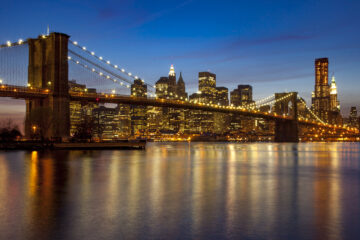 When I think of New York City, the first image that rises to the surface isn’t its vaunted skyline, those defiant towers scraping at the heavens. It isn’t the classical grandeur of the Metropolitan Museum where civilizations whisper through marble and canvas, nor the razzle-dazzle of Broadway where melodies unfurl amidst a fever of lights and applause. No, of all the things I could remember, the image that lingers most is one of angst—dense, unrelenting and amorphous, like yellowing seepage on the walls of an old house, eating it from the inside out.
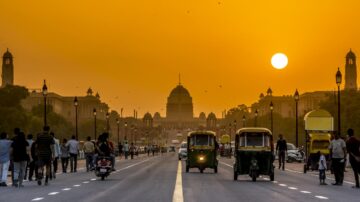 Meanwhile, in New Delhi, the capital city of India to which I’ve just returned, I’ve been startled to find a different rhythm altogether – slower, steadier, and far from the edge of a precipice. Here, the streets hum with chaos, the air is thick with dust and petrol, and the disparities between wealth and poverty gape wide. And yet, amidst this, I see people who seem—dare I say it?—happier. Their circumstances, when measured against any global standard of “quality of life,” are objectively harsher than those of the stressed and striving New Yorkers I left behind. But their faces, their words, their mannerisms suggest something else entirely.