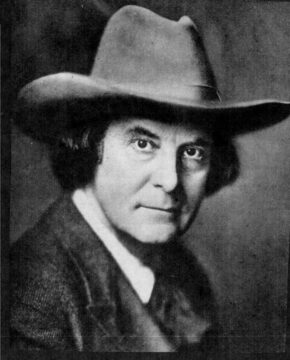
by David Kordahl
Peter Morgan has worked for decades to appreciate the underlying structures of physics. But can he convince others he is right?
When I receive unsolicited scientific communication, I bin writers into two crude categories: Possible Collaborators, and Probable Crackpots. Of course, these categories may overlap. Ted Kaczynski, after all, taught at Berkeley before he made those bombs.
When I first received a message from Peter Morgan, I wasn’t sure where to slot him. The fact that he was listed as a lab associate for the Yale University Physics Department pushed the needle of my prior judgment toward Collaborator. But the fact that he was cultivating journalists to promote his ideas about quantum theory…well, that swung my needle far the other way.
Morgan first contacted me on X.com (the website formerly known as Twitter) on December 9, 2024. I had posted the review of Escape From Shadow Physics: The Quest to End the Dark Ages of Quantum Theory that I had written for 3 Quarks Daily, and he posted a short comment in response. Seeing Morgan’s frequent physics posts, I followed him. Minutes later, he pitched me a column idea.
Morgan suggested that I write about his ideas:
I hope that if there are any of the ideas that deserve to go viral, they will do so sooner rather than later, then I can admire what better mathematicians and physicists than I am can do with whatever survives the winnowing. There are quite a few people who react positively to how different this is (for one thing it’s not a ToE, and the data and signal analysis aspect is met almost joyfully by some people), but I’m so far out in left field that nobody quite believes that I’m not making some obvious mistake. It’s always embarrassing to be the person who champions nonsense, right?
Right. I went to Morgan’s profile and watched one of the talks on his YouTube channel. After realizing I had no immediate way of assessing whether there was any there there, I sent him a polite but noncommittal reply, and placed a mental bookmark, thinking I might contact him again once I had time to spare. Read more »

 In a culture oscillating between dietary asceticism and culinary spectacle—fasts followed by feasts, detox regimens bracketed by indulgent food porn—it is easy to miss the sensuous meaningfulness of ordinary, everyday eating. We are entranced by extremes in part because they distract us from the steady, ordinary pleasures that thread through our daily lives. This cultural fixation on either controlling or glamorizing food obscures its deeper role: food is not just fuel or fantasy, but a medium through which we experience the world, anchor our identities, and rehearse our values. The act of eating, so often reduced to a health metric or a social performance, is in fact saturated with philosophical significance. It binds pleasure to perception, flavor to feeling, and the mundane to the meaningful.
 Since 1914, the Federal Trade Commission ‘s mission has been to enforce civil antitrust and unfair competition/consumer protection laws. The question is whether this mission has been supplanted—whether the FTC under Trump 2 .0 is becoming the Federal Political Truth Commission.

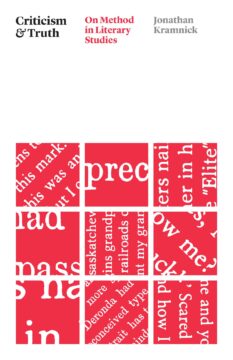 It is now close to 20 years since I completed my Ph.D. in English, and, truth be told, I’m still not exactly sure what I accomplished in doing so. There was, of course, the mundane concern about what I was thinking in spending so many of what ought to have been my most productive years preparing to work in a field not exactly busting at the seams with jobs (this was true back then, and the situation has, as we know, become even worse). But I’ve never been good with practical concerns; being addicted to uselessness, I like my problems to be more epistemic. I am still plagued with a question: Could I say that what I had written in my thesis was, in any particular sense, “true?” Had I not, in fact, made it all up, and if pressed to prove that I hadn’t, what evidence could I bring in my favour? Was what I saw actually “in” the text I was studying?


 Sughra Raza. Colorscape, Celestun, Mexico. March 2025.
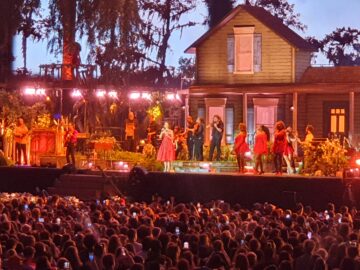 Lana Del Rey exists in a meticulously crafted world of her own. It’s a world apart. I purchased an invite to drop-by this summer, so that I might glimpse its finer details. Along with the crowd at the Anfield stadium in Liverpool, I was standing at its perimeter, gazing inwards, wondering. The atmosphere seemed rarified, there were even lily pads on the custom-built pond.