by Akim Reinhardt
Stuck is a weekly serial appearing at 3QD every Monday through early April. The Prologue is here. The table of contents with links to previous chapters is here.
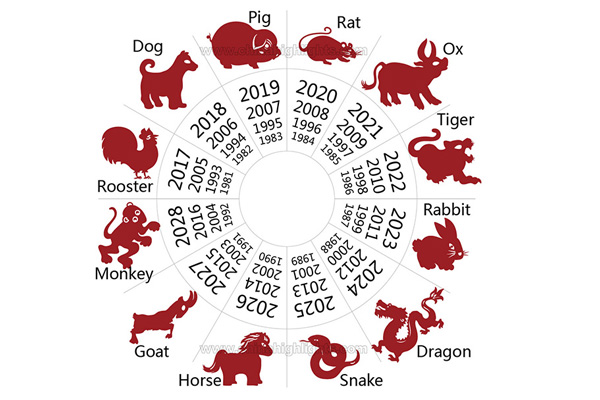 In the Chinese calendar, 2015 was the year of the sheep. I’m a sheep, and I briefly got into it. When you’re a sheep, you gotta own it.
Ain’t no rat gonna cut you no slack.
While singing the praises of sheep and trying to hold my own against dragons, snakes and the like, I made a passing reference to the 1977 pop hit “Year of the Cat” by Al Stewart. Didn’t hear the song, didn’t sing it to myself, didn’t even utter the words. Merely wrote Al Stewart’s “Year of the Cat” in a blog post. And that, apparently, is all it took for the song to get stuck in my head.
Why did “Year of the Cat” trap me with such ease? Possibly because it’s one of the very first songs I ever purchased.
The first two long playing, vinyl record I ever bought were a couple of collections called Music Machine and Stars. It was 1979. I was eleven and a half years old. Both albums were put out by a company called K-Tel.
The brainchild of a Winnipeg, Manitoba knife salesman, K-Tel hit it big in the 1960s by taking to the airwaves and hawking various of odds and ends with an intense but simple “As Seen on TV” sales pitch. They started with all sorts of knives and bladed devices like the Veg-O-Matic and the Dial-O-Matic. It slices, it dices, bla bla bla. Other gadgets that wouldn’t make you bleed soon followed. But during the 1970s, the company was best known for music compilations.
It actually began in 1966 with a record called 25 Great Country Artists Singing their Original Hits. That format, a compilation of hit singles by various artists, was still fairly novel, and K-Tel struck gold when combining it with their high octane TV marketing formula. By the time I picked up my two discs, K-Tel had issued over 500 different albums, mostly collections. Read more »
 Schoolteachers across the grades are responsible for teaching their students how to write. Their essential pedagogical role is instrumental. With particular attention paid to format, grammar, spelling, and syntax, students ideally learn to write what they know, think, or have learned. It matters little if the student is in a class for “creative writing” or “composition,” writing is taught and practiced as a way to record thoughts, compose ideas in a coherent manner, and clearly communicate information. A student’s writing is then assessed for how well she adhered to these instrumental standards while the teacher is assessed for how well she adhered to the standards of instrumental teaching.

 1.
1.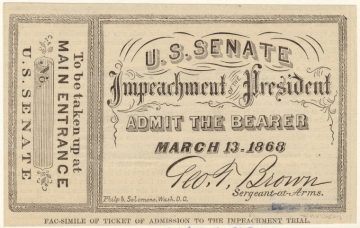 I have an awful confession to make. I haven’t made up my mind about whether President Trump should be convicted and removed from office.
 When Bob Dylan was awarded the Nobel Prize in Literature in 2016, the poet Nora Gomringer expressed her satisfaction at the recognition thus afforded not only poetry, but in particular songwriting, which she identified as the very wellspring and guarantee of literature, citing in her appraisal such classical forebears as Sappho and Homer. In an article published in the Neue Zürcher Zeitung, Gomringer mocked the conventional Western view of letters, a canon founded on prose and the novel, and now challenged by the award to Bob Dylan: “Literature is serious, it is beautiful, it is a vehicle for the noble and the grand; poetry is for what is light, for the aesthetically beautiful, it can be hermetic or tender, it can tell its story in a ballad and, if especially well made, can invite composers to set it to music…”. But “such categories”, she went on to suggest, “are stumbling blocks and increasingly unsatisfying, since they have ceased to function”, in part because of the Academy’s willingness to step outside its comfort zone and award the prize to a popular “singer/songwriter”.
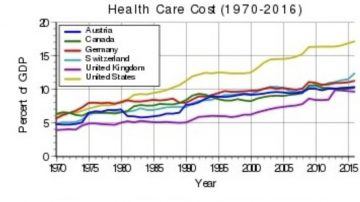 Fifty years ago, when healthcare expenditures were a mere 6% of US GDP, Martin Feldstein was afraid that the seemingly imminent adoption of some form of national health insurance would cause health care spending to grow unchecked.


 Back in 2014 I circled the country. It was a very long trip. From late August to early November I drove over 9,000 miles, all of it by myself. For many people, perhaps most, that kind of marathon driving day after day, particularly without someone to talk to, is only made bearable by listening to music. And given my own background, which has includes stints as a radio DJ, music critic, and rankly amateur musician, most everyone I know assumes I fall into that camp. Which is why they’re often shocked to find out that I don’t.
 As I sit here marveling at the inexorability of deadlines, even in the midst of holiday cheer, I consider that I should, in the absence of time for research ventures, write about “what I know.” Isn’t that the default advice for people who don’t know what to write about and don’t want to come across as false? Well, I spend at least half of my time, and most of my psychic energy, on tasks stemming from being a mother. But do I “know” anything about it? For example, how do you get your child to become a good person, and by that I don’t mean compliant or obedient, but ethical? I spend a lot of time fretting about it, but I don’t know if I have any answers.