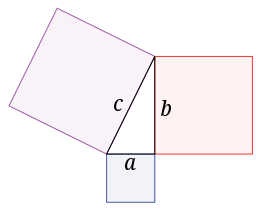
Why I’ll change how I talk to my students about proof

by Jeroen Bouterse

I have some very simple New Year’s resolutions, and some that require an entire column to spell out. One example of the latter is that I want to make a subtle but meaningful change in how I talk to my (middle and high school) math students about proofs.

First, I need to be open about the fact that talking about proof in mathematics comes with an especially strong impostor syndrome: as a secondary school teacher, who am I to talk about the nature and limits of deductive reasoning in a discipline of which I have barely scratched the surface? I know high school proofs of high school mathematical concepts; I am vaguely aware that people much cleverer than I have tried to reduce all mathematical claims to analytical (logical) truths, or at least to a limited set of axioms; and I believe that after having mentioned this, I have to name-drop Gödel as the person who has supposedly put a stop to these projects, even though I have never studied his incompleteness theorem and doubt I would be able accurately to judge its relevance and meaning. That’s about it.

Usually, doubts like these are something to keep hidden in a light-hearted column like this, because they waste space and look self-absorbed. In this case, however, I think they are relevant, because I suspect I will not be the only one who (1) is by no means an expert on mathematical logic, and (2) still has some intuitive convictions about the special relation between mathematics and provability. Most of us, when we think about mathematics and proof, think of high school or undergraduate mathematics. I think it is fair to say that this is the most culturally prominent face of mathematics: the concepts almost all of us have been taught, or at least heard about, and the discourses surrounding the teaching of those concepts.

These discourses will depend in part on the teachers you have encountered, but I’ll go out on a limb here and speculate that most mathematics teachers will have told most of their classes, at some point, that “in mathematics we believe things because we can prove them”. I know I have made comments in that spirit. I have also come to feel a bit uncomfortable about them. Let me tell you why. Read more »
The Cancer Questions Project, Part 25: Stavroula Kousteni

Stavroula Kousteni, is the Associate Professor of Medicine in Physiology and Cellular Biophysics at Columbia University Medical Center. The goal of her research is to understand the influence of the skeleton on various physiological processes, to uncover the pathogenesis of degenerative diseases and to suggest therapies for them. She is currently examining the role of osteoblasts in hematopoiesis with particular emphasis in myelodysplasia (MDS) and acute myeloid leukemia (AML). Her lab has discovered the skeletons role as an inducer of leukemogenesis, identifying a mutation in osteoblasts that disrupts hematopoiesis leading to leukemogenic transformation of hematopoietic stem cells (HSCs) and establishment of MDS progressing to AML. Additionally, she has helped establish the role of osteoblasts in the engraftment of leukemia blasts. She is currently characterizing the signaling pathway that mediates these actions to manipulate osteoblasts to make the hematopoietic niche hostile to residual leukemia cells.

Azra Raza, author of The First Cell: And the Human Costs of Pursuing Cancer to the Last, oncologist and professor of medicine at Columbia University, and 3QD editor, decided to speak to more than 20 leading cancer investigators and ask each of them the same five questions listed below. She videotaped the interviews and over the next months we will be posting them here one at a time each Monday. Please keep in mind that Azra and the rest of us at 3QD neither endorse nor oppose any of the answers given by the researchers as part of this project. Their views are their own. One can browse all previous interviews here.

1. We were treating acute myeloid leukemia (AML) with 7+3 (7 days of the drug cytosine arabinoside and 3 days of daunomycin) in 1977. We are still doing the same in 2019. What is the best way forward to change it by 2028?

2. There are 3.5 million papers on cancer, 135,000 in 2017 alone. There is a staggering disconnect between great scientific insights and translation to improved therapy. What are we doing wrong?

3. The fact that children respond to the same treatment better than adults seems to suggest that the cancer biology is different and also that the host is different. Since most cancers increase with age, even having good therapy may not matter as the host is decrepit. Solution?

4. You have great knowledge and experience in the field. If you were given limitless resources to plan a cure for cancer, what will you do?

5. Offering patients with advanced stage non-curable cancer, palliative but toxic treatments is a service or disservice in the current therapeutic landscape?

All Those Yesterdays That Built Today

by Thomas O’Dwyer

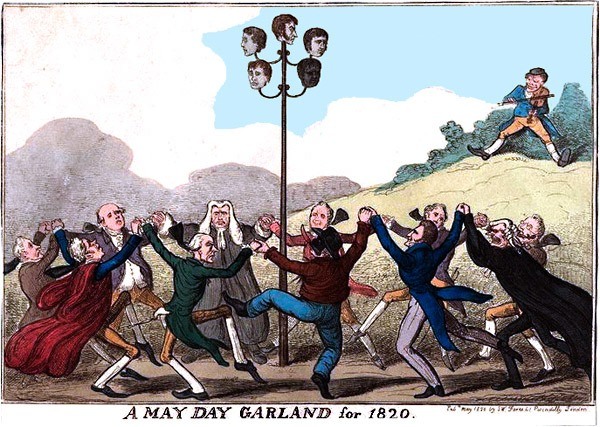
An 1820 print celebrating the execution of the English Cato conspirators.

We still recall the 1920s as the Roaring Twenties or the Jazz Age. Not many will know that the decade which began 200 years ago with U.S. President James Monroe in office was the Era of Good Feelings, a name coined by a Boston newspaper. In 1820, a presidential election year, Monroe ran for his second term — he was unopposed, so there was really no campaign. He won all the electoral college votes except one, narrowly leaving George Washington to remain as the only president ever to score a unanimous victory.

In the flood of commentary, prophecy, gloom, and nostalgia that has greeted the start of a new decade, many of the comparisons with the past have fixed on the 1920s. That age is almost within living memory, maybe not personal, but at least familial, through the reminiscences and records of parents or grandparents. And for the first time in human history, we have extensive evidence in sound, film, and photography from the fascinating 1920s.

But is also interesting to look even further back, another 100 years, to the 1820s. For here, most people can agree, lie the true roots of the science-driven modernity that was more spectacularly obvious in the 1920s and beyond. Full documentary records in the 1820s were sparse but growing. Nicephore Niepce developed the first photograph in 1826 but sound reproduction would have to wait another 50 years for Thomas Edison. The first moving-picture sequence was made by Frenchman Louis le Prince in 1888. The new inventions and discoveries of the 1820s were physically primitive, but loaded with hidden significance and promise that no one could have guessed. Read more »

You Are Here

by Mary Hrovat

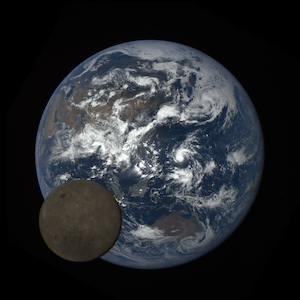
Moon passing in front of Earth as captured by NASA's DSCOVR EPIC instrument.
Image credit: NASA EPIC team

I think it was in the 1980s that I first saw t-shirts showing a drawing of a spiral galaxy with an arrow indicating “You are here.” They were amusing, and the image provides a bit of cosmic context. You may be here, looking at this screen, with your to-do list and personal problems and worries about the world, but you’re also here in the Orion arm of the Milky Way, about 25,000 light years from the center, in this solar system, on this planet.

One way to capture the most local part of your cosmic context is the 3D solar simulator at The Sky Live, which shows a simulated snapshot of the locations of all the planets relative to the sun at this moment. You can zoom in and out and add asteroids, near-Earth objects, and comets. You can also animate the simulation. At one week per second, you get a pretty good view of the tight circling of the inner planets, but the outer planets move at a very sedate pace. At one year per second, the inner planets move too quickly to follow easily, but the outer planets sweep along briskly.

Of course, you can also observe the solar system from the inside. One great way to broaden your horizons is to go out in the evening to see what other planets in the solar system are visible and to watch them moving along in their orbits over the weeks and months. There are a number of guides to what you can see on a clear night. Sky & Telescope provides a weekly update that tells you which planets will be visible, what phase the moon is in, and whether there will be any events such as eclipses or meteor showers. Space.com offers a monthly summary that covers a somewhat broader range of things to look for in the night sky, and EarthSky describes what you can see in the sky tonight.

In addition, space is not an unchanging backdrop but a place with its own weather (sort of) and events. Spaceweather.com posts news stories about solar activity, aurorae, meteor showers, fireball observations, and more. The sidebar on the left shows current data and images. Read more »

Reflections on It-ing and Thou-ing

by Charlie Huenemann

We find ourselves always in the middle of an experience. But it’s what we do next – how we characterize the experience – that lays down a host of important and almost subterranean conditions. Am I sitting in a chair, gazing out the dusty window into a world of sunlight, trees, and snow? Am I meditating on the nature of experience? Am I praying? Am I simply spacing out? Depending on which way I parse whatever the hell I’m up to, my experience shifts from something ineffable (or at any rate, not currently effed) to something meaningful and determinate, festooned with many other conversational hooks and openings: “enjoying nature”, “introspecting”, “conversing with God”, “resting”, “procrastinating”, and so on. Putting the experience into words tells me what to do with it next.

Buber claims that the deepest and most immediate setting we establish in characterizing our experience is whether it falls into one or another mode: that of the “I/It” or that of the “I/Thou”. (Think of a toggle switch at the base of your mind, with two settings.) On the I/It setting, I am experiencing It: “I perceive something. I feel something. I want something. I sense something. I think something.” A curtain is drawn between two countable collections, and typically there is one thing on one side (me, or you), and one or more things on the other. Toggling into this setting means you are getting serious about getting something done or making something known. You will see whether you have enough butter and eggs to make the cookies. You are an agent, one who does. And the entities you are doing unto are patients, or the pieces in your game.

We should resist any temptation to underestimate the scope of I/It. It underlies nearly everything we do – no, everything, since “we do it” is an I/It formulation. To the extent that we think, sense, know, understand, or do anything, it is on this setting. Indeed, we might well wonder what other setting there could possibly be. Read more »

Stuck, Ch. 11: The Virgin Hairs: The Association, “Never My Love”

by Akim Reinhardt

Stuck is a weekly serial appearing at 3QD every Monday through early April. The Prologue is here. The table of contents with links to previous chapters is here.

Forever is a long time.

When I was 8 years old, I vowed that I would never smoke a cigarette. Had my first one when I was 19 and smoked steadily for several years. Camels unfiltered.

At age 10, I made a pact with my best friend: under no circumstances would we ever do drugs. I don’t even know where to begin with that one; it’d be a whole separate book.

Circumstances change. People change. Everything within you changes, as does everything you are within. Oaths are so hard to keep that their ultimate meaning perhaps lies in the breaking. That life is not about our hopes and dreams, but the ways we turn them into lies.

At the alter of a Lutheran church in North Carolina, my paternal grandparents married forever in eyes of God. A couple of decades later, they got divorced. Then they married each other once more. Followed by yet another divorce.

The oath as a sling shot. The oath as a yo-yo.

No less than three times has Sean Connery sworn he was done playing James Bond. Beginning in 1962, he did five films in five years. He burned out, was unhappy with the pay, and worried about typecasting. So he quit the franchise for the first time in 1967 after You Only Live Twice. Read more »

Monday, January 13, 2020

With Friends Like These: Against the AAUP “Defense of Knowledge and Higher Education”

by Joseph Shieber

It is a great shame that the authors of the recently released AAUP statement “In Defense of Knowledge and Higher Education” do not even know what it is that they are attempting to defend. And it is the height of irony that, in an essay attempting to defend the importance of expert knowledge, the authors of the AAUP would be so cavalier in their rejection of expert knowledge about the very subject of their defense, namely knowledge itself.

The authors of the AAUP report have a laudable goal in mind. They seek to defend the importance of, as they put it, “the disciplines and institutions that produce and transmit … knowledge”.

The authors correctly note that recent critics of higher education mistakenly confuse the teaching and research conducted at colleges and universities with indoctrination. They quote the current United States Secretary of the Department of Education, Betsy DeVos, who exhorted college students to “fight against the education establishment”. “The faculty, from adjunct professors to deans,” DeVos warned the students, “tell you what to do, what to say, and more ominously, what to think.”

Although they aren’t terribly clear, it would seem that the AAUP report authors push back against DeVos’s conflation of education with indoctrination on the basis of three important qualities of research and education at higher education institutions:

1. College and university professors develop and transmit valuable thinking methods and skills — examples that the authors cite include learning how to “solve differential equations”, “to predict the path of a hurricane”, “to track the epidemic of opioid addiction”, “to study the impact of tariffs on the economy”.
2. College and university professors discover and disseminate factual information — examples that the authors cite include “the principles of quantum mechanics”, “the somatic effects of nicotine”, and “the history of slavery and Jim Crow, or the history of the Holocaust”.
3. In addition to those discipline-specific thinking methods and bodies of factual information, college and university professors also inculcate in students an appreciation for the methods of investigation appropriate to knowledge-seeking, which the authors characterize as “informed, dispassionate investigation”.

So far, so good! If the authors of the AAUP report had stopped here, they would have done higher education — and, indeed, the general public who derive so much from the fruits of higher education — a great service.

Unfortunately, they didn’t stop here. Read more »

Monday Poem

Banks

along a river its banks are set
and keep the river in the river

being in the river the river’s
in its being

within its banks, whole, astatic,
a river flows unbound, ecstatic
a falling river goes

within these banks, astatic,
this river grows unbound, ecstatic
this falling river flows

until, without banks,
this river goes

Jim Culleny
1/4/2020

Photo: S. Abbas Raza

Lili Marleen: the poem and the song

by Emrys Westacott

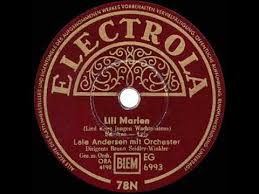
Lili Marleen is one of the best known songs of the twentieth century.  A plaintive expression of a soldier’s desire to be with his girlfriend, it is indelibly associated with World War II, in part because it was popular with soldiers on both sides. It was first recorded by the German singer Lale Anderson in 1939. The Nazi propaganda minister Joseph Goebbels disliked the song and initially banned it from the radio, probably because it expresses a preference for staying at home rather than going off to war.  But in 1941 he granted a Belgrade-based radio station in German-occupied Yugoslavia permission to broadcast it. Apparently, Rommel, commander of the German troops in North Africa, liked the song, Goebbels relented, and soon Radio Belgrade (which had a very limited supply of disks available) was playing it every night as their sign-off tune. It quickly became popular with both German and allied forces. Anderson recorded an English version in 1942.
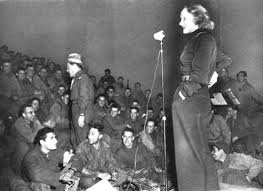
Marlene Dietrich, who worked tirelessly during world war two entertaining allied troops, also recorded both a German version and an English version of the song. Compared to the Anderson recordings, with their strong, marching tempo, Dietrich’s versions, which begin with the melancholy strains of an accordion, are slower, sweeter, and more wistful. The English version retains the melody and the general theme, but beyond the first line the lyrics are not even a loose translation of the original German.
The song began life as a poem of three stanzas, written in 1915 by Hans Leip (1893-1983), a schoolteacher from Hamburg who had been called up into the German army and was training in Berlin prior to leaving for the Eastern front. In the years following world war one, Leip became a successful author. His poem, with two further verses added, was eventually published in 1937, as “Das Lied eines jungen Soldaten auf der Wacht” (The song of a young soldier on watch). It was put to music in 1938 by Norbert Schultze, already by then a well-known composer who wrote numerous songs to be used by Goebbels’ propaganda ministry. Read more »

Hope and Paradox in the Age of Climate Change

by Katie Poore

While waiting, shivering and jetlagged, for a train home from the Paris airport this week, I alternately stared into space and checked the train timetables. My train was an hour late. I later learned, thanks to the friendliness of a fellow traingoer, that the train had hit a deer.
Waiting on the platform, I happened upon an article in The Atlantic. The author’s name was Jedediah Britton-Purdy. I clicked the Instagram link with immediate fascination, not because of the notability of that name—it strikes me as so quintessentially American—but because I spent days and weeks with his book After Nature last year, slogging through an undergraduate thesis centered on the intersection of the environment and literature.

Purdy’s article is called “The Concession to Climate Change I Will Not Make.” In it, he explains his rationale for maintaining hope in a world that seems to be, quite literally, burning down around us. To him, this hope means, at least in part, continuing to have children.

This struck a chord with me, perhaps because it was eerily similar to a conversation I had with my mother over the holidays, where I professed a sense of hopelessness about the world and its seemingly impending expiration date. Sometimes it made me terrified to have children, I told her. Thinking about what they might inherit felt almost cruel. Read more »

The Cancer Questions Project, Part 24: Antonio “Tito” Fojo

Dr. Antonio “Tito” Fojo specializes in the management of patients with adrenocortical cancer, malignant pheochromocytoma, neuroendocrine malignancies, and thyroid cancer; his current laboratory efforts are focused on developing therapies to treat such patients. Dr. Fojo has worked to understand the molecular basis of drug resistance, he was involved in the original work relating to several ABC transporters and identified rearrangements involving the MDR-1 gene as a novel mechanism of drug resistance in several cancers. He has also been very involved in research on microtubule-targeting agents. In addition to his clinical expertise Dr. Fojo is involved in the design, conduct and interpretation of oncology clinical trials and his collaboration have helped to pioneer a novel method of analysis that dissects rates of tumor growth and regression as concurrent events.

Azra Raza, author of The First Cell: And the Human Costs of Pursuing Cancer to the Last, oncologist and professor of medicine at Columbia University, and 3QD editor, decided to speak to more than 20 leading cancer investigators and ask each of them the same five questions listed below. She videotaped the interviews and over the next months we will be posting them here one at a time each Monday. Please keep in mind that Azra and the rest of us at 3QD neither endorse nor oppose any of the answers given by the researchers as part of this project. Their views are their own. One can browse all previous interviews here.

1. We were treating acute myeloid leukemia (AML) with 7+3 (7 days of the drug cytosine arabinoside and 3 days of daunomycin) in 1977. We are still doing the same in 2019. What is the best way forward to change it by 2028?

2. There are 3.5 million papers on cancer, 135,000 in 2017 alone. There is a staggering disconnect between great scientific insights and translation to improved therapy. What are we doing wrong?

3. The fact that children respond to the same treatment better than adults seems to suggest that the cancer biology is different and also that the host is different. Since most cancers increase with age, even having good therapy may not matter as the host is decrepit. Solution?

4. You have great knowledge and experience in the field. If you were given limitless resources to plan a cure for cancer, what will you do?

5. Offering patients with advanced stage non-curable cancer, palliative but toxic treatments is a service or disservice in the current therapeutic landscape?

History and the Supposed Inevitability of War

by Mindy Clegg

Qasem Soleimani in 2019

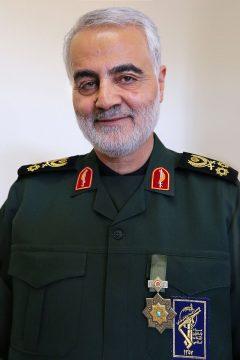
This past week has been a roller coaster in American foreign policy, as we quite nearly ended up in a hot war with Iran. A curious phenomenon reared its ugly head during the fallout of the assassination of Qasem Soleimani, one of Iran’s top generals—comparisons to the start of the First World War’s precipitating event, the shooting of the Archduke of the Austro-Hungarian empire Franz Ferdinand.1 As we all seriously contemplated another war, some leaned into the notion of its inevitability. Many would have you believe a Third World War was history merely asserting itself once again.2 Supporters of a war with Iran (and other wars) might tell you that war is a glorious thing, that our young will cut their teeth on violence and blood, coming out the other side battle hardened, ready to tackle the “real” world with both hands. At the very least, we’ll defeat our enemies and ensure our continued dominance of the world, which we deserve. They might also proclaim that war is the only racket in town that will get our economy jumping again, exciting innovation through shattered bodies. I could not agree less with these assessments, and history most certainly backs me up here. First, with a few exceptions, there is no inevitable path to conflict—history shows us there are always choices. Second, young people are often shattered by participation in war, as our homeless population still replete with veterans of various wars attest. Last, many things can jumpstart innovation. I argue that making parallels to events of the past in order to draw conclusions about the inevitability of particular outcomes (the ones that benefit the fewest and hurt the most, like a war) is to misread or even blatantly misuse history and what it actually tells us about humanity. Read more »

What is the Problem with Wine Metaphors?

by Dwight Furrow

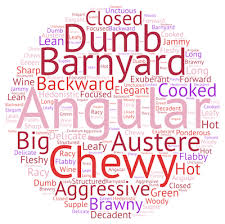
Wine writers, especially those who write wine reviews, are often derided for the flowery, overly imaginative language they use to describe wines. Some of the complainants are consumers baffled by what descriptors such as “brooding” or “flamboyant” might mean. Other complainants are experts who wish wine language had the precision of scientific discourse. The Journal of Wine Economists went so far as to call wine writers “bullshit artists”. (The feeling is mutual.)

Even the sommelier-trained author of the bestselling book Cork Dork, Bianca Bosker, has reservations about the accuracy of such language. After taking writers to task for using terms such as “sinewy” and “broad-shouldered” she writes: “It seems possible that what we “taste” in a fine wine isn’t so much its flavor as the qualities of good taste that we hope it will impart to us.” She seems to be suggesting that wine writers just make stuff up to sound impressive.

The general objection is that these descriptors are metaphorical and are therefore too subjective and ambiguous to give readers an accurate, verbal portrayal of the wine. However, these complaints are tilting at windmills. Read more »

Stuck, Ch. 10. Behold the Sheep: Al Stewart, “Year of the Cat”

by Akim Reinhardt

Stuck is a weekly serial appearing at 3QD every Monday through early April. The Prologue is here. The table of contents with links to previous chapters is here.

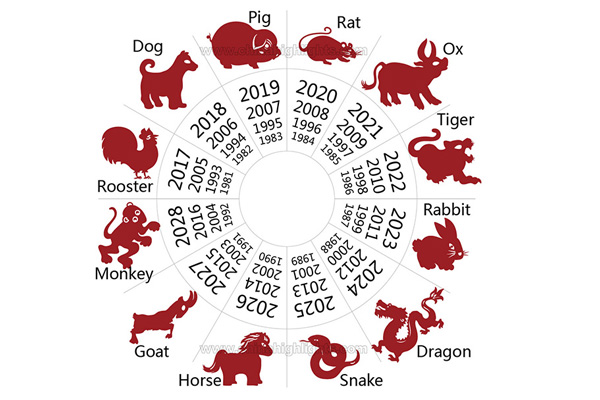
Image result for chinese zodiacIn the Chinese calendar, 2015 was the year of the sheep. I’m a sheep, and I briefly got into it. When you’re a sheep, you gotta own it.

Ain’t no rat gonna cut you no slack.

While singing the praises of sheep and trying to hold my own against dragons, snakes and the like, I made a passing reference to the 1977 pop hit “Year of the Cat” by Al Stewart. Didn’t hear the song, didn’t sing it to myself, didn’t even utter the words. Merely wrote Al Stewart’s “Year of the Cat” in a blog post. And that, apparently, is all it took for the song to get stuck in my head.

Why did “Year of the Cat” trap me with such ease? Possibly because it’s one of the very first songs I ever purchased.

The first two long playing, vinyl record I ever bought were a couple of collections called Music Machine and Stars. It was 1979. I was eleven and a half years old. Both albums were put out by a company called K-Tel.

The brainchild of a Winnipeg, Manitoba knife salesman, K-Tel hit it big in the 1960s by taking to the airwaves and hawking various of odds and ends with an intense but simple “As Seen on TV” sales pitch. They started with all sorts of knives and bladed devices like the Veg-O-Matic and the Dial-O-Matic. It slices, it dices, bla bla bla. Other gadgets that wouldn’t make you bleed soon followed. But during the 1970s, the company was best known for music compilations.

It actually began in 1966 with a record called 25 Great Country Artists Singing their Original Hits. That format, a compilation of hit singles by various artists, was still fairly novel, and K-Tel struck gold when combining it with their high octane TV marketing formula. By the time I picked up my two discs, K-Tel had issued over 500 different albums, mostly collections. Read more »

Monday, January 6, 2020

Writing To Learn, Learning to Live: Against Instrumentality

by Eric J. Weiner

The allure of fresh and true ideas, of free speculation, of artistic vigor, of cultural styles, of intelligence suffused by feeling, and feeling given fiber and outline by intelligence, has not come, and can hardly come, we see now, while our reigning philosophy is an instrumental one. —Randolph Bourne

Schoolteachers across the grades are responsible for teaching their students how to write. Their essential pedagogical role is instrumental. With particular attention paid to format, grammar, spelling, and syntax, students ideally learn to write what they know, think, or have learned. It matters little if the student is in a class for “creative writing” or “composition,” writing is taught and practiced as a way to record thoughts, compose ideas in a coherent manner, and clearly communicate information. A student’s writing is then assessed for how well she adhered to these instrumental standards while the teacher is assessed for how well she adhered to the standards of instrumental teaching.

By contrast, writing to learn re-conceptualizes our relationship to writing from measurable outcomes to critical/creative processes. It moves the epistemological needle from instrumentality to exploration, innovation, imagination, and discovery. Writing to learn supports the development of what Randolph Bourne (1917) called “poetic vision.” Having poetic vision diverts our “creative intelligence” away from “the machinery of life” and redirects our “creative desires” toward enhancing the quality of life. “It is the creative desire,” Bourne writes, “…that we shall need if we are ever to fly” (from Twilight of Idols). Read more »