by Marie Snyder
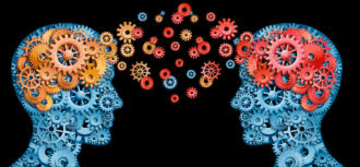 In reading about attachment theory, David Wallin‘s description of Peter Fonagy’s work was intriguing, so I went down that rabbit hole. Fonagy developed Mentalization-Based Treatment (MBT) to improve emotional regulation, as distinct from Jon Kabat-Zinn’s Mindfulness-Based Stress Reduction (MBSR). Fonagy sees our mental development as relational, but in order to have empathy for others, we need awareness of our own feelings, which can be helped with mindfulness work. However, in looking at the evidence of efficacy of these separate modalities, I question the attempt, since Freud, to make psychology into a natural science. Each of the various ways to help are useful, but there’s an element of the unknowable in the way when we treat them scientifically.
According to Wallin, Fonagy’s focus was on developing the understanding of the mental states of others, which he calls mentalizing, to let us understand the depths of ourselves and others. For instance, it can help heal old wounds if we understand that dad’s rejection of us might be due to his depression and not our behaviour as a child. Other people’s reactions to us aren’t just caused by us, but there are always multiple factors at play affecting how people behave. It seems very similar to Theory of Mind. He met Bowby in the 1980s, and studied adults’ behaviour relative to their own descriptions of childhood attachment, and found, when comparing severely deprived to well-connected adults, that a weak attachment was correlated with a weak “reflective functioning” (the ability to understand behaviours in terms of their thoughts, feelings, and mental states). From this, he says psychotherapy should be the “effort to restore or kindle patients’ capacity to mentalize,” to simultaneously feel our feelings and reflect on their meaning. To help people develop mentalizing requires a relationship that mirrors and guides emotional responses.
His description of mirroring is specific: it must be “contingent and marked.” The reaction has to be accurate and not our own reaction to the other person’s upset, but an empathetic reaction with them. Read more »
 On a sunny Saturday towards the end of last month we took a train to Moutier in the west of Switzerland, half an hour from the French border, to attend an opera in a shooting range. We had tickets to hear my friend


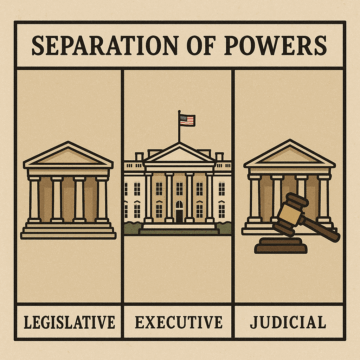 Americans learn about “checks and balances” from a young age. (Or at least they do to whatever extent civics is taught anymore.) We’re told that this doctrine is a corollary to the bedrock theory of “separation of powers.” Only through the former can the latter be preserved. As John Adams put it in a letter to Richard Henry Lee of Virginia, later a delegate to the First Continental Congress, in 1775: “It is by balancing each of these powers against the other two, that the efforts in human nature toward tyranny can alone be checked and restrained, and any degree of freedom preserved in the constitution.” As Trump’s efforts toward tyranny move ahead with ever-greater speed, those checks and balances feel very creaky these days.

 Gozo Yoshimasu. Fire Embroidery, 2017.



 In a culture oscillating between dietary asceticism and culinary spectacle—fasts followed by feasts, detox regimens bracketed by indulgent food porn—it is easy to miss the sensuous meaningfulness of ordinary, everyday eating. We are entranced by extremes in part because they distract us from the steady, ordinary pleasures that thread through our daily lives. This cultural fixation on either controlling or glamorizing food obscures its deeper role: food is not just fuel or fantasy, but a medium through which we experience the world, anchor our identities, and rehearse our values. The act of eating, so often reduced to a health metric or a social performance, is in fact saturated with philosophical significance. It binds pleasure to perception, flavor to feeling, and the mundane to the meaningful.
 Since 1914, the Federal Trade Commission ‘s mission has been to enforce civil antitrust and unfair competition/consumer protection laws. The question is whether this mission has been supplanted—whether the FTC under Trump 2 .0 is becoming the Federal Political Truth Commission.