by Thomas O’Dwyer

“Trust the science; follow the scientists” has become a familiar refrain during our past year of living dangerously. It is the admonition of world health organisations to shifty politicians; it is good advice for all whose lives have been battered into disruption by Covid-19. But another insidious pandemic has been creeping up on us. The World Health Organization calls it the “infodemic”. It includes those endlessly forwarded emails from ill-informed relatives, social media posts, and sensational videos full of spurious “cures” and malicious lies about the virus and the pandemic. The disinformation isn’t all the work of internet trolls, conspiracy theorists and “alternative” medicine peddlers. Some actual scientists have been caught in acts of deception. These are people who undermine whatever faith the public has left in science, and who sabotage the credibility of their scrupulous colleagues. One of the worst cases of fraud was Dr Andrew Wakefield’s bogus 1998 research paper linking vaccines to autism, which endangered the lives of countless children before it was debunked and its author struck off the UK medical register. In this 700th anniversary year of Dante Alighieri’s death, we should reserve a special place in his Inferno for those who profit from turning the truths of Mother Nature into dangerous lies.
“If it disagrees with experiment, it’s wrong. That’s all there is to it,” the physicist Richard Feynman once said in a lecture on scientific method. It’s a noble truth — your theory is wrong if the experiments say so — but given the flaws of human nature, it’s not that simple. Sloppy work or deliberate fraud can make your theory seem correct enough to get published in one prestigious journal, and cited in many others. Scientific theories should follow the Darwinian principle of “survival of the fittest”. Yesterday’s cast-off ideas (goodbye, phlogiston) may pave the path to progress, but along the way, there are also some fake signposts pointing in wrong directions. Read more »







 Jesus is reported to have critiqued the seventh commandment as follows:
  by Thomas R. Wells
 We both have daughters who are good at math, but opted out of advanced math. In so doing, they effectively closed off entry into math-intensive fields of study at university such as physics, engineering, economics, and computer science. They used to be enthusiastic about math, but as early as grade three this enthusiasm waned, and they weren’t alone. It was a pattern we observed repeatedly in their female friends during those early school years, as boys slowly inched ahead.
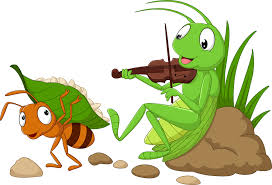 Here is a hardy perennial: Are human beings naturally indolent? From sagacious students of human nature there is no shortage of opinions.