
by Akim Reinhardt
 My Jewish maternal grandparents came to America just ahead of WWII. Nearly all of my grandmother’s extended family were wiped out in the Holocaust. Much of my grandfather’s extended family had previously emigrated to Palestine.
My maternal family history illustrates why many modern American Jews continue to view Israel as their ultimate safety net. After two millennia of vicious anti-Judaism, many Jews believe they can eventually be run out of any country, even Untied States. American Jews’ sometimes uncritical support for Israel is underpinned by a wistful glance and a knowing nod; if it does happen here, we can escape to there.
Even though I am only half-Jewish, my familial immigration history is more recent than most American Jews. Their ancestors typically arrived here a full generation or two earlier than mine, and most of them did not lose a slew of close family members in the Holocaust like my grandmother did.
But unlike most American Jews, I can counter the fear of “It can happen here” with a sense of American belonging that stems from deeply rooted Southern WASP family history. Depending on which of my paternal branches you follow, we’ve been here upwards of about three centuries.
Or so they tell me.
Exactly how long ago the Reinhardts, Lowrances, Younts, Dunkles, and Hollers I’m descended from first arrived here is besides the point. In fact, not having an exact date actually helps; it was long enough ago that no one really knows. And that feeds into the one common thread binding deeply-rooted white Protestant Americans, despite their many differences in class, education, geographic region, and religious denomination. It’s the unassailable sense that you belong here because you’re from here. That you’re not really the sons and daughters of immigrants. Rather, you’re descended from the people who took this land from Native Americans, and who fought to gain independence from the British. That you’re part of the group who really “earned” it. America’s your inheritance. You own it.
This is also the core of Trumpism: believing you have a better claim to being here than other people do. Read more »


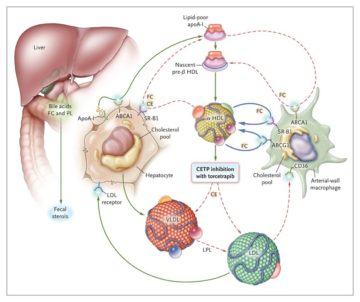 shocking. Torcetrapib, for example, failed at the very end of its phase III trial. So many resources had been expended to get that far in development. Everything spent was lost. All that remained was a big data pile worth virtually nothing, along with pilot plants that were built to supply the drug to thousands of patients across years of clinical trials.
 “The American way of life is not up for negotiation.” —George HW Bush to the assembled international diplomats at the Earth Summit in Rio de Janeiro, 1992
 Not since the Civil War and Reconstruction has the citizenry in the United States been so divided. In our current
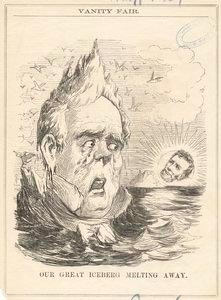 November 6, 1860. Perhaps the worst day in James Buchanan’s political life. His fears, his sympathies and antipathies, the judgment of the public upon an entire career, all converge into a horrible realty. Abraham Lincoln, of the “Black Republican Party,” has been elected President of the United States.

 Back in 1971, I couldn’t have predicted that the release of Joni Mitchell’s fourth album, Blue, would mark the beginning of the end of a friendship.
 2020 has been a wild ride, but it’s almost over, and I’m here to tell you it wasn’t all bad, as some great music came out this year – so much, in fact, that we’ll have to have two or even three podcasts this time even for the small taste which is our annual year-end review. Here’s part 1 (widget and link below).
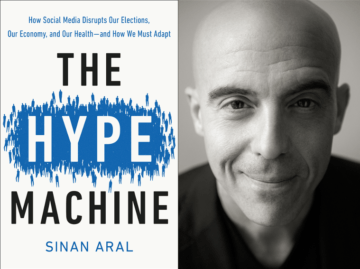 Given where we find ourselves in this late November of 2020, it is hard to think of a book more relevant or timely than The Hype Machine by Sinan Aral. The author is the David Austin Professor of Management and Professor of Information Technology and Marketing at the Massachusetts Institute of Technology. As one of the world’s foremost experts on social media and its effects, Prof. Aral is the perfect person to look at how this phenomenon has changed the world and the human experience. This is what he sets out to do in his new book, The Hype Machine, published under the Currency Imprint of Random House this September, and with considerable success.
 Dylan Kwait. Surfers by Plum Island, October 2020.
 Not long ago there was an article circulating on Facebook about ‘Hating the English’, originally published in a large circulation newspaper. The Irish author says something to the effect that once she thought it was just a few bad ones etc., but now she hates the lot of them. It’s been stimulated, I think, by the repulsive English nationalism that has been raising its head since Brexit, plus the usual ignorance about Ireland, Irish history and Irish interests on the part of your typical ‘Brit’. It’s not a very good piece of writing, and it has a rather slight idea in it. I’d ignore it but for the ‘likes’ and positive comments it’s received, particularly from ‘leftists’. It’s an example of what we could call ‘bloc thinking’ – the emotionally satisfying but futile consignment of entire masses of people into categories of nice and nasty.