
by Eric J. Weiner
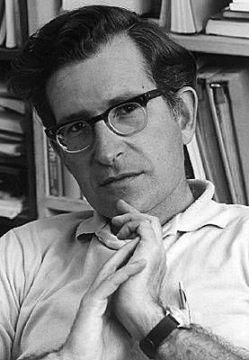
There are few people who spend as much time writing, thinking, and talking about the value of the work they do than intellectuals. Even as some noted intellectuals like Noam Chomsky and Thomas Sowell bristle at the term intellectual to describe who they are and what they do, they among many other self-described or self-denied intellectuals have taken up significant time and space writing and talking about the roles and responsibilities of intellectuals. The bibliography of work about the roles and responsibilities of intellectuals by intellectuals is impressive and too long to review here. Suffice it to say that from the dissident side of the intellectual coin, the work of Antonio Gramsci, Noam Chomsky, Edward Said, Pierre Bourdieu, Henry Giroux, James Baldwin, C. Wright Mills, Doug Kellner, Stanley Aronowitz, bell hooks, Toni Morrison, Michel Foucault, Ellen Willis, Eddie Glaude, and Cornel West represent some of the best and most provocative ideas and examples to date about the roles and responsibilities of intellectuals in modern times. Out of these conversations comes more exacting representations of the intellectual based on the kind of work she or he does. From Pierre Bourdieu comes the idea of the Collective Intellectual. From Stanley Aronowitz and Henry Giroux we get the Transformative, Critical, and Accommodating Intellectual. Doug Kellner gives us the Postmodern Intellectual. Most famously, Antonio Gramsci offered up the Organic, Traditional and Hegemonic Intellectual. From Noam Chomsky, we get a simple dichotomy between Dissident Intellectuals vs. Commissar Intellectuals. Michel Foucault identified Specific Intellectuals. And then there is the beloved Public Intellectual. There is also a significant body of work specific to the role of Black Intellectuals.
From the hegemonic side of the intellectual coin, the work of Richard Hofstadter, David Horowitz, Bill Bennett, Thomas Sowell, William F. Buckley, and Heather Mac Donald represent the work of intellectuals who, not surprisingly, deny or minimize the importance of their role in manufacturing a form of common sense that rationalizes the status quo of culture, power and knowledge. Their attacks on dissident intellectuals distracts from their own role as hegemonic intellectuals. Their attacks are not on intellectual work per se but on dissident intellectual work that exposes how various ideologies of official power naturalize oppression, violence, poverty, sexual harassment, white supremacy, and other social modalities of brutality and injustice. The primary project of hegemonic intellectuals, in addition to producing intellectual work in the service of established ideological, cultural, educational, and/or military power, is to attack dissident intellectual work and the intellectuals that produce it. Read more »
 When I was 12 my parents fought, and I stared at the blue lunar map on the wall of my room listening to Paul Simon’s “Slip Slidin’ Away” while their muffled shouts rose up the stairs. As I peered closely at the vast flat paper moon—Ocean Of Storms, Sea of Crises, Bay of Roughness—it swam, through my tears, into what I knew to be my future, one where I alone would be exiled to a cold new planet. But in fact it was just an argument, and my parents still live together—more or less happily—in that same house where I was raised.
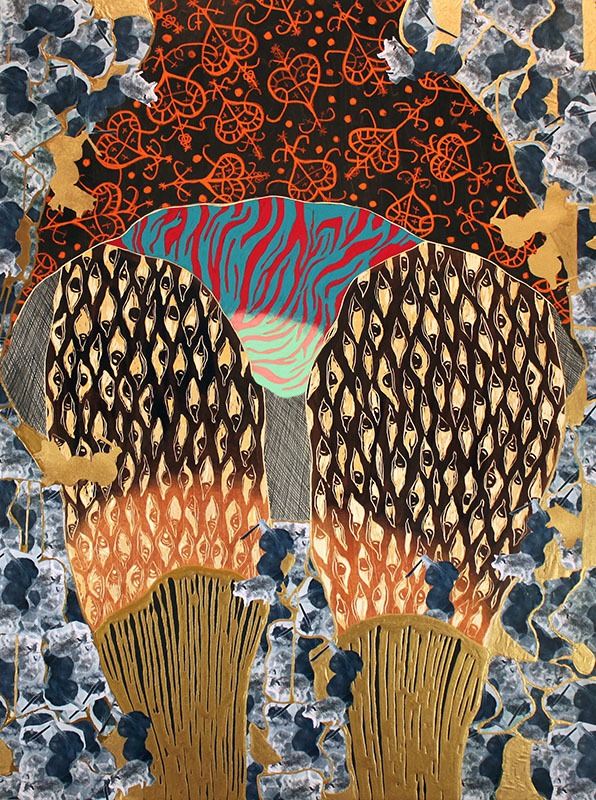 Didier William. Ezili Toujours Konnen, 2015.
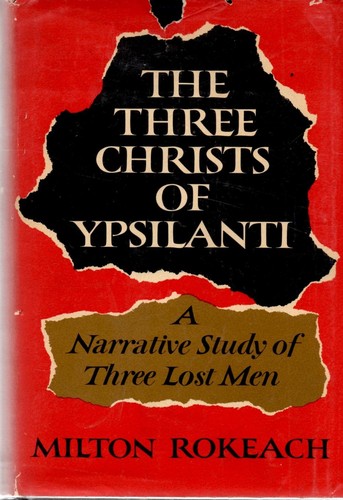 As an undergraduate History major, I reluctantly dug up a halfway natural science class to fulfill my college’s general education requirement. It was called Psychology as a Natural Science. However, the massive textbook assigned to us turned out to be chock full of interesting tidbits ranging from optical illusions to odd tales. One of the oddest was the story of Leon, Joseph, and Clyde: three men who each fervently believed he was Jesus Christ. The three originally did not know each other, but a social psychologist named Milton Rokeach brought them together for two years in an Ypsilanti, Michigan mental hospital to experiment on them. He later wrote a book titled The Three Christs of Ypsilanti.
 “I am by nature too dull to comprehend the subtleties of the ancients; I cannot rely on my memory to retain for long what I have learned; and my style betrays its own lack of polish.”
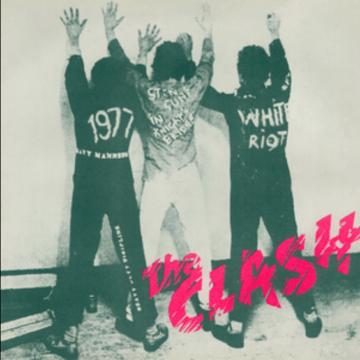 On August 17, 1977, I stopped in as usual at our neighbors’ house, to while away the summer day with my younger brother and sister until our mother’s return home from the university. Our friends – two sets of twins and one singleton – were home-schooled by their mother, and we were all having a summer staycation in any case, so there was always somebody at their house, and a reliably lively time to be had. What met me when I walked into the kitchen that morning, however, was an unaccustomed stillness. All five young people were hovering around the door to the living room while their mother sat at the kitchen table, hunched over a newspaper. “Elvis is dead,” whispered the singleton. Presley had died the day before, in Memphis, in the early afternoon of August 16; but the headlines, and President Carter’s address, would be that day’s news, on the outskirts of Vancouver as elsewhere around the world.


 The gully cricket I played in my neighborhood also had a tournament, where different neighborhoods of north Kolkata competed. I once played in such a tournament which was being held in the far north of the city, some distance from my own neighborhood. I don’t now remember the game, but I met there a savvy boy, somewhat older than me, who opened my eyes about Kolkata politics. When he asked me which locality I was from, he stopped me when I started answering with a geographic description. He was really interested in knowing which particular mafia leader my neighborhood fell under. Finding me rather ignorant, he went on to an elaborate explanation of how the whole city is divided up in different mafia fiefdoms, and their hierarchical network and different specialization in different income-earning sources, and their nexus with the hierarchy of political leaders as patrons at different levels. After he figured out the coordinates of my locality he told me which particular mafia don my neighborhood hoodlums (the local term is mastan) paid allegiance to. I recognized the name, this man’s family had a meat shop in the area.
 On May 31st, 2021, I sent an email to John Pawelek, Senior Research Scientist at Yale University, requesting a zoom meeting. When a week went by without a response, I decided to call. Searching for his number, I came across his Obituary instead. John Pawelek died on May 31st, 2021. Alas, I missed my chance to speak to a knowledgeable and accomplished scientist.
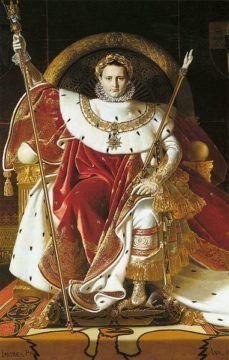 This year marks the 200th anniversary of Napoleon Bonaparte’s death in exile on the island of St Helena. And it was 206 years ago last June that his career came to a bloody end at Waterloo, with defeat at the hands of an allied army led by Britain’s Wellington and Prussia’s Blucher. But while the Emperor himself is dead and gone, the Napoleon Myth marches on, and is celebrated in some unlikely quarters.


 Sughra Raza. HAPPY BIRTHDAY JIM CULLENY!