
by Usha Alexander
[This is the fourteenth in a series of essays, On Climate Truth and Fiction, in which I raise questions about environmental distress, the human experience, and storytelling. All the articles in this series can be read here.]
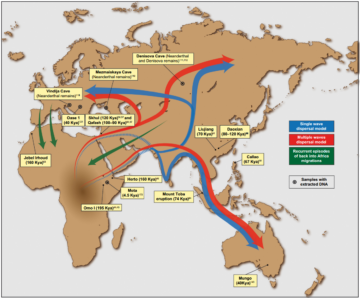 Our human story has never been simple or monotonous. In fact, it has been nothing less than epic. Beginning from relatively small populations in Africa, our ancestors traveled across the globe. As they went, they mastered new environments, even while those environments were continuously changing—sometimes in predictable cycles, sometimes unpredictably, as the planet wobbled in its orbit, the sun flared, a volcano blew, or other geophysical events transpired. Born during the ever-fluctuating conditions of the ice age, early humans soon mastered a great variety of adaptive living strategies. They combined cycles of nomadism and settlement. They fished, trapped, followed game herds, ambushed seasonal mass-kills, or even forbade the consumption of particular species at various times and places. They tended forests and grasslands with controlled fire, spread seeds, shifted cultivation, pruned and grafted trees, fallowed lands, and followed seasonal produce, among other techniques, managing their local environments and recognizing that their own wellbeing was intimately tied up with the health of local ecosystems. Through these practices, each community relied upon diets that included hundreds of species of edible plants and animals, from palm piths to pine needles, sea slugs to centipedes, mosses to mongooses—far beyond the foods we ordinarily think of today—and developed material cultures and pharmacopeias that might have included hundreds more. Such flexibility and breadth of environmental understanding promoted resiliency among what grew into a great diversity of peoples over hundreds of millennia, many of whom managed to steadily inhabit a particular region, maintaining an unbroken cultural continuity over hundreds of generations.
Alongside their diverse subsistence strategies, human societies also practiced an astonishing array of social and political institutions and arrangements—none of them ever amounting to a utopia—many of them difficult for us even to imagine today, with our impoverished templates of human possibility. They included fluid forms of power sharing that shifted ritually, seasonally, or otherwise, between generations, genders, lineages. Sometimes social power was more centralized; other times more distributed or opportunistic; sometimes more closely tied with wealth, but not usually. Read more »
 hookers rested after walking Hollywood Boulevard, or at least that’s what my mother once said of her counterparts who lived in rooms above the garages of a small apartment building on a busy street. While waiting for my father to return from prison, we lived in one of the garages, converted into a shelter.
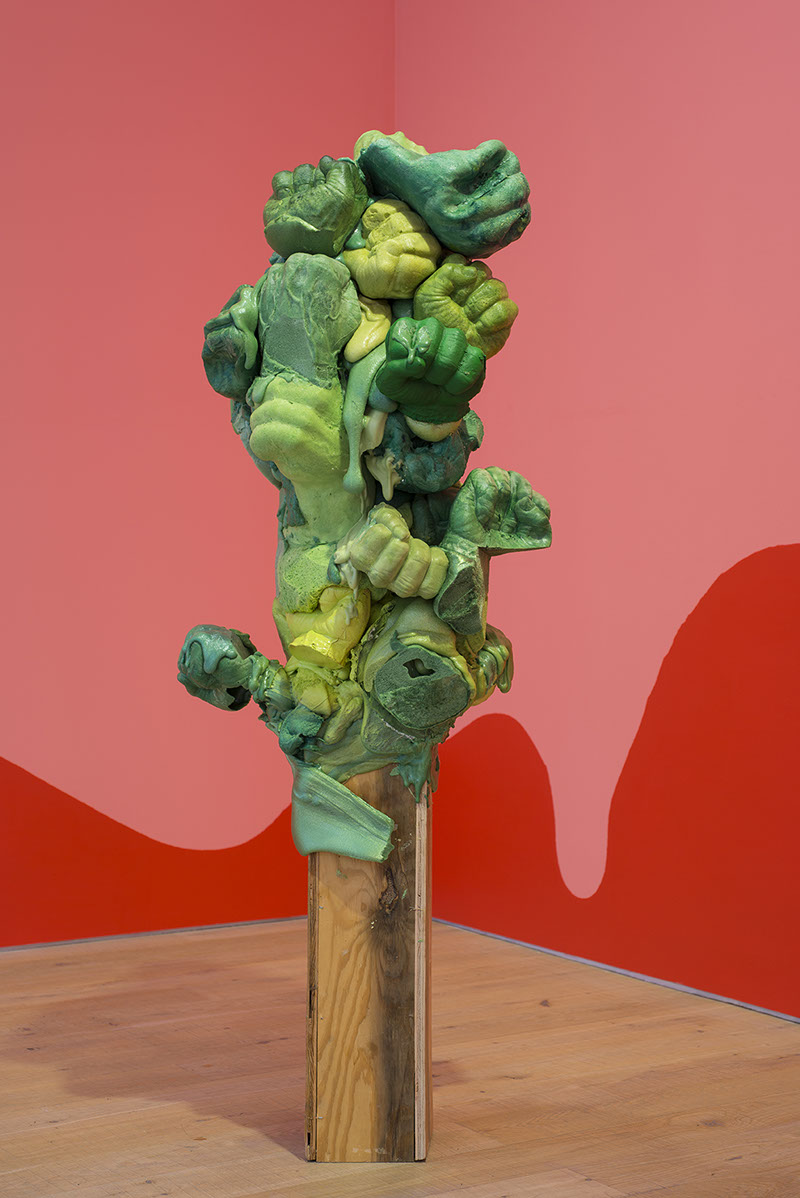 Catharine Ahearn. Incredible Hulk, 2014. In the exhibition “Everything Falls Faster Than An Anvil”.
 Do we Americans really have a shared, founding mythology that unites us in a desire to work together for the common good?
 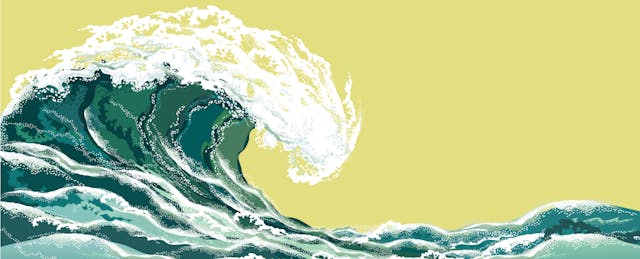 It’s still a year away, maybe three, but you can see it coming.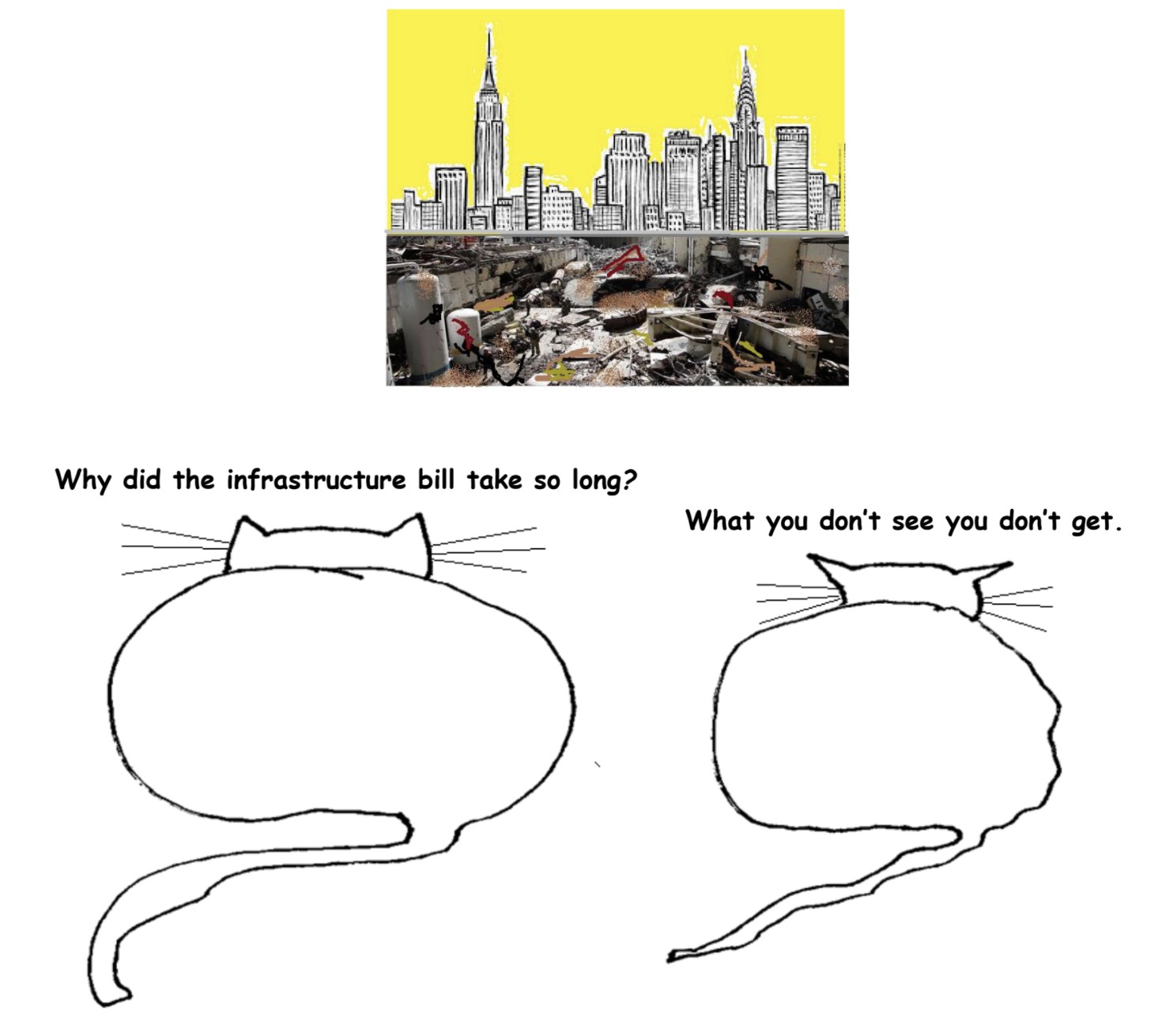


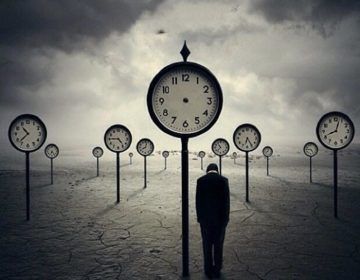 At MIT I had my initiation into a breathless pace of academic activity that was quite different from the pace I had seen elsewhere until then. The whole place was a dynamo of research activity, you could almost hear the hum and feel the energetic throb of multiple high-powered brains at work. While teaching was an important part of daily activity and it often fed into research, it was research where the main action was. Later I found out this was more or less the case in other top departments in the country, but at MIT I had my first experience. There was the thrill of thriving at the frontier of your subject, you saw the frontier visibly moving from one seminar to another, from one widely-cited journal article to another, you had to run fast even to remain at the same place, and while the competition and the race were invigorating, you could also see the jostling and the occasional hustle.
 Philosophy, as we teach it in the U.S. and Europe, originated in Ancient Greece, specifically in the person of Socrates who wandered the marketplace tormenting fellow citizens with incessant questions and losing his life for his efforts. For Socrates, there was one overriding question that not only defined philosophy and distinguished it from other inquiries but was a question all human beings should urgently and persistently ask. What is the best life for human beings? His answer was that only a life in pursuit of wisdom regarding what is good could be fully satisfying and complete. The implication was that philosophy was not only a way of life but the best form of life possible since it was uniquely the job of philosophy to discover wisdom.
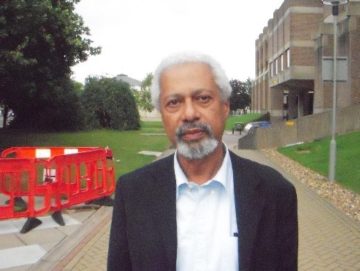 My immediate thought after finding out that he had won this ultimate literary accolade was that it couldn’t have happened to a nicer or more grounded writer. In a
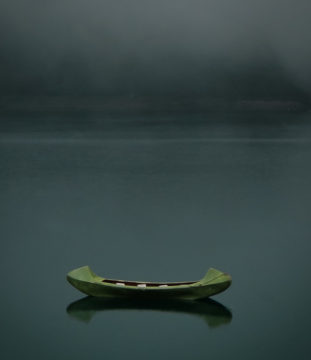
 A few years ago, there was a debate in the pages of a British newspaper along the lines of ‘is Keats better than Bob Dylan?’. Mainly futile, I think, as the unanswered question was surely better at what? It’s not clear that one can usefully compare -and rank -an early 19th century lyric poet with a 20th/21st singer-songwriter, because they aren’t really doing the same thing. Another half submerged question lurking in the discussion, was really: are there standards by which we can assess the excellence or otherwise of a work of art? Is there is a qualitative difference between the novels of Tolstoy and those of Dan Brown – or should we just say, ‘if you like it, it’s as good as anything else’? Here, I think, the discussion often gets confused. So we have a debate about excellence, or worth, judged according to an uncertain standard; and conflated with that another about the canon, about ‘high’ and ‘low’ art, so called. Here you might well be tempted to dismiss it all, and just say ‘if I like it, its enough’, or maybe better: ‘there are no standards beyond ones own taste’. If that is so, we might as well just shut up about what we like or don’t like in art. A person just has the response they happen to have, and different people will have different responses. The rest is, or should be, silence.
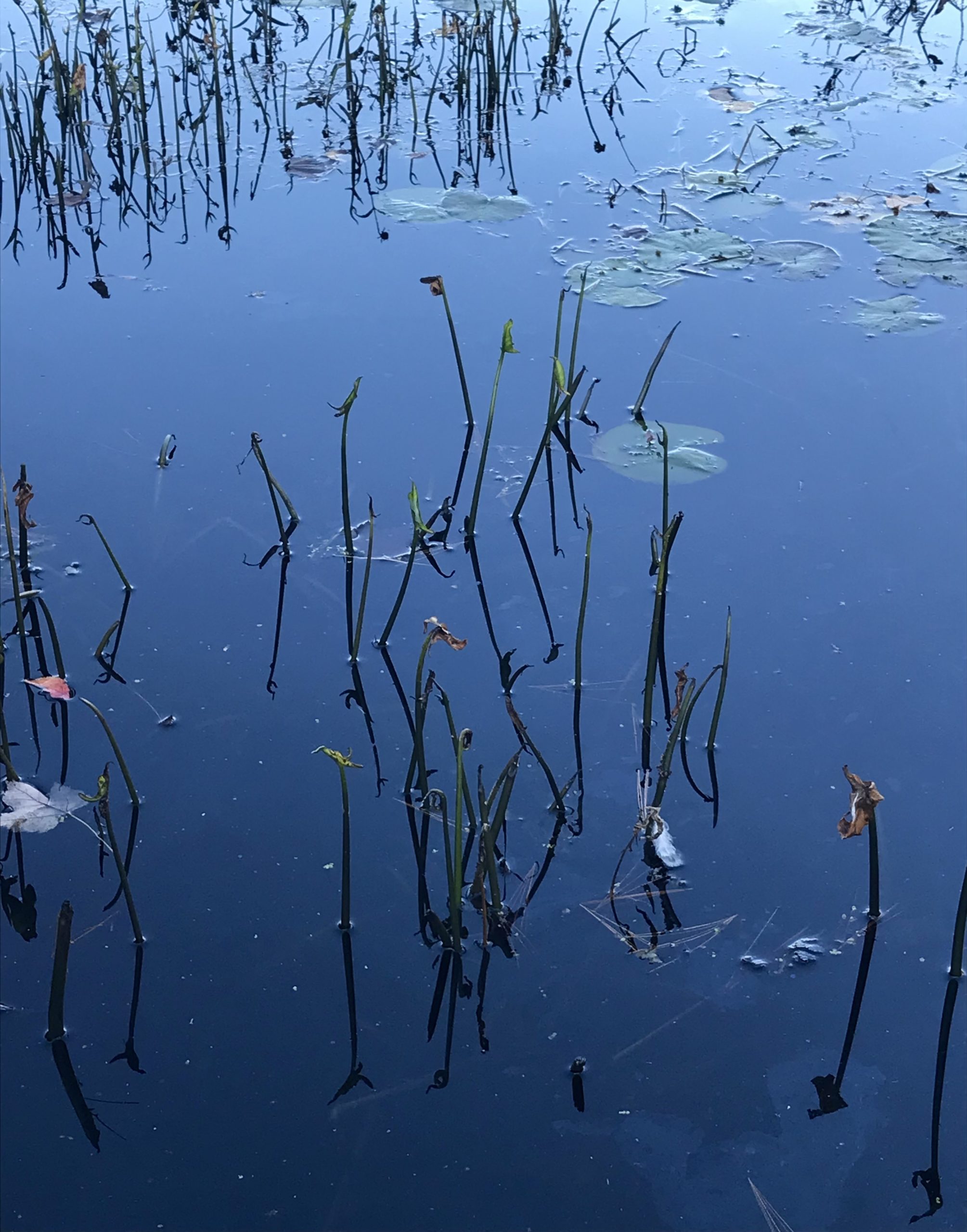 Sughra Raza. Starry Night, October 2021.
 The soon-to-be famous ship is part-way around the world. It will eventually become only the second vessel in recorded history to achieve the complete circumnavigation – after Magellan. But the ship is poised over disaster. Somewhere in the seas off present-day Indonesia, the captain has ordered full sail and then retired to his cabin. The ship hits something – there’s an awful shudder and it stops dead in the water. A reef, probably.