by Paul Braterman

When those in authority withhold promised information, we must fear for the worst. That is now the situation at Imperial College. As I write, the President’s Board is considering erasing from public view the role of one of the College’s founders, TH Huxley, despite his distinguished contributions throughout his life to education, science, and the abolition of slavery and other forms of discrimination. It is also considering erasing JBS Haldane’s name because he once discussed eugenics, even though he strongly opposed to this movement in its heyday, on the grounds that it was scientifically unsound and merely a rationalisation for the dominance of the upper classes.
This perverse outcome is the result of a deeply flawed process, as I have discovered by examination of the public record, supplemented by information from within Imperial’s faculty. It may well be too late to change the Board’s decision, but it is never too late to learn from the events that have led to this debacle.
It is by now widely known by now that:
as part of the commendable activity of reviewing its past and encouraging diversity, Imperial College appointed a History Group to make recommendations,

that this recommendation has provoked widespread opposition among Imperial College academic staff and elsewhere,
that 40 distinguished academics have put their signatures to a letter of protest,
 that these signatories include 17 members of Imperial’s own Faculty, Faculty at 11 other universities and research institutes, 19 Fellows of the Royal Society as well as several members of comparable overseas bodies, 4 Sirs, a Nobel Prize winner (Sir Paul Nurse), a Breakthrough Prize winner (John Hardy), a McArthur Fellow (Russell Lande), and many of our most distinguished science communicators, including, most relevant in the present context, Adam Rutherford, author of How to Argue with a Racist and Control; the Dark History and Troubling Present of Eugenics,

that the journal Nature refused to publish this letter, on the grounds that they regarded it as a petition, which they no longer carried (Huxley, of course, was among the founders of Nature),
and that, thanks to the initiative of an alert journalist, the letter eventually appeared, sandwiched between others, in the London Daily Telegraph, together with an article summarising its contents. Read more »
 Sughra Raza. Bey Unvaan. February, 2022.

 Why do I have to help?
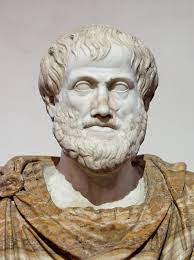 Among the ideas in the history of philosophy most worthy of an eye-roll is Aristotle’s claim that the study of metaphysics is the highest form of eudaimonia (variously translated as “happiness” or “flourishing”) of which human beings are capable. The metaphysician is allegedly happier than even the philosopher who makes a well-lived life the sole focus of inquiry. “Arrogant,” self-serving,” and “implausible” come immediately to mind as a first response to the argument. It’s not at all obvious that philosophers, let alone metaphysicians, are happier than anyone else nor is it obvious why the investigation of metaphysical matters is more joyful or conducive to flourishing than the investigation of other subjects.
 In late January the United States Senate Health, Education, Labor and Pensions (HELP) Committee released a draft discussion of its COVID-prompted public health bill titled, “Prepare for and Respond to Existing Viruses, Emerging New Threats, and Pandemics Act” (
 Soon K.N.Raj gave up his Vice-Chancellorship and moved to his home state, Kerala, and started a new institution, Center for Development Studies (CDS). He tried to lure me (and Kalpana) to join the faculty there, and even offered to get us land on which he’d persuade his friend Laurie Baker (a resident British-Quaker architect) to build us a low-cost, energy-efficient beautiful house (like his own). At CDS, he not merely provided intellectual leadership, he was the pater-familias for the group. After a whole day of teaching and seminars, in the evening he’d visit his colleagues’ homes, try to solve their multifarious domestic problems, while his wife, Sarsamma, will minister to their sundry medical needs. Once driving me to the airport, when I was all praise for the young institution and the community he was in the process of building, he asked me if I had any word of criticism. I told him it was too much of a “Hindu undivided family” for my taste. Raj corrected me and said it was not “Hindu” — he did not seem to mind the “undivided family” part.

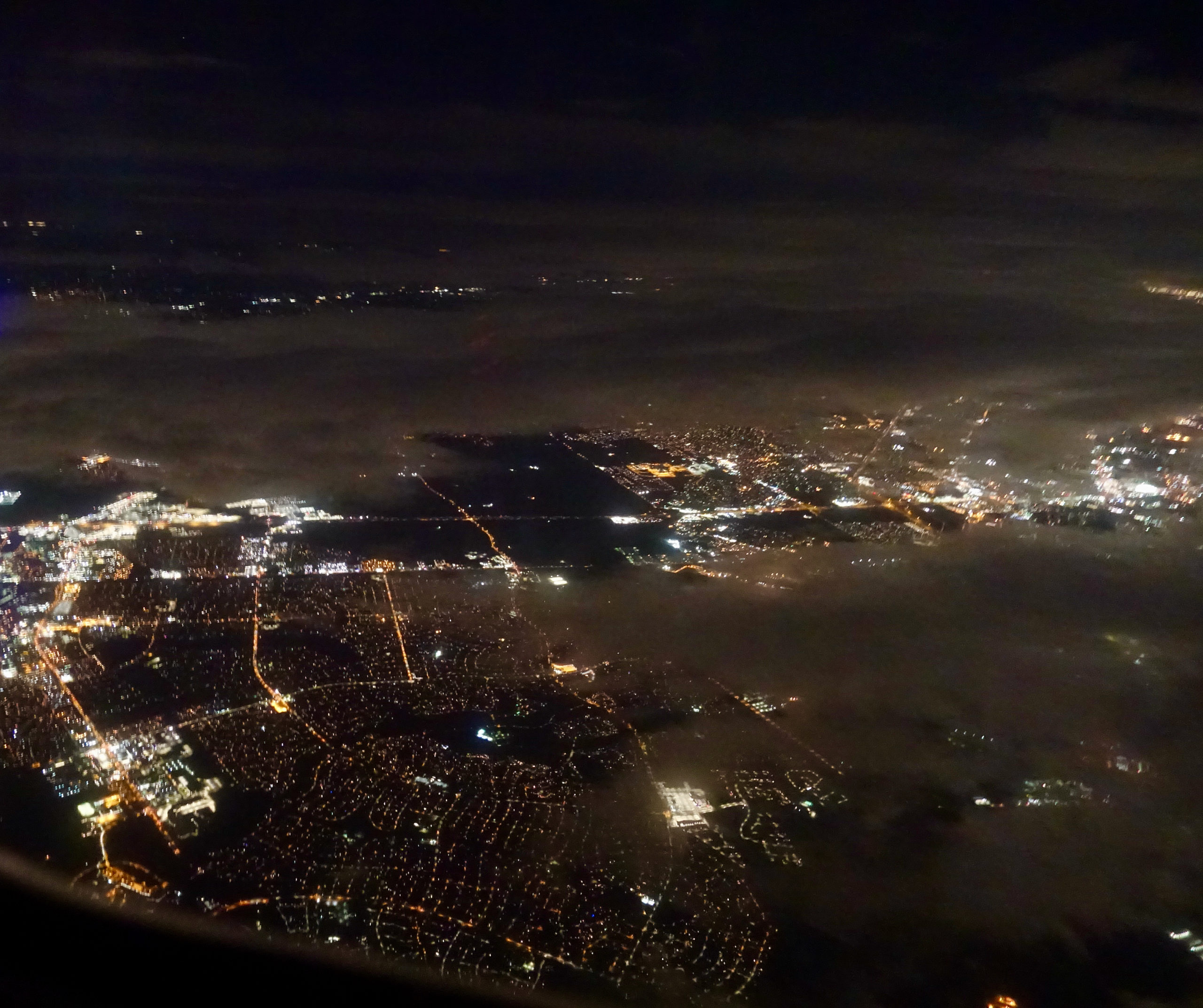 Sughra Raza. Kaamdani, Approaching Santiago, Chile, 2017.
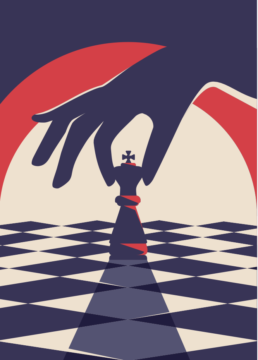 In the game of chess, there are dramatic moves such as when a knight puts the king in check while at the same time attacking the queen from the same square. Such a move is called a fork, and it’s always a delicious feeling to watch your opponent purse his lips and shake his head when you manage a good fork. The most dramatic move is obviously checkmate, when you capture the king, hide your delight, and put the pieces back in the box. But getting to either the fork or checkmate involves what’s known in chess as positioning, and for the masters, often involves quiet moves long in advance of the victory.