
by Rafaël Newman

It’s the final day of February 2022, a month that began with the centenary of the publication, on February 2, 1922, of Ulysses, on what was also the 40th birthday of its author, James Joyce. Commemorations were held, among other places, in Dublin, where Joyce was born and which plays a central role in the novel, and in Zurich, where Joyce wrote parts of Ulysses, where he died, and where he is buried.
The commemoration in Zurich took the form of an all-day reading of sections of the novel at thematically appropriate locations throughout the city. The marathon was organized by friends of the James Joyce Foundation, a center for the study of the writer’s works under the direction of the eminent Swiss Joyce scholar Fritz Senn; and because I have myself been involved in other events organized by the Foundation, and count among my acquaintances people associated with it, I was asked to take part, on Saturday, February 5, as a reader.
 By a happy chance, the section I was invited to read from, alongside Andreas Flückiger and William Brockman, two associates of the Foundation, at the James Joyce Pub in Pelikanstrasse in downtown Zurich, was the Cyclops episode, the 12th of the novel’s 18 chapters. This pleased me because I have cherished the episode for years, in part because my Greek teacher at high school had begun our reading of Homer’s Odyssey with the ninth book of that 24-book poem, in which the Greek hero cunningly escapes death at the hands of the one-eyed giant Polyphemus, and which serves as the template for Joyce’s episode; and in part because, when I first came to read Ulysses, at university in the 1980s, it was the Cyclops chapter that appealed to me most, as it contained what I found the most cogently political encounter in Joyce’s novel—and politics was what interested me most at the time. Read more »


 After my several visits to Kerala, I wrote up an article, “On Life and Death Questions in India” for EPW, where I highlighted the welfare and demographic achievements of Kerala, the most advanced region in India in terms of many indicators of social democracy. Soon Raj and his colleagues (including my friend, T.N.Krishnan) produced a large, quantitative report for the United Nations Development Program, which brought to international attention the so-called Kerala model of development.

 that this Group
  that these signatories include 17 members of Imperial’s own Faculty, Faculty at 11 other universities and research institutes, 19 Fellows of the Royal Society as well as several members of comparable overseas bodies, 4 Sirs, a Nobel Prize winner (
 Sughra Raza. Bey Unvaan. February, 2022.

 Why do I have to help?
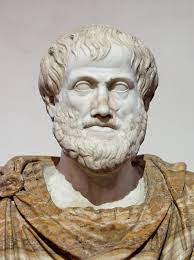 Among the ideas in the history of philosophy most worthy of an eye-roll is Aristotle’s claim that the study of metaphysics is the highest form of eudaimonia (variously translated as “happiness” or “flourishing”) of which human beings are capable. The metaphysician is allegedly happier than even the philosopher who makes a well-lived life the sole focus of inquiry. “Arrogant,” self-serving,” and “implausible” come immediately to mind as a first response to the argument. It’s not at all obvious that philosophers, let alone metaphysicians, are happier than anyone else nor is it obvious why the investigation of metaphysical matters is more joyful or conducive to flourishing than the investigation of other subjects.
 In late January the United States Senate Health, Education, Labor and Pensions (HELP) Committee released a draft discussion of its COVID-prompted public health bill titled, “Prepare for and Respond to Existing Viruses, Emerging New Threats, and Pandemics Act” (