
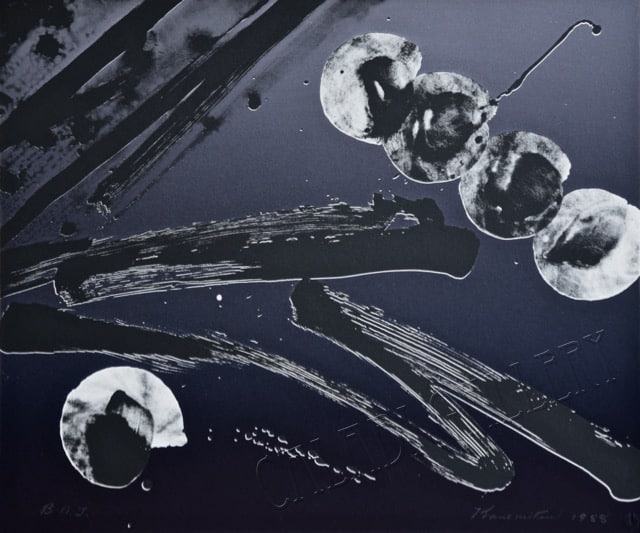
 Matsumi Kanemitsu. For The Dream, 1988.
The Miller’s Daughter and the Deadbeat Dad
by Jerry Cayford
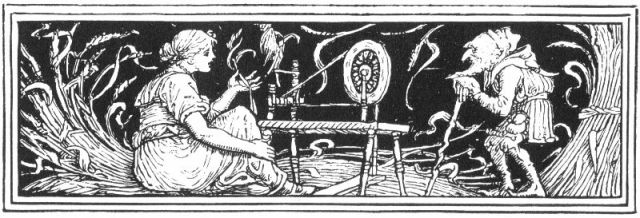 “This is the story of a man. Not rich and powerful, not a big man like your father, Sweetheart. Just a funny little man. I didn’t know him long, only three nights. But there was something about him, something magical.” If “Rumpelstiltskin” started with this framing, we would have a different picture of the story’s meaning, a truer picture, for this framing suggests what is hidden below the surface.
The miller’s daughter is our “shadow” narrator. No one else witnesses the central events of the story, except Rumpelstiltskin, and he’s dead. We get suspicious that the story she’s telling makes her look too good: the beautiful victim, abused by everyone, who somehow ends up with the king, the gold, the servants, and the child, and never has to pay her debts. Clues pile up, starting from Rumpelstiltskin’s death. He “ripped himself up the middle in two” and sank into the earth. The poor sap killed himself. Why? We follow the trail of breadcrumbs. Why would the guy want the daughter’s firstborn? Sounds like a euphemism… That’s it! The bargain wasn’t for the child but for the woman! It’s the oldest bargain in the world. But if that was the deal… paydirt: Rumpelstiltskin is the child’s father!
There is plenty to uncover in this fairy-tale-noir story of illicit sex, betrayal, obsession, and suicide, but you have to believe it is worth digging. Perhaps if I tell you the story is older than the bible: “Rumpelstiltskin, in summary, is one of the earliest known narratives in Western literature” (Oliver Tearle). Scholars have traced the story back to languages long vanished. As Tearle puts it, “The story obviously has its roots deep in the most primal and basic drives and emotions which are commonly shared throughout humanity.” Read more »
Determined To Be Annoying
by Chris Horner
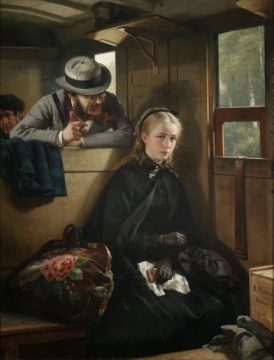
Imagine you are put in regular close contact with someone who regularly makes your life difficult. This could be at work, or a flat share, anything. They leave you to finish the chores they start, invade your space, and generally act in an inconsiderate way. You’d like to put some space between them and you, but you can’t. Perhaps you’ve some choice words for them which you are preparing to share, but holding back your exasperation you try to point out to the person the problems they are causing. When you start to do that, this person responds by disclosing that they have a condition that, according to them, makes them act in this way. For our purposes this could be anything: ADHD, autism, PTSD, neurosis stemming from childhood neglect, bipolar – anything (to be clear: I am not suggesting that any of these are necessarily connected to antisocial behaviour; let’s also assume that they aren’t inventing the diagnosis, and that the condition is real). [1]
How does this change your feelings about the situation, if at all? Perhaps you try to talk through the situation to find a way to work with this person to mitigate the antisocial behaviour. But it continues. You might find a way of leaving the situation, or of getting outside assistance. You might check that there has been a legitimate medical diagnosis, all sorts of things. Suppose the condition has been diagnosed by a qualified person. So they do have this condition. Again: what has changed? Read more »
Catspeak
by Brooks Riley
Cruel Warfare
by O. Del Fabbro
Of 969 days in captivity, Stanislav Aseyev spent 875 days in complete isolation in a modern concentration camp in Russian occupied Donetsk. In his memoir, The Torture Camp on Paradise Street, Aseyev aims to write about this personal experience.[1]
Torture is, according to Aseyev, a complex system of measures. The goal is not necessarily to hurt the victim physically, but to destroy their individuality. Indeed, Aseyev is victim to a mixture of physical and psychological torture, simply because body and mind cannot be separated from one another. After electrical shocks, or beatings with the PR-73 (a standard Soviet-police rubber baton), Aseyev’s tormentors ask him seemingly weird questions such as his belief in God, if he’s ever jumped with a parachute and how many times he masturbates per day. Every once in a while, he is asked questions about his actual charges: espionage. The goal, of course, is to disorient the victim, to potentially make him lie only to be able to punish him even more. Aseyev is released from prison in December 2019.
Even though Aseyev speaks only about his personal experience, his case is one of many. It is representative for Russia’s cruel warfare against Ukraine, the terror that started even before the full-scale invasion in February 2022. Ever since, we have seen the mass graves in Bucha, have watched videos of the mercenary Wagner Group executing its own members with a sledgehammer, read about the castration of an Ukrainian POW by Russian soldiers and the sexual abuse and rape of women and men, children and elderly. We witnessed how thousands of Ukrainian children were shipped to Russian territory and indoctrinated with Russian propaganda.
Russian cruelty seems to dwell from an endless well, even affecting nature, that is the biodiversity of ecosystems, as the explosion of the Kakhovka Dam has shown. These examples might be singular events, but taken together, they show the systematic cruelty hiding behind Russian warfare. Lastly, Russians are not just cruel to their enemy, they are also active within their own ranks, for example when Russian soldiers executed their comrades, who were fleeing from the frontline. Read more »
On the Bus / At Work
by Ethan Seavey
On the bus my mind just keeps running
And I’d love for it to slow down. It does when I’m writing because the thoughts can’t happen four times a second. They go as fast as my fingers do, and my fingers are clunky on this little glass screen, they have to go back and polish up the thoughts so that they’re readable, so that they make sense. My mind doesn’t do that by itself, it just jumps from jump to jump to jump. But it’s hard to type on the phone and so I just sit and think
I miss [redacted] but it was right to say goodbye because I’m not ready to spend more time with them I need a psychologist to diagnose my adhd and a therapist to rewire my brain and ketamine therapy is something I should look into I’m gonna be so tired at work today I have to be a self starter I’ll tell my coworkers I’m kinda sick so they don’t expect too much of me I’ll close my eyes and open them when the bus stops again I forgot to spritz the plants today I should write a story called all our husbands are gay, all our wives are lesbian and it would be humorous but probably insensitive, cut to a random memory from my trip to Greece when I walked around the ruins of a temple with James, spliced with the time I was walking a dog and failed it because it pulled on the leash and I let go and it ran across the street + got bit. I get bored and check my apps, I deleted an app and now I spend too much time on social media and I can’t read War and Peace because my brain is tired, I can’t write well on the bus, can I? That’s language that limits you, E, you often let language limit you , using language which further locks me to its statement; I often let language limit me because it was once said about me by me and it clicks in my head that way
Do I have to do backflips and say that language does not limit me in order to harness its power in a productive way?
It all feels so overwhelming but in reality there are only a few things I need to do
Find an apartment find a therapist and a psychologist find a graduate program to apply and find a graduate program that will accept me and find a spot in a career I have no energy for right now because I’ve just been stuck because you’ve been giving yourself away to other things and other people Read more »
Monday Photo

Sculpture in a pool at the outdoor deck of the Tower Garden restaurant in Vahrn, South Tyrol.
Wild about Harry: Diaries and memoirs at the end of history
by Brooks Riley
Ems, 17 June 1880
“This morning I took a long walk with Papa . . . judging by this morning, a more awfull profusion, diffusion, infusion and confusion of colours it is difficult to imagine . . . the Britishers especially excell in this art and their colours are put together as they might be on the dirty palette of an inexperienced painter.. . .”
 Count Harry Kessler was born to write it all down. In this excerpt from his second ever diary entry, written at the German spa town of Bad Ems where Kaiser Wilhelm also summered, the 12-year-old French-born German boy has a high old time stretching the limits of the English language, in preparation for matriculation at a prestigious British boys’ school. An incipient snob and precociously intelligent, Kessler offers us a nutshell preview of the diabolical pleasure with which he will mash words, sounds and images for the next 57 years—savaging inanity wherever he sees it—but more importantly, promoting and nurturing great artists and thinkers along the way, including Rilke, Beckmann, Seurat, Grosz, Maillol, van der Velde, Max Reinhardt, Gordon Craig, von Hofmannsthal, Stravinsky, Rodin, Kurt Weill, Strauss, Nijinsky, Munch, Walther Rathenau and many others.
“. . . the promenade is a crowd of dresses so short and tight one might take them for underpetticoats or so long and loose you could mistake them for dressinggowns, of cloaks most certainly copied from the assyrian bas reliefs or from the cloaks found with the mummies in the pyramyds (with which they have a strong resemblance,), . . . of projecting stomacks, of very flatt and long feet, of red faces and other accomplishments. . .”
Nota: In coming to Ems we had 19 trunks and 18 parcels in the whole 37 things, Rien que çà!
Harry takes a walk with his Papa, but he won’t tell us what they talked about. What matters to Harry is reporting what he saw on that walk and how he saw it—as journalist, critic, satirist, diarist and outsider. His nota, thrown in for fairness, adds his own family to those guilty of excess.
In this opening salvo, we learn that beyond the omniscience of his observations, Kessler is not terribly interested in writing about himself. The less he tells us, the more we want to know about him. The less he tells us, the more we will start to feel that we know him, warts and all, as the mists around his persona slowly begin to lift. It is this indistinct but discernible sum of a man who will become as fascinating as the many famous people he writes about during his whirlwind European lifetime. At ease in five languages (two of them dead), he manages to combine a phenomenal intellect with the social ease that made him a lively addition to any dinner party. Read more »
The Literary Canon Today, Part 3: The State of Publishing Canonical Literature
by Joseph Carter Milholland

Reputation, reputation, reputation! O, I have lost
my reputation! I have lost the immortal part of
myself, and what remains is bestial.
– Cassio (Othello, Act 2, Scene 3)
So far, my focus in this series of essays (see part 1 here and part 2 here) has been how we write and talk about the literary canon. The canon is a rather abstract subject, but when we talk about how the canon has changed, we are wont to talk about something even more abstract: a writer’s reputation.
“Reputation” – read enough literary essays, and you’ll see that word appear again and again. “In recent years Kipling’s reputation has taken such a beating that it’s a wonder any sensible critic would want to go near him now,” a writer in the New Yorker explains. “A century after his birth, and more than half a century after his death, Wilde continues to enjoy a reputation that can hardly be justified by his mere literary achievement,” alleges another writer in the New Republic. “In the 32 years since Bellow won the Nobel, there has been exactly one American laureate (not counting writers from other countries who became American citizens), Toni Morrison, whose critical reputation in America is by no means secure,” a third writer in Slate asserts.
Reading all this concern over reputation can be a bit dispiriting; the literary critic who records the minute changes in a writer’s reputation begins to look drearily like that of a day trader obsessing over the small variations in corporate shares (only, the literary critic makes a lot less money). What, after all, does reputation have to do with serious literary criticism? If a writer is good, why bother at all about their reputation? Read more »
Monday, September 25, 2023
Guillain-Barré Syndrome and Me
by Gautam I. Menon
Across the period of a week, starting around the 8th of August 2023, I transformed from being someone in reasonable, if not perfect, health, to being a patient confined to a hospital bed, effectively paralysed waist-down. That I knew that my condition could possibly deteriorate even further, to the point where I would have to go into an ICU, added an inescapable layer of stress. I managed to camouflage this concern, but it never really left my mind.
This is a personal story of an illness and subsequent recovery. I’ll narrate events much as they unfolded in real time, but I’ll also weave my narrative around the condition itself, its treatment, and lessons from my experience.
The back-story starts in July, 2023, overlapping into early August. This was a period of intense travel: 11 airports in about a month across and outside India. This travel was largely on work. Delhi, where I stayed, was a fixed point to which I kept returning. Along the way, during this period, I had acquired a persistent cough, largely dry, accompanied by what seemed to be a barely noticeable fever. This lasted a while, 2 weeks or more, exacerbated by the stresses of both incessant travel and work. I recall feeling drained of energy through much of the time. (A meeting we’d organized, on data science in health, and in which I’d particularly wanted to attend all the talks, was washed-out for this reason. I stayed in my room for much of the time, emerging only for select talks by friends and the group photograph.)
The last leg of my travels was a brief trip out of India, at least partly to recharge before beginning to deal with the rigours of a teaching semester. The cough wore off and so did the exhaustion that had accompanied it. I threw myself into simply being a tourist in a foreign country, walking long distances to see places I hadn’t been to before. This was a country I had grown to love, across two previous visits. It helped that there were a number of friends there, old and new.
The weather was, as usual for that time of year, glorious. The cafes were brimming with people. The ferry trips were exactly as I remembered them from previous visits, with the summer light glancing off the ripples and waves, in shades of blue, seemingly as if reflected from a mirror shattered into a million pieces. My first inkling that something was wrong was a persistent tingling, a pins-and-needles feeling, on the soles of my feet, on August 9th. The sensation stayed with me. It was a more intense feeling than I had ever encountered previously. By the following day, the 10th, the same sensation had spread further. It was now but also in my hands, particularly in my fingers and palms. Read more »
Try This – A Final Exam in Finite Math
by John Allen Paulos
 Over the years I’ve been teaching, many people have asked me about the content of an elementary course I teach. I’m interested in the syllabi and exams of courses in other fields, so this I hope may be of interest to others as well. The survey course on which this exam is based is a smorgasbord of probability, voting theory, scaling, and other variable material. Since the class is very large, I often reluctantly make the final exam multiple choice as is the example below. Try it if you like. Two hours is all the time you have. Writing useful prompts for ChatGPT will take too long to be of much help.
Math Patterns Final Exam, Prof. Paulos
1.) Two large screen TV’s are essentially the same except for their size. The width of the larger screen
is 48 inches and that of the smaller is 30 inches. The area of the larger screen is how many times the area of the smaller screen.
- 1.60 B 1.44 C 2.560 D 4.097
2.) The weight of the smaller TV is 44 pounds. What is the weight of the larger TV?
A 70.4 pounds B 112.64 pounds C 180.22 pounds
3.) Meteors that strike Earth always seem to land in craters, and fatal skiing accidents always seem to happen on the skier’s last run. Is the explanation for these:
A coincidence B reverse causation C Bayes Theorem D humorous flapdoodle
4.) A large pizza has a diameter 2.5 times the diameter of a small one of the same thickness. How many times as much pizza is in the larger one?
A 5 times as much B 6.25 times C15.625 times D 2.5 times
5.) If the national debt is about 30 trillion dollars, how much is each individual American’s share?
A $120,000 B $90,000 C $60,000 Read more »
Monday Poem
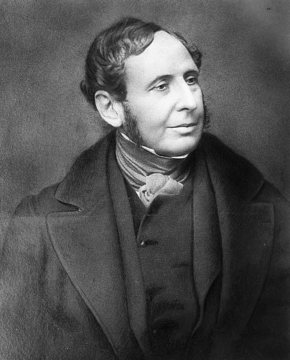
Grand Observations: Darwin and Fitzroy
by Mark Harvey
One of the artifacts of modern American culture is the digital clutter that crowds our minds and crowds our days. I’m old enough to have grown up in the era before even answering machines and the glorification of fast information. It’s an era that’s hard to remember because like most Americans, I’ve gotten lost in the sea of immediate “content” and the vast body of information at our fingertips and on our phones. While it’s a delicious feeling to be able to access almost every bit of knowledge acquired by humankind over the last few thousand years, I suspect the resulting mental clutter has in many ways made us just plain dumber. Our little brains can absorb and process a lot of information but digesting the massive amount of data available nowadays has some of our minds resembling the storage units of hoarders: an unholy mess of useless facts and impressions guarded in a dark space with a lost key.
If you consider who our “wise men” and “wise women” are these days, they sure seem dumber than men and women of past centuries. I guess some of them are incredibly clever when it comes to computers, material science, genetic engineering, and the like. But when it comes to big-picture thinking, even the most glorified billionaires just seem foolish. And our batch of politicians even more so.
It’s hard to know the shape and content of the human mind in our millions of years of development but the story goes that we’ve advanced in consciousness almost every century, with major advances in periods such as the Renaissance and the Enlightenment. That may be true for certain individuals but as a whole, it seems we drove right on past the bus stop of higher consciousness with our digital orgy and embryonic embrace of artificial intelligence. Are we losing the wonderful feeling, agency, and utility of uncluttered minds? Read more »
Escape From Brain Prison Part IV: A Universe of Possible Minds
by Oliver Waters
 In Part I, we explored some immediate benefits of transitioning from our organic brains to synthetic ones, perhaps the most attractive being effective immortality via ‘backing up’ our digital minds. But now I’d like to venture off into much more speculative territory: how artificial brains may enable us to meet aliens.
People have been scratching their heads about where all the aliens are for a long time. Perhaps the bleakest theory is that we are truly alone in the vast darkness of spacetime. It’s also the most boring theory. The problem with the more interesting option – that other intelligent life forms exist – is that there seems to have been more than enough time for advanced aliens to mosey on over to our neck of the woods, yet they haven’t. This is the ‘Fermi paradox.’
The most compelling answer to this paradox may be that they don’t want to visit us. After all, a highly advanced civilisation would obviously be technologically capable of venturing out into their solar system, galaxy, then eventually inter-galactic space. But would they be motivated to do so? This might seem like a stupid question, at least to any fans of Star Trek. Of course they’d be motivated to explore the universe! What kind of incurious moronic species would they have to be to decline such an exhilarating adventure!?
But the stark reality is that outer space is rather boring. It’s mostly dark and empty, and the clumps of matter and energy that punctuate its monotonous fabric are identical to those in any local environment. It’s the configurations of fundamental particles that are the truly interesting things. The most interesting of these configurations are other rational and creative beings: namely people. We dream of conversing with aliens with richly imaginative personalities like E.T, not of scooping Martian amoeba into petri dishes. Read more »
Perceptions
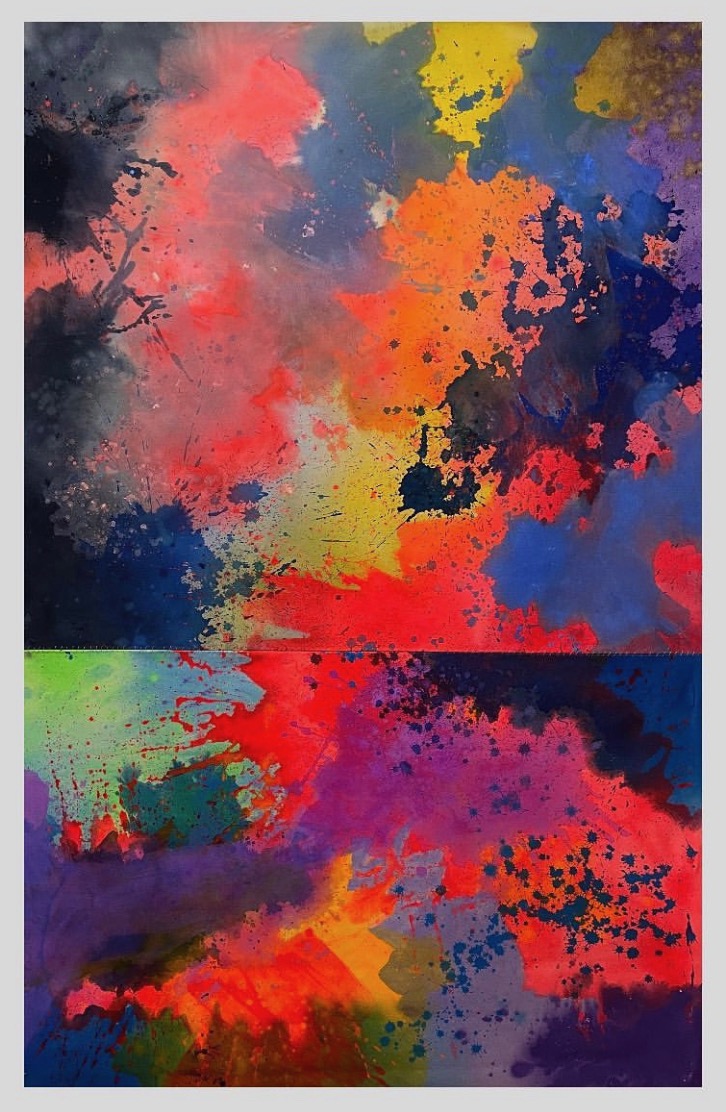 Rashida Abuwala. Untitled Diptych, 2023.
Barbie and Plato
by Nate Sheff

(Lots of spoilers for Barbie.)
Plato’s cave allegory depicts the philosopher’s journey out of the world of appearances and into the real light of day. After a long climb out from the pits and puppet shows, our protagonist emerges into the world under the sun, whose light makes everything else visible. Having learned from this journey, the philosopher turns back into the cave to spread the good news. The shadows on the wall pale in comparison to the real. True goodness can only be sought elsewhere, up above, after a journey towards the light.
Let’s picture a different one.
Our version starts in the sky. The sun shines, and the world below brightens and basks in its glow, the sun somehow becoming stronger and even more real. But something else comes into being: sighs and grumbling half-heard from a crack in the rocks. The sun’s light dims. Maybe it’s time to see how things are going down there. So the sun steps down from the heavens, taking the form of just another human, and peeks its head down into the cave. After a climb down – not easy, given this is the first time the sun has felt gravity – the sun finally meets the humans and tells them about the boundless sky and the light of day.
But humans know all about that, and they’ve decided that light is light, even from a measly fire. The sun’s “good news” is empty hype, mere marketing.
The sun considers this and feels its confidence waning. These people are denying the intrinsic goodness of its light. How can that be? How can these humans embrace a messy, complex, blurry world over simple brilliance? Maybe it’s the sun that has some learning to do.
Plato tells a story about the Idea of the Good, a source of goodness that is so independent as to be impossibly remote yet infinitely powerful. We need it to understand ourselves and our place in the world. The funhouse mirror version has that Idea shedding the trappings of the ideal for the sake of understanding the non-ideal, but complicated and interesting real world. I like this version. It might not have Plato’s insight or artistry, but it has a scrappy charm that allows me to think about Plato’s original in a new way.
Barbie, Greta Gerwig’s film (co-written with Noah Baumbach), plays a trick like this. Read more »
Of Time And Euchre
by Mary Hrovat
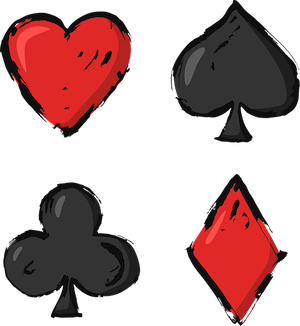 The other day, one of my grandsons asked me if I’d like to play Mario Kart with him. It goes against my grain to turn down invitations from my grandsons. However, when we’d played Mario Kart a few weeks earlier, I’d been terrible at it. His younger brother, watching from the sidelines, wanted to know why I played so badly. I said it was because the game was new to me, but in fact I’ve always been slow and clumsy at games that require quick reactions and hand-eye coordination, back to Pac-Man and even earlier. As an undergrad I was good at an arcade version of Trivial Pursuit, but that cuts no ice with anyone these days.
So I asked if we could play another game instead. My grandson wasn’t interested in any of the games I suggested; I suspect he was still hoping for a video game. Then one of his parents proposed that we play euchre. My daughter-in-law started setting up the card table; my son went for a deck of cards. My grandson and I teamed up to play the two of them. My younger grandson, who had shown me his rock museum and drawings from a nature journal earlier, washed his hands of card games and went to play outside.
∞
My son walked us through a sample round. Card games often mystify me, and some twenty-five years earlier my sons had tried to teach me euchre, without success. I’d thought that absolutely nothing about the game had stuck with me, beyond the fact that you use only some of the cards (the 9 to the ace of each suit). However, it looked more familiar than I expected. And somewhere between my late 30s and my early 60s, I’d become more relaxed about arbitrary rules (in part because I’d learned a lot about ignoring the unimportant ones). I could accept with equanimity the statement that the jack of spades can, in some situations, be considered a club. I understood the use of the words leading and following. I started to get the point. Read more »
Catspeak
by Brooks Riley
So Much Depends Upon So Much
by Eric Bies
 In geometry, a line goes on and on: it goes on and on and never stops. In poetry, a line goes on as long as the poet lets it….though in practice this rarely means more than six or seven words at a stretch.
I open the novel lying next to me—an attractively typeset hardback Bolaño—and its lines smile with the teeth of all of twelve or fourteen. Words: like the Greeks at Thermopylae, they have, somehow, to say more, do more, be more when they amass in minor number. That’s the poet’s problem.
Of course, the poet is more than welcome to set about the rather dry, administrative task of composing and arranging a rank and file of discrete poetic lines: in the end times we shall all stand watching from the horse-shaped shade of an outsize bicorn as the lines march out onto the page, ready to clash with or be routed by the reader’s eye. And this makes for a nice image, but it does nothing to dispel the poet’s problem: that blasted matter of saying more with less. If only the poet had paid a little closer attention in class. For even I can hear it now. It’s the sound of a single line begging to be many.
Such a line, whose contents spill over into another (and perhaps another, and not infrequently another yet), zigging and zagging in clots and clauses of continuous thought, participates in a process called enjambment. Most halfway okay poems—those desirous both of basic interpretability and, well, the appearance of poetry—do usually enjoy enjambments, of which the poet ensures an artfulness sufficient to staving off suspicions as to their simply having fed a sentence to a sushi chef. But then there really are those poems that one could say are little more than their dismemberments. What we end up with, for instance, when we lift the line breaks from a famous poem by a New Jersey physician is a sentence merely, and an unremarkable one at that.
See, so much depends upon a line break. William Carlos Williams demonstrated as much when he punched this one out on his typewriter:
so much depends
upon
a red wheel
barrow
glazed with rain
water
beside the white
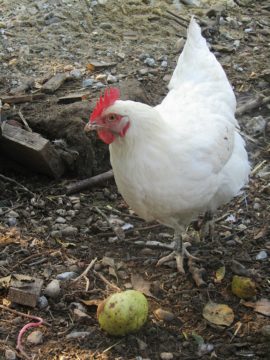
chickens
The poem, which is everything modernists like Williams taught us a poem could be—studiously irregular, liberally aerated, colloquially disembodied—is clearly only barely a poem. (Actually, it’s safe to say it shares more in structure and spirit with the readymades of Marcel Duchamp, asserting new perspectives on everyday objects, than anything Longfellow left us.)
But what does depend upon a red wheelbarrow, glazed with rainwater, beside the white chickens? Read more »
The Academic Assembly Line (A Brief Personal History)
by Faculty

At twenty minutes before dismissal time, I can think of nothing else to say but, “Class is over for today.”
As they all begin to scatter, a tall blonde student with a pigtail coiled on her head like a hat comes forward to stand before my desk. She holds the copy of her just-returned essay by the corners flat against her jeans like an apron.
“I—” Her breath gives out.
I gather that she is disturbed about something.
“I’ve never gotten a C before.”
This is a first draft of the first paper during the first semester for a first-year student. Her sentences seem to have issued from a shredder. She doesn’t know a comma from a period from a semi-colon, a “there” from a “their” from a “they’re.” She writes “would of” and “may of.” But she was “considered an A student” in high school. Hence, her surprise this morning.
“You’ll get to rewrite that. That’s the whole point of this assignment.”
“I have to get at least a B in this class.”
I stack my books on top of each other and put the stack of books on top of my folders. I snatch my pen off the desk and shove it into my breast pocket.
“If I don’t get a B, I’ll lose my funding.”
“You’ll get to rewrite the paper.”
#
My teaching gig is part-time, and I’ve been known to work as many as three jobs at once — Emergency Medical Technician for about fifteen years, plasterer and wallpaperer while my spouse still had his historic restoration business, small-scale vegetable and apple farmer, cemetery superintendent at present. My academic CV fits on one side of an 8.5 X 11 sheet of paper. When my fiction writing aspirations crashed, I took up old time fiddling. I drink cheap domestic red wine out of a Mason jar with an ice cube in it.
“Adjunct” is the perfectly suitable, adjective-turned-noun describing academic part-timers like me. It sounds like a vestigial body part. Read more »