by Derek Neal
 There are certain words that seem to take on a life of their own, words that spread imperceptibly, like a virus, replicating below the level of consciousness, latent in our environment and culture, until suddenly the word is everywhere, and we are afflicted with it. We may even use these words ourselves: we struggle to find the right phrase, the true word to capture our intention, and these words come to us unbidden, floating into our minds from somewhere out there, and we speak the word without understanding what we really mean, but we see understanding and acknowledgement in the face of our interlocutor, and we know we have hit upon the correct utterance that will mark us as one who belongs.
Journey
Here are some uses of the word “journey” that I’ve heard or read recently: faith journey, personal development journey, teeth journey, skincare journey, healing journey, leadership journey, finance journey, mental health journey, breast cancer journey, fertility journey, musical journey, immigration journey, medical journey, weight loss journey, pregnancy journey. The first thing we notice about these “journeys” is their combination with another word, increasingly a noun. It seems to me that the use of journey used to be exclusively about physical travel from one place to another (journey to the stars, journey to the center of the earth), or that an adjective would be used to describe a journey (harrowing journey, difficult journey), but now nouns are often used to describe a type of journey, which enables us to turn any sort of experience into a narrative story. Just now, when attempting to pay my credit card bill, I was told that my bank could help me on my “credit journey.” The word “journey” acts like a spell—once it is cast, it performs a sort of magic, turning something without order or structure into something that we can trust will turn out well, because it’s about the journey, not the destination. Read more »
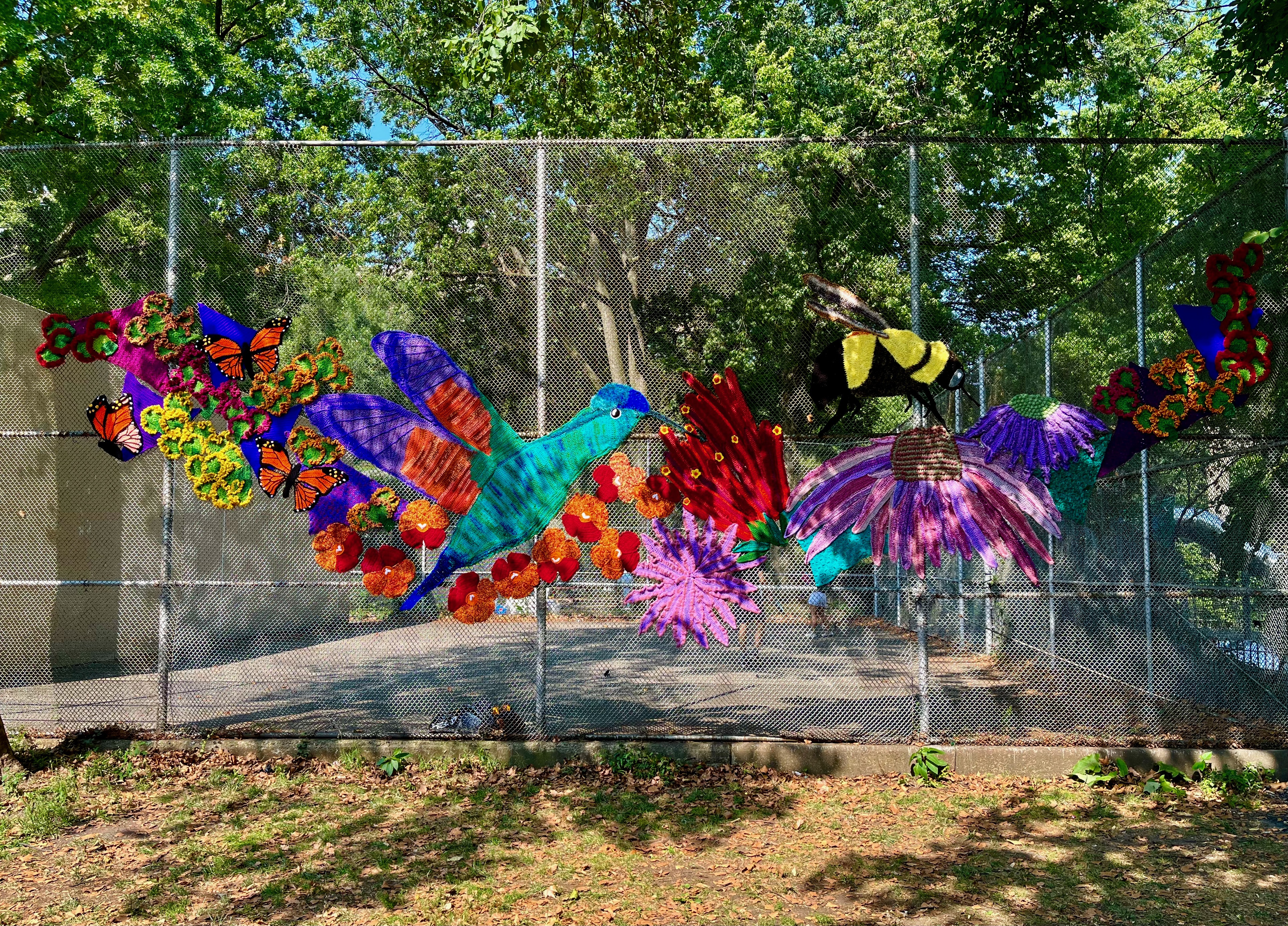 Naomi Lawrence. Tierra Frágil, 2022.
 Come die with me.
 by Leanne Ogasawara


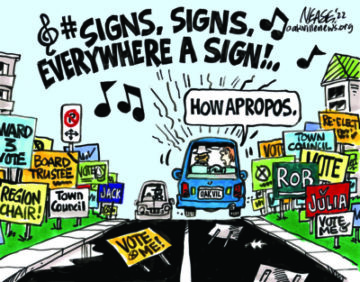 trustee. It’s a relatively minor position and non-partisan, so there’s no budget or staff. There’s also no speeches or debates, just lawn signs and fliers. Campaigning is like an expensive two-month long job interview that requires a daily walking and stairs regimen that goes on for hours. Recently, some well-meaning friends who are trying to help me win (by heeding the noise of the loudest voices) cautioned me to limit any writing or posting about Covid. It turns people off and will cost me votes. I agreed, but then had second thoughts the following day, and tweeted this:
 Before leaving Santa Fe I spent (yet another) morning at a coffeehouse. It’s an urban sort of behavior, and a Bachian one too – you might know about Zimmerman’s in Leipzig, the coffeehouse where Bach brought ensembles large and small to perform once a week. It seems to have been a chance to make some non-liturgical music, a relief from Bach’s otherwise very churchy employment.
 At a recent tournament sponsored by the St. Louis Chess Club, 19-year old Hans Niemann rocked the chess world by defeating grandmaster Magnus Carlson, the world’s top player. Their match was not an anticipated showdown between a senior titan and a recognized rising phenom. The upset came out of nowhere.
 They all want it: the ‘digital economy’ runs on it, extracting it, buying and selling our attention. We are solicited to click and scroll in order to satisfy fleeting interests, anticipations of brief pleasures, information to retain or forget. Information: streams of data, images, chat: not knowledge, which is something shaped to a human purpose. They gather it, we lose it, dispersed across platforms and screens through the day and far into the night. The nervous system, bombarded by stimuli, begins to experience the stressful day and night as one long flickering all-consuming series of virtual non events.