
by Akim Reinhardt
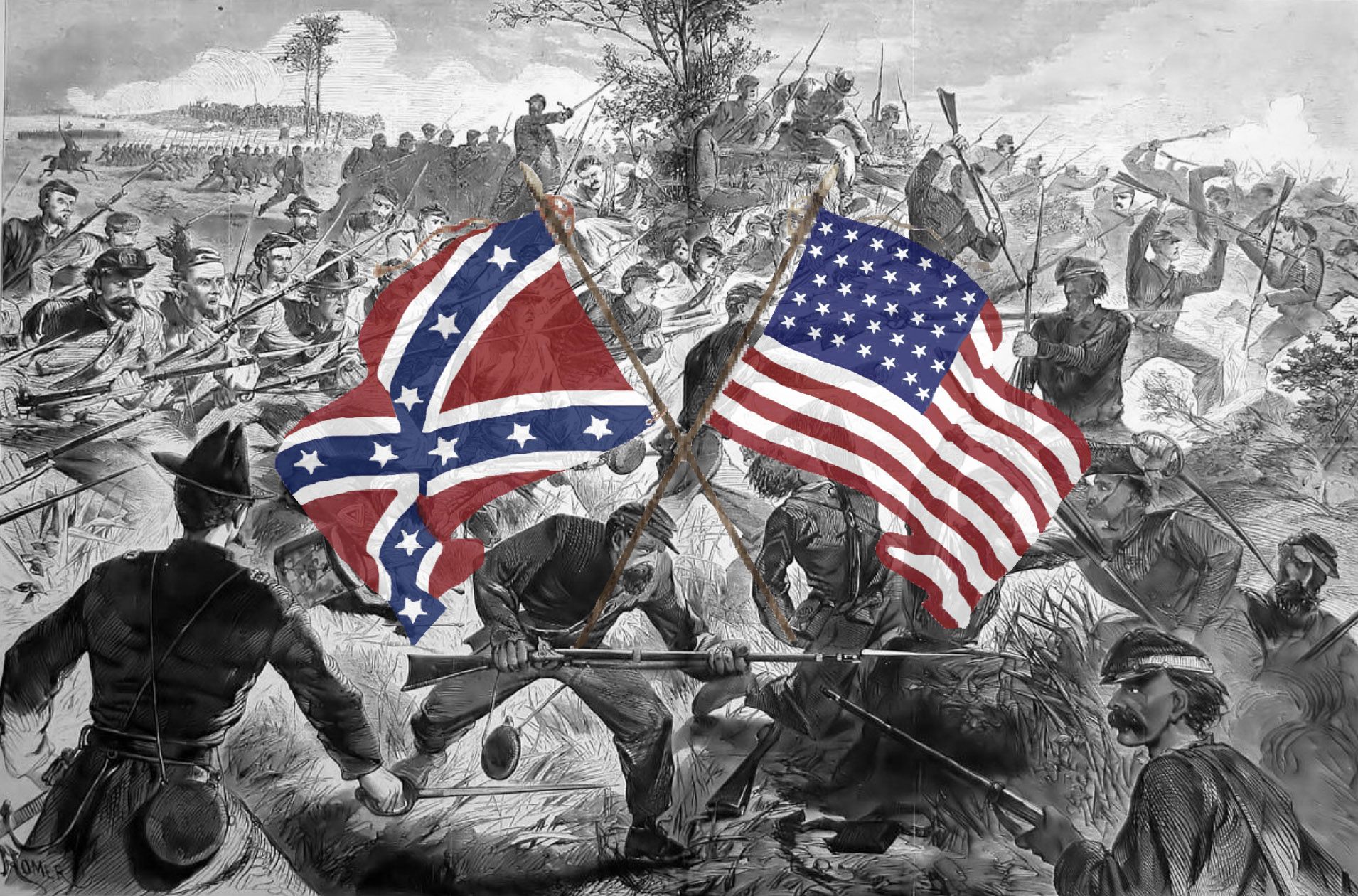 I first heard “The Blundering Generation” in the 1990s when I was taking a course on Civil War history. As my professor explained, the early 20th century saw a new cohort of historians who no longer personally remembered the war and debated anew the nature of its origins. They were trying to move past the earlier, caustic interpretations of Northerners and Southerners who openly blamed each other, the former decrying the Southern “slaveocracy” and the latter bemoaning the “war of Northern aggression.” So instead, these thinkers at the vanguard of historical study decided to blame everyone. Or no one.
One new interpretation was The Irrepressible Conflict: Increasingly divergent economic, social, and cultural differences between the North and South were so profound and so deeply rooted, that the war was essentially unavoidable. Oh well. The other new viewpoint was The Blundering Generation: The Civil War, tragically, had been entirely avoidable, but was brought on by thirty years of missteps and increasing vitriol by a generation of incompetent and extremist political and social leaders.
It’s easy to imagine why these men (these historians were all men), born after the Civil War, raised in its long shadow and the seemingly endless animosity it spawned, would look for a way to move past it. But their groundbreaking debate, inevitability vs. endemic stupidity and extremism, proved to be a false dichotomy. Newer, better, smarter schools of thought eventually followed and displaced them. Yet nowadays I am reminded of this early Civil War historiography when I listen to observers talk of our current divided society. Read more »
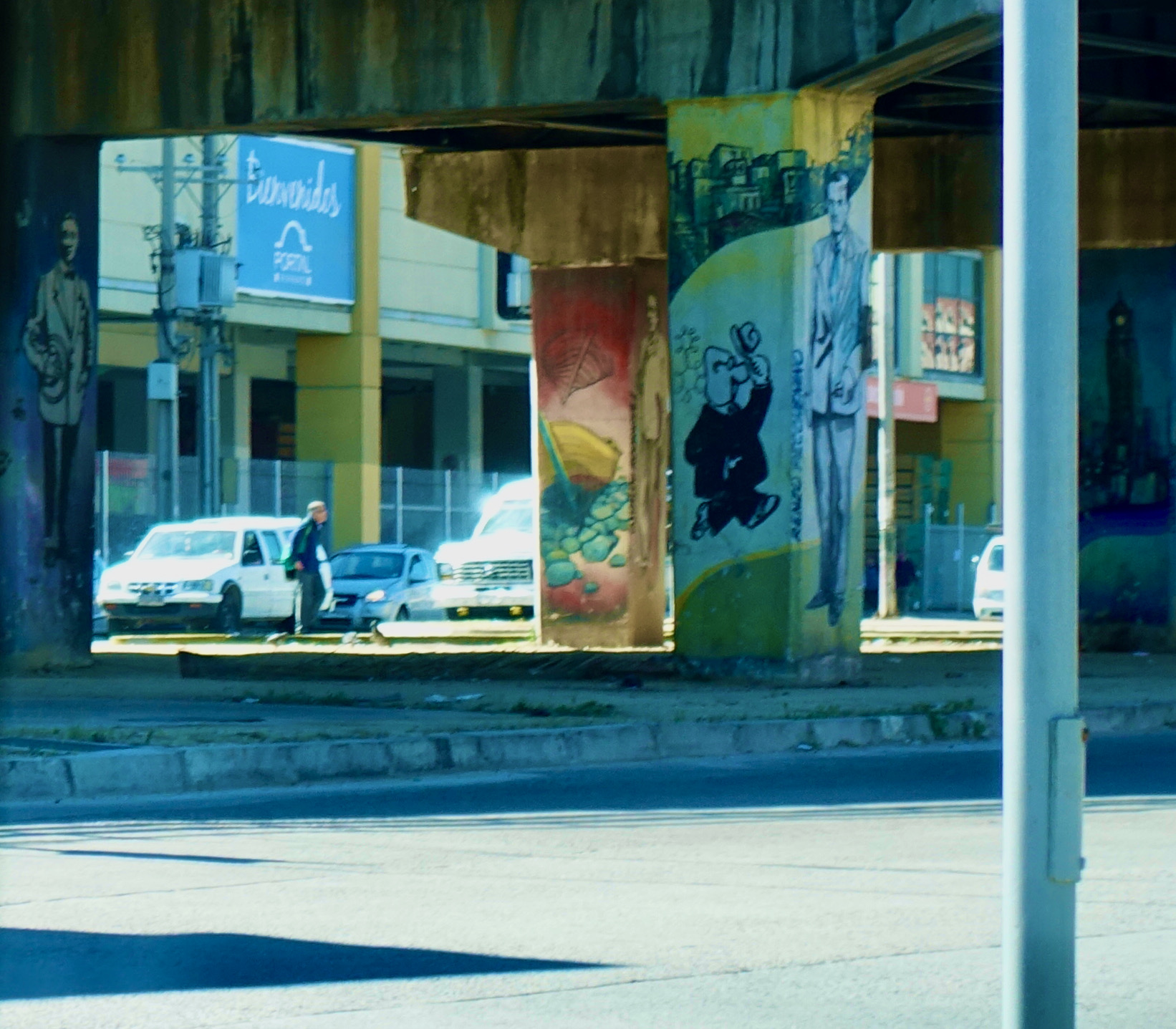 Sughra Raza. Santiago Street Color, Chile, November 2017.
 Spanning just shy of a thousand years, al-Andalus or Muslim Spain (711-1492), has a riveting history. To picture the Andalus is to imagine a world that gratifies at once the intellect, the spirit and all the senses; it has drawn critical scholars, poets and musicians alike. Barring cycles of turbulence, it is remembered as an intellectual utopia, a time of unsurpassed plentitude and civilizational advancements, and most significantly, as “la Convivencia” or peaceful coexistence of the three Abrahamic faiths brought together as a milieu. Al-Andalus was a syncretic culture shaped by influences from three continents— Africa, Asia and Europe – under Muslim rule. This civilization came to be known as a golden age for setting standards across all human endeavors, a bridge between Eastern and Western learning, sciences and the fine arts, between the public and private, native and foreign, sacred and secular— a phenomenon hitherto unknown in antiquity. The decline and eventual collapse of al-Andalus is no less of a legend; it is a history of in-fighting and brutal intolerance perpetrated throughout the three centuries of the Spanish Inquisition (1478-1834) with ramifications to witness in our own times. The stark contrast between the Convivencia and the Inquisition makes al-Andalus a poignant story of reversals.
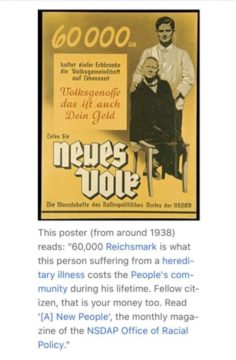 Some people are arguing that the removal of mask mandates in hospitals is a form of eugenics. Tamara Taggart, President of Down Syndrome BC, said on “
 Who doesn’t love a three-day weekend? If an extra day to relax isn’t good enough, the following week always seems to go quickly, making a Memorial Day, Labor Day, or a bank holiday in the UK, the gift that keeps on giving. Of course, most of us should consider ourselves lucky only to have to work a 5-day week. No law of the universe says a work week has to be 5 days. In fact, the concept of a 40-hour workweek is relatively new; it was only on June 25, 1938, Congress passed the Fair Labor Standards Act, which limited the workweek to 44 hours, and two years later, Congress amended that to 40 hours.
 In the 1960s, when I was a boy growing up on the west side of Montreal, whenever my father needed a hit of soul food — a smoked-meat sandwich, some pickled herring, or a ball of chopped liver with grivenes—he would head east (northeast, really, in my hometown’s skewed-grid street plan) to his old neighborhood on the Plateau. He would make for Schwartz’s, or Waldman’s, to the shops lining boulevard St.-Laurent, once known as “the Main” in memory of its service as a major artery through the Jewish part of town before the district changed hands: or rather, reverted to majority rule. On weekends my father would travel a little farther, in the direction of Mile End, to either of two places, St. Viateur Bagels and Fairmount Bagels, each located on the street from which it took its name and each, as its name candidly proposed, a baker and purveyor of bagels.

 In the movies the mathematician is always a lone genius, possibly mad, and uninterested in socializing with other people. Or they are
 Zaneb Beams. Untitled, 2022.


 ‘Wenn möglich, bitte wenden.’