by John Allen Paulos
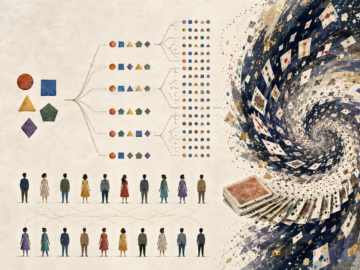 Here is a very simple notion that is astonishingly powerful. It’s called the multiplication principle and states that if some action can be accomplished in M ways and another action can be accomplished in N ways, then these two actions can be performed in succession in MxN ways. Hence the word “multiplication.” This can obviously be extended to three or more actions or choices. An example: In how many ways can one choose and order 3 letters from among the letters a,b,c,d,e? There are 5 possibilities for the first choice, 4 for the second and 3 for the third, so the answer is 5 x 4 x 3, which equals 60. Similarly the number of ways of ordering all 5 letters is 5 x 4 x 3 x 2 x1, which equals 120.
For a slightly more interesting example, assume that 10 world leaders at an international conference line up to get the commemorative group picture taken. In how many ways can the leaders be lined up? There are 10 choices for the left-most person in the photo, 9 choices for the next person in line, 8 for the next person in line, 7 for the next, and so on. So the number of possible orderings for the 10 leaders is 10x9x8x7x6x5x4x3x2x1, which equals 3,628,800. A surprisingly large number! (Of course, we assume that all of the orderings are possible, and that there is no narcissistic blowhard who can commandeer the center of the ordering.) A bit of useful notation for the product 10x9x8x7x6x5x4x3x2x1 is 10 factorial, written as 10!
Now rather than 10 world leaders, consider a deck of 52 cards (no jokers). In how many possible ways are there to order the cards in the deck. Note that there 52 possibilities for the first card in the ordering. After that choice, there remain 51 possible cards for the second card in the ordering, 50 possible choices for the third card in the ordering, 49 possible choices for fourth card, and so on for 48 possible choices, 47 choices, 46 choices until there is only one possible choice for the last card in the ordering.
Invoking the multiplication principle and factorial notation gives us 52x51x50x49x48 4x3x2x1 or 52! ways to order the 52 cards in a deck. So what does 52! equal? In this case the exclamation point might be taken to have two functions – to express the product succinctly and perhaps to express amazement at how big the number is. Read more »

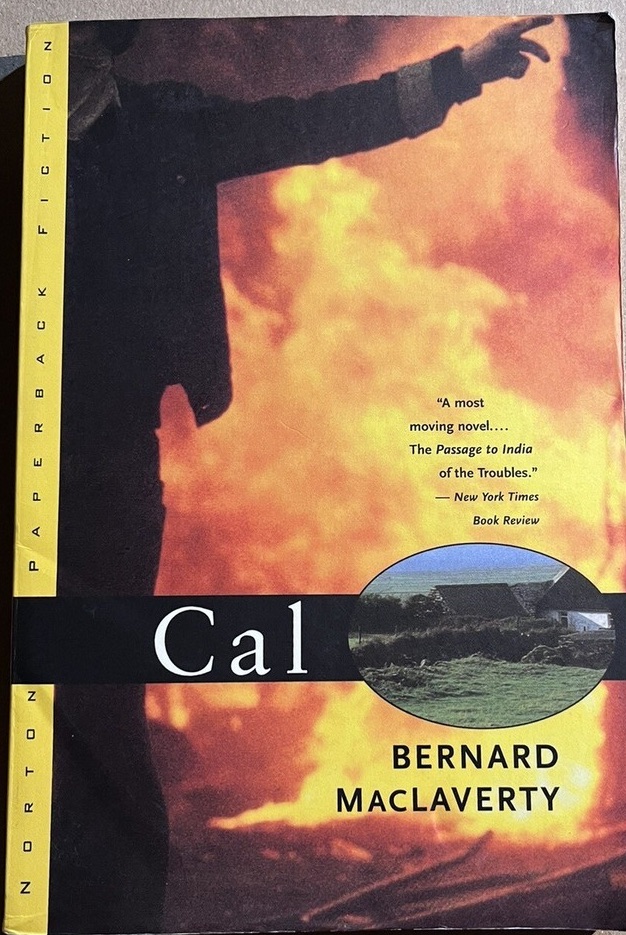


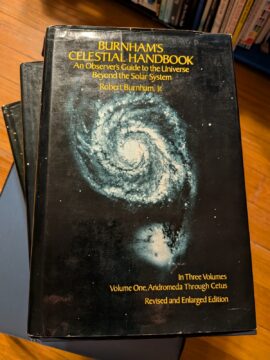 Burnham’s Celestial Handbook, by Robert Burnham, Jr., is a classic text. Its third and final volume was published in 1978. Written as a set of guidebooks for amateur astronomers, it’s a product of its time and circumstances. The abundant illustrations are in black-and-white, and the pages may look very plain to anyone accustomed to glossy large-format books about the universe, replete with color photographs. But to me it’s still immensely valuable, for the sheer amount of information it presents, for its attention to the history of astronomy, and for its astonishing breadth.
 Over what is slowly becoming a lengthy session of being alive, I’ve found this statement to be absolutely true. I’m usually thrilled with the variety and my experiences so far. However, those things the world is full of aren’t necessarily always pleasant. Or desirable. We’re thrust, will we, nil we, into a stew of unknowns.
 Had the historian of California, Mike Davis, lived long enough to take in the spectacle of the AI boom, he very well may have seen a through line to earlier hybrids of unvarnished hype, greed, military research, science fiction, and techno-millenarianism, all perduring elements of a unique California ecosystem that has evolved some of the nation’s more distinctive cultural formations. If you think Peter Thiel’s itinerant, closed-door lectures on the Antichrist, Elon Musk’s high-volume procreation, or Sam Altman’s fascination with Napoleon and his notion of founding a company like you’re founding a religion were each a bit unusual, you have not read the history of California’s Church of Scientology.

 Thomas R. Wells
 I started reading the Bible after Easter of this year. Five months later, I’m about halfway through-
 In

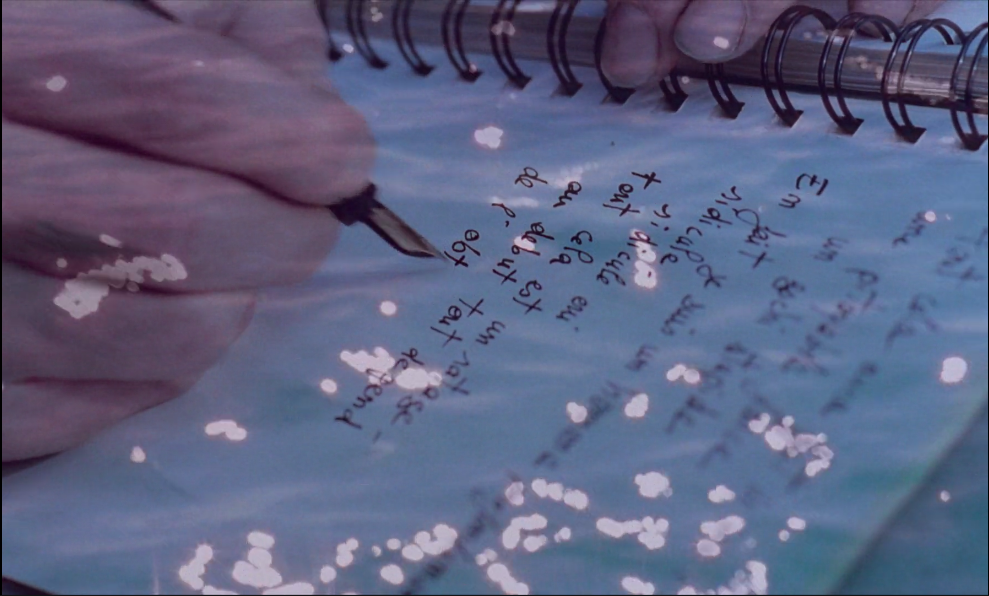 What if you took Paul Schrader’s “man in a room” concept and transposed it to the vast expanse of the African desert? You would get something like Claire Denis’ Beau Travail (1999), which shows that the room a man locks himself in doesn’t need to be literal—a prison can be made anywhere. In Denis’ film, the man in a room is Galoup, a French Foreign Legion sergeant who commands a group of some 15 men in Djibouti. He is, he tells us in voiceover, “a perfect Legionnaire,” and like Schrader’s protagonists, he writes in a journal and narrates his memories, a storytelling technique stretching back to Robert Bresson’s Pickpocket. The story thus proceeds along two timelines: one, with Galoup in Marseille, writing in his notebook after he has been dismissed from the Foreign Legion; and the other, the memories of the desert and the Legion that the notebook engenders.