by Sherman J. Clark
Is your uncle racist? Is the American educational system? Are military beard standards? Is our president? I won’t try to answer those questions here. I don’t even know your uncle. Instead, I want to talk about what we mean when we use that term—and the confusion we experience as a result of the ways we use it. This won’t solve our underlying problems having to do with race; but it might help us address those problems more clearly.
The terms “racist” and “racism” appear daily in our political debates, social media, and institutional communications. They shape hiring decisions, educational curricula, and corporate policies. They can end careers, transform elections, and rupture communities. Yet for all their prominence—or perhaps because of it—we rarely pause to notice that we use these words in fundamentally different ways.
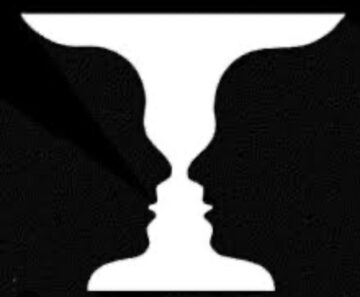
This semantic multiplicity creates dysfunction. We believe we are engaged in substantive disagreements about race and justice when we are often simply talking past one another. One person declares a policy racist, meaning it produces disparate outcomes; another hears an accusation of malicious intent and responds defensively. One person insists they are not racist, meaning they bear no personal animus; another hears a denial of systemic advantage and reacts with frustration. The confusion compounds: accusations of racism are met with accusations of bad faith, which generate accusations of fragility, which prompt accusations of ideological extremism. The cycle accelerates, positions harden, and the possibility of genuine exchange evaporates.
Before attempting to map these different uses, let me address two predictable responses. Read more »
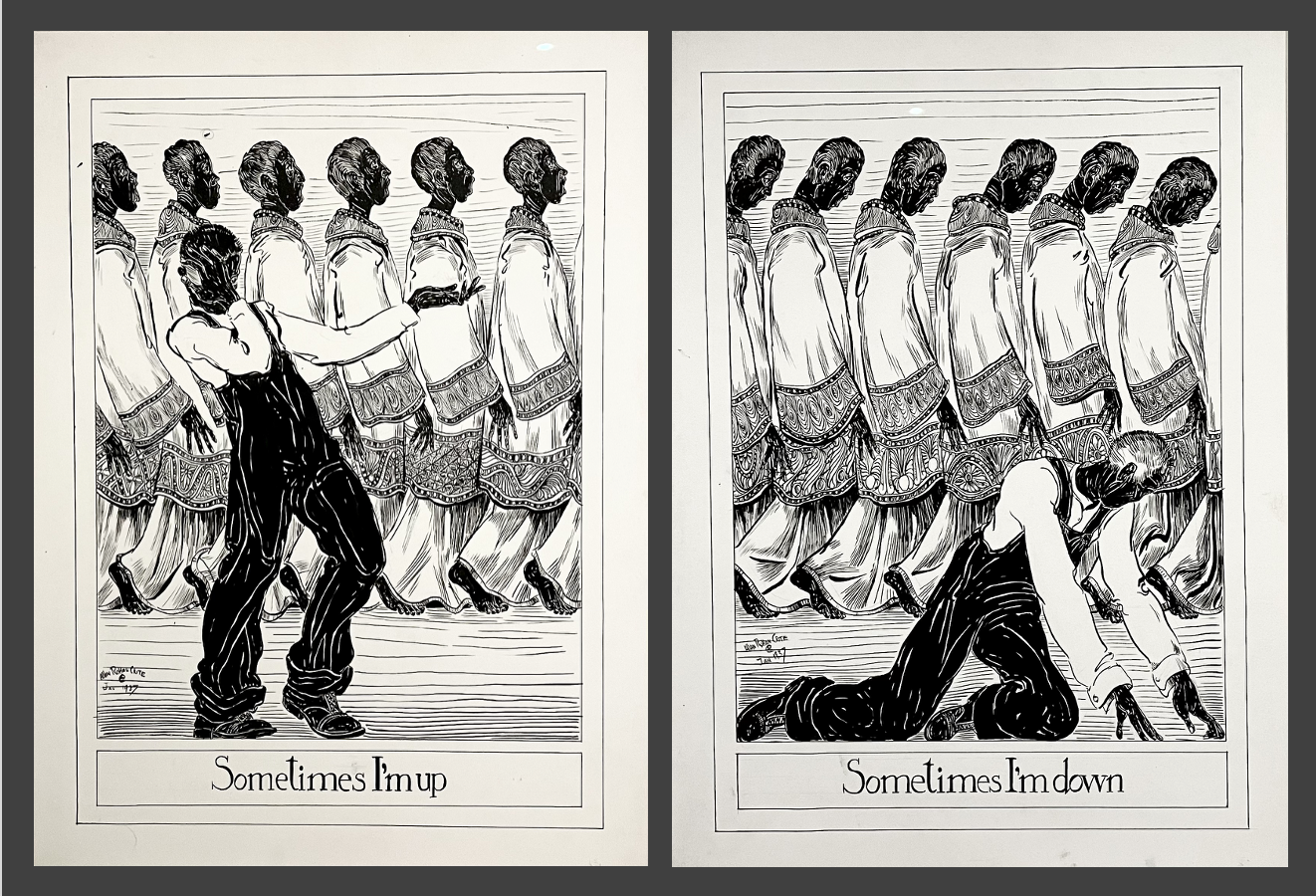 Allan Rohan Crite. Sometimes I’m Up, Sometimes I’m Down. Illustration for Three Spirituals from Earth to Heaven (Cambridge, Mass., 1948),” 1937.
  Dear Reader,


 We sometimes say that someone is living in the past, but it seems to me that the past lives in us. It lives in our houses; it lies all around us. As I write this, I’m sitting on the couch under two blankets crocheted by my grandmother, who was born around the turn of the 20th century. The laptop sits on a folded blanket that came from Mexico via a friend years ago. And that’s just the surface layer. My closets and file cabinets are also full of the past.