by Chris Horner
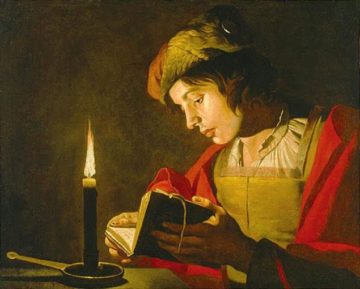
What should we look for in literature? And in the arts and humanities in general? It’s a large question with many answers, some better than others: entertainment, edification, elevation – and much more. A more limited question might be: what is the point of studying it?
Let’s stick with literature as our example.Think of all the students studying the novel, poetry, drama, essays and more. A multitude of students, teaching staff, departments and institutions. And an awful lot of money, much of it in the form of debt. Assuming that at least some of those who enrol and don’t go on to an academic career will want to go and read, see and listen to the things they wrote essays about in school and college, what is is it supposed to mean for them? I got to thinking about that after being present at a conversation about an author (DH Lawrence) between an academic and a reader who had obtained a degree in English and American literature over forty years ago. It went something like this:
Graduate: DH Lawrence is a very interesting writer.
Academic: I agree.
Graduate: The value of Lawrence is both in what he wants to say about life, and the way in which he says it – the art of the The Rainbow, Women in Love, the poetry – Lawrence has an urgent message for us about one’s life and how it might be more richly lived. How do your students respond to it?
Academic: Well, that’s not really what we are interested in at [well known UK university].
Reader: How can it not be?
Academic: We don’t approach any text with that kind of thing in mind. What we study and teach is the social and historical context in which it was produced, the the social background to the text’s production, the forces that shape and mark it: political, economic, questions of gender etc are all important aspects: the discursive and ideological forces that shaped it and made it part, or not part, of the canon.
Reader: But isn’t that missing the point of what DHL has to say? I think he has something to say to me. Of course he is open to criticism – but that’s what the study of literature is about, isn’t it? The questions of value that are raised in our reading of great literature?
Academic: it’s naive to just pick up a text and think of it as speaking to you in an unmediated way, just like that.
The conversation went on, but didn’t really get much further than the positions I’ve very roughly outlined above. The subject was literature but it could surely have been about all sorts of cultural production – the visual arts, for instance. Read more »
 But—let’s be honest—to me he’s Dad.
 Martyn Iles, a lawyer by training, was the managing director of the Australian Christian Lobby (ACL) from 2018 until he was


 Allison Elizabeth Taylor. Only Castles Burning, 2017.
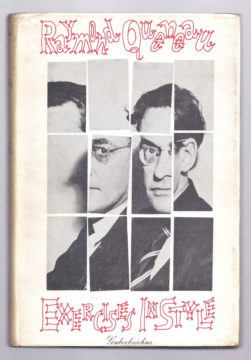 Raymond Queneau was a French novelist, poet, mathematician, and co-founder of the Oulipo group about



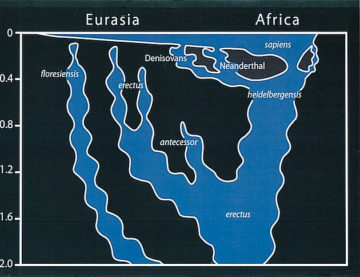
 Human minds run on stories, in which things happen at a human level scale and for human meaningful reasons. But the actual world runs on causal processes, largely indifferent to humans’ feelings about them. The great breakthrough in human enlightenment was to develop techniques – empirical science – to allow us to grasp the real complexity of the world and to understand it in terms of